OVARIAN CANCER
Learn about ovarian cancer, including risk factors, diagnosis, treatment, stories from our community, and where to find support.
WHAT IS OVARIAN CANCER?
What does an ovarian cancer diagnosis mean? Simply put, it means there are malignant (cancerous) cells growing on one or both ovaries. It is often accompanied by the spread of malignant cells to surrounding organs in the abdominal cavity.
The ovaries are located on either side of the uterus and are responsible for the production of ova (eggs) and hormones involved in the menstrual cycle and fertility.
While cells in our body usually grow in a controlled and organised fashion, when they grow abnormally, they form a growth or a tumour, which can be benign or malignant. A malignant ovarian tumour, known as a cancer or carcinoma, will continue to spread in an uncontrolled fashion through the body unless it is treated. The extent of this spread will determine the stage of ovarian cancer.
Ovarian cancer continues to be one of the most lethal and least understood cancers affecting women and girls.
Today, four women will be diagnosed with ovarian cancer. It’s a devastating experience, because:
- The symptoms of ovarian cancer are so vague. For many women, the only signs are cramps, bloating, feeling full or needing to urinate more often—all symptoms which mimic common female complaints;
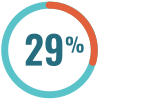
- Around 70% of women are diagnosed in the advanced stages, meaning only around 29% of these women are expected to survive beyond five years;
- Many women will have entered hospital to undergo exploratory surgery, but most will wake to find they have undergone a complete hysterectomy;
- Invasive surgery is currently the only way of detecting and accurately diagnosing ovarian cancer;
- Instead of being allowed to simply rest and recover from major surgery, they then undergo intense chemotherapy as first line treatment, with few options to personalise and target this therapy to their specific cancer type;
- Many ovarian cancer patients discover that even if their treatment succeeds in getting rid of their cancer, there’s an 80% chance that it will come back.
It is a bleak and depressing picture of the reality of ovarian cancer—a picture that hasn’t shifted significantly in thirty years but needs to change urgently.
These statistics scratch the surface of why innovative research is so urgently needed—to find an early detection test and also discover better, more effective treatments that will help women survive their ovarian cancer diagnosis long term.
Read more about ovarian cancer key facts, signs and symptoms, ovarian cancer diagnosis, ovarian cancer treatments, personal stories and ovarian cancer support services.

ABOUT OVARIAN CANCER
Understand the most up-to-date information and statistics about ovarian cancer in Australia.

OVARIAN CANCER CAUSES & RISK FACTORS
Learn more about what causes ovarian cancer and whether you may be at an increased risk.



SIGNS & SYMPTOMS OF OVARIAN CANCER
Get to know the common signs and symptoms of ovarian cancer.




OVARIAN CANCER TREATMENT
Understand the general treatment options for ovarian cancer patients.

OVARIAN CANCER STORIES
Read personal stories from those living with or impacted by ovarian cancer.



SUPPORT SERVICES
Where you can find specialised ovarian cancer support for yourself and your family.
OVARIAN CANCER IS THE MOST LETHAL GYNAECOLOGICAL CANCER, YET IS CRITICALLY UNDERFUNDED.
KEY OVARIAN CANCER STATISTICS IN AUSTRALIA*
TODAY FOUR WOMAN WILL BE DIAGNOSED
with ovarian cancer

ONE WOMAN DIES EVERY EIGHT HOURS
with ovarian cancer

ONLY 29% OF WOMEN WILL SURVIVE BEYOND FIVE YEARS
when diagnosed in the advanced stages
*All data published by the Australian Institute of Health and Welfare. Last updated June 2021.

Get the latest news, stories & updates.
