Australian Government grant gives major boost to ocrf-funded ovarian cancer early detection test research
August 18 2024
- Professor Carlos Salomon Gallo from The University of Queensland awarded $1.46 million National Health and Medical Research Council grant by the Australian Government, leveraging $940,000 awarded by the OCRF in March 2024, as well as other philanthropic contributions.
- This Partnership Project will further investigate the potential of the OCRF-7 test to detect of high-grade serous ovarian cancer, the most common and aggressive type.
- Preliminary studies show this blood test can detect ovarian cancer far earlier and more accurately than current methods.
- Potential application for people in high-risk groups such as those with a family history and in the longer term, for population screening.
NEXT LEVEL FOR OVARIAN CANCER EARLY DETECTION
In a significant development for ovarian cancer research, OCRF donations have helped attract major additional funds from the Australian Government’s National Health and Medical Research Council (NHMRC) scheme, to reach a total of $2.9m to further investigate a high potential early detection test.
The OCRF has been supporting Prof Salomon Gallo’s work since 2017. Earlier this year, OCRF announced a grant committing over $940,000 to the Sierra study through our annual National Research Grants Scheme. The University of Queensland secured additional philanthropic funding from the Lions Medical Research Foundation. The funds have now been doubled, thanks to the NHMRC grant, providing a major boost to the project.
Professor Salomon Gallo’s team has developed the OCRF-7 ovarian cancer test, named in recognition of the OCRF’s previous funding. The test, which involves a combination of biomarkers, has outperformed the CA-125 biomarker, which is currently clinically used to signal the potential presence of ovarian cancer. This project allows the team to validate the OCRF-7’s diagnostic accuracy in larger and more complex sample groups. A previous OCRF-7 study suggested that the OCRF-7 has over 90% accuracy in identifying stage I and II ovarian cancer in a 465-sample case-control cohort, while CA-125 identified ovarian cancer in approximately 60% in the same patients.
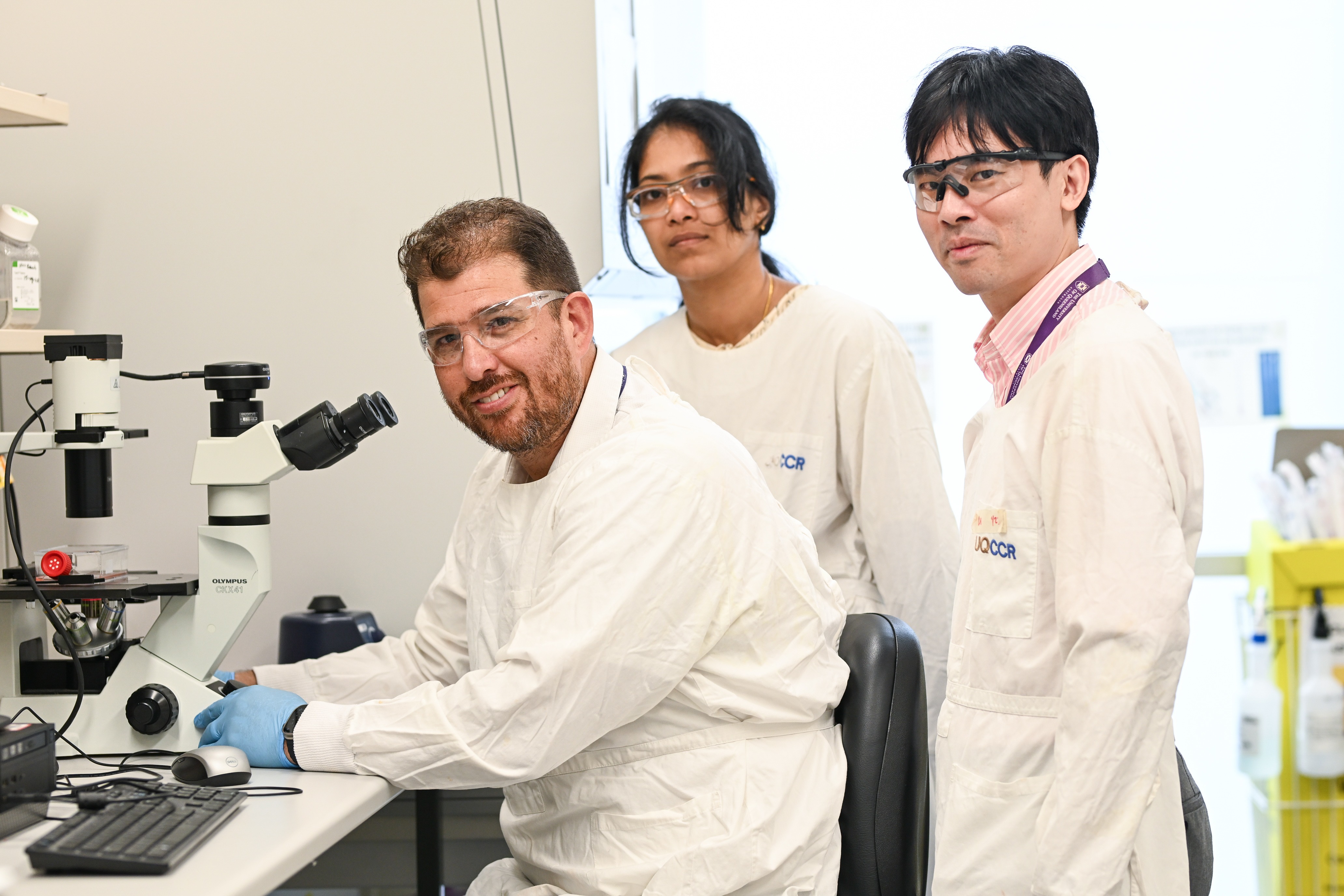
Picture above: Professor Carlos Salomon Gallo (left) and part of his research team at University of Queensland.
The Partnership funds will enable Professor Carlos Salomon Gallos and his team at the University of Queensland to progress to the next phase of the project and determine how specifically the OCRF-7 test can distinguish high-grade serous ovarian cancer from other cancers and benign conditions such as endometriosis, to ensure it won’t return false positives, and to move into phase I clinical trials.
Reflecting on the significance of OCRF’s support, Professor Salomon Gallo said, “The support and partnership with the OCRF over the last 8 years have been fundamental to the development of our ovarian cancer program. The OCRF not only provided the much-needed funding but also connected us with the community and their extensive national and international network. Without the OCRF, this program would not have been possible.”
CEO of the OCRF, Robin Penty, said the expansion of the project funding was testament to what community generosity and belief can achieve. “We’re thrilled that the Australian Government is supporting this important project and doubling our recent grant. We think of OCRF funds as special money. It’s raised by our extraordinary ovarian cancer community, who are committed to creating a more hopeful future for all those impacted by ovarian cancer,” she said.
“Since our original grant in 2017, OCRF funding has seen Professor Salomon Gallo’s research, and the OCRF-7 biomarker algorithm, grow from a promising idea into an exciting Australia-wide effort. It offers potential for urgently required advancement in early detection of ovarian cancer, which we know is a high priority for the ovarian cancer community.”
EXPLAINER: OCRF-7 EARLY DETECTION PROJECT
Why would an early detection test be a serious game-changer for ovarian cancer?
Ovarian cancer is the most lethal gynaecological disease taking more than 1000 Australian lives every year [1]. With no early detection test and vague symptoms, it is often diagnosed late, making it difficult to treat. If detected early, particularly when patients are asymptomatic, studies [2] show the survival rate could increase above 90%. With an estimated 1786 diagnoses of ovarian cancer in 2023 [1], successful outcomes from this project could potentially save hundreds of Australian lives annually if implemented. Investigating innovative and promising approaches, such as this, is particularly important considering the currently available CA125 test, and internal ultrasound have been shown to be detect ovarian cancer too late to significantly improve survival rates [3].
What is so exciting about this early detection approach FOR OVARIAN CANCER?
In the simple form of a rapid blood test, preliminary studies show it can detect ovarian cancer far earlier and more accurately that current methods.
In preliminary studies the test – which involves a panel of selected biomarkers – has achieved over 90% accuracy [4] in identifying ovarian cancer. In fact, the test has identified ovarian cancer incidences where the currently used CA125 test had shown ‘normal’ results.
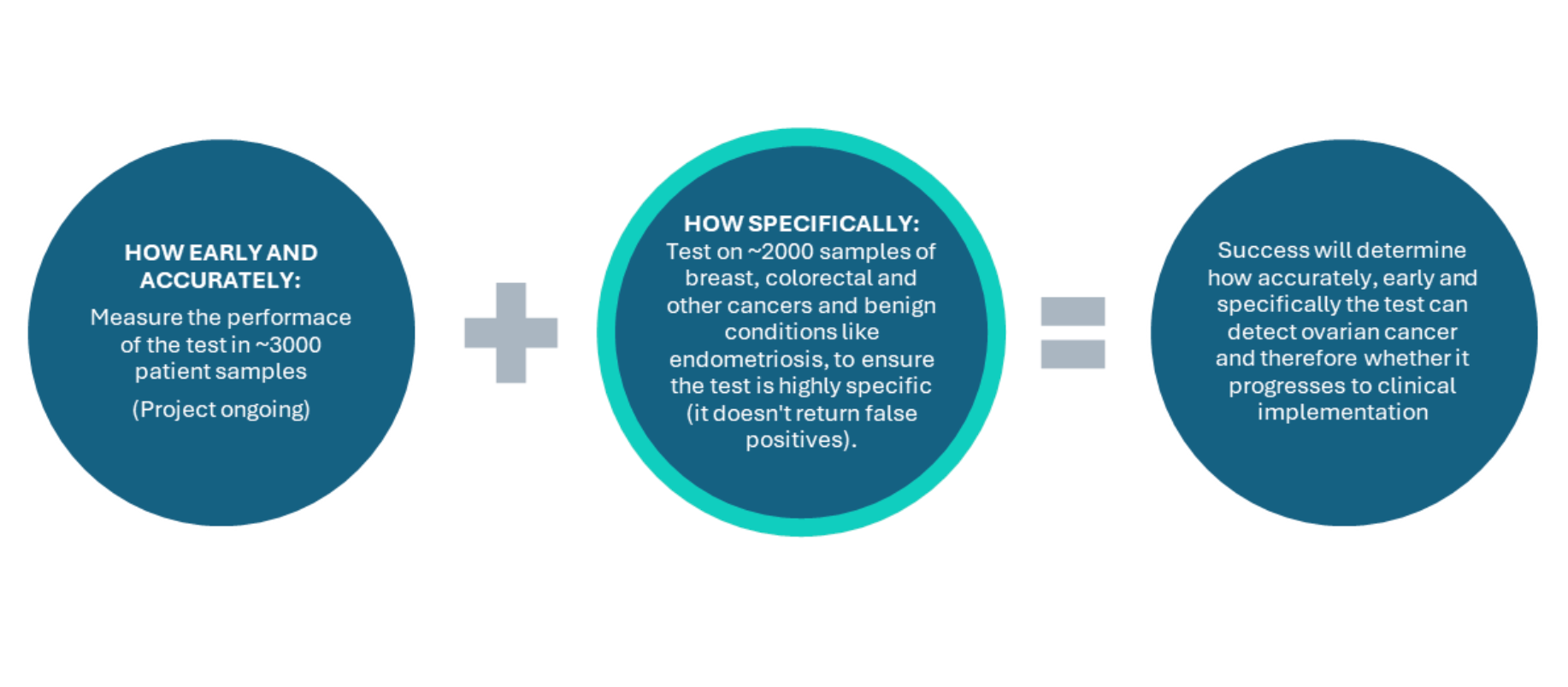
Late last year, we spoke to Professor Salomon Gallo about trialling the test in approximately 3000 ovarian cancer samples, with promising results thus far. That phase of the project will finish mid-2026 and uses samples from the United Kingdom Collaborative Trial for Ovarian Cancer Screening. Working with researchers from University College London, he is testing his approach on samples taken both at the point of diagnosis and as early as five years before diagnosis to determine how early his test could accurately detect ovarian cancer.
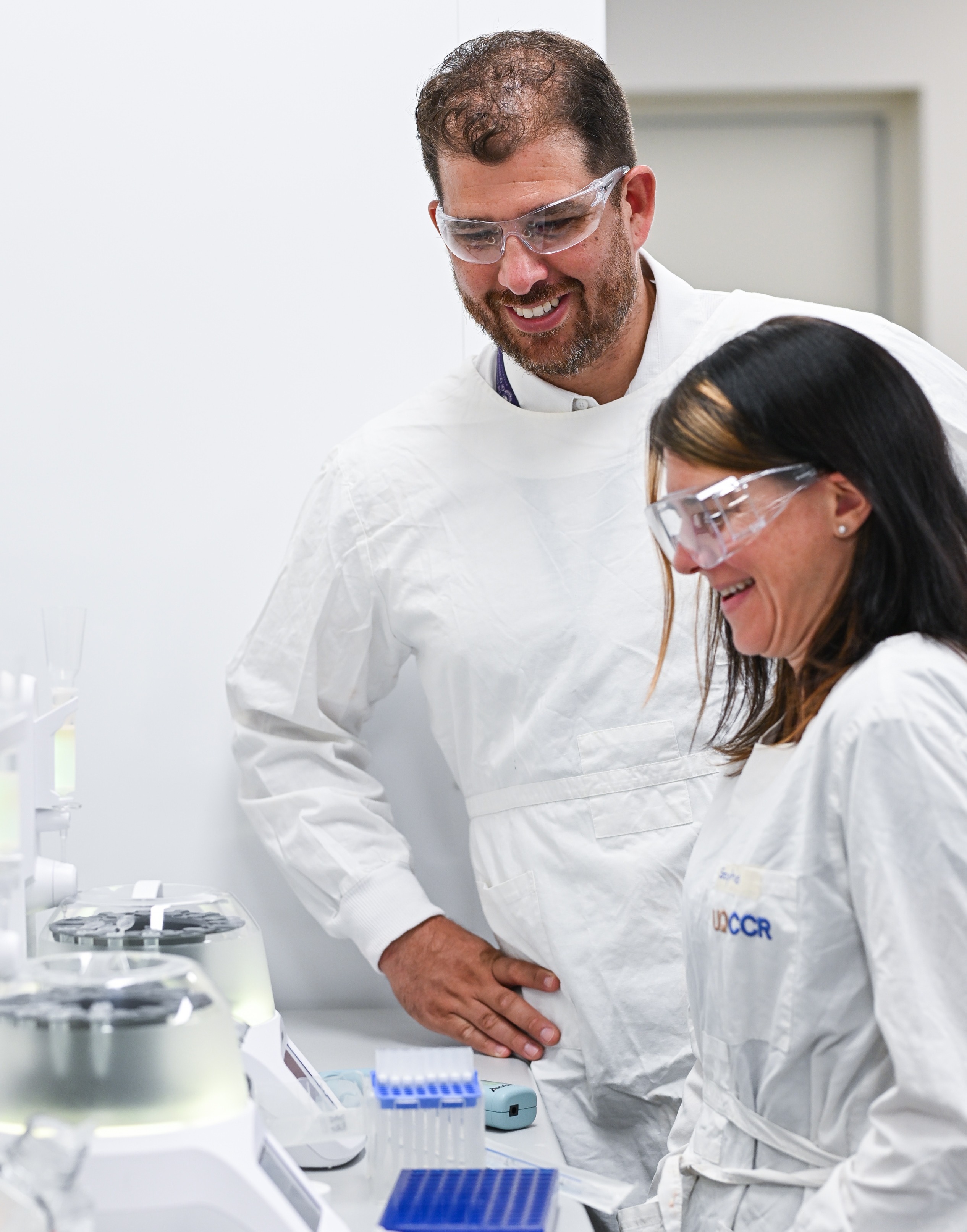
Picture on right: Carlos and Colleague Sophie Krumeich, Senior Research Assistant.
This Partnership phase of the research is called The EARLY Study and will now test, in 2000 samples, how specifically Professor Salomon Gallo’s approach can distinguish high-grade serous ovarian cancer from other cancers and benign conditions such as endometriosis, to ensure it won’t return false positives.
They will do this by comparing the results from ovarian cancer samples, with results from non-ovarian cancer samples to determine how well the test distinguishes between them. They will also confirm how well the test works as a simple blood test in a standard pathology lab, to ensure it is feasible.
To collect and process samples, this partnership is funding a large-scale Australia-wide effort involving researchers from 5 universities, 9 hospitals, 2 research centres, and 2 philanthropic organisations (including the OCRF). Of course, this project would not be possible without the thousands of ovarian cancer patients and other donors who have donated samples through respective programs — no collaborative effort would be possible without them.
What could this project mean if successful and where to from here?
Most of the ovarian cancer samples being test are high-grade serous ovarian cancer, though some of the samples include other epithelial subtypes such as low-grade serous. Currently, due to having significantly more available samples for high-grade serous, the test is geared towards this subtype.
If successful, the test could progress in two ways:
- Firstly, as a diagnostic test for those who are asymptomatic but at high risk: If the test shows high specificity, meaning it can distinguish between ovarian cancer and other cancers and non-cancerous conditions, and can accurately identify ovarian cancer in the ~3000 samples, it could be progressed as a differential diagnostic test. The team hope to make it available to people that are at high risk of developing ovarian cancer, such as those with BRCA1/2 mutations or a family history, in the next five years.
- Secondly, towards a future population screening program: If the test demonstrates that it can achieve 98% or greater specificity, by being able to distinguish ovarian cancer from other cancers and non-cancerous conditions, and avoid returning false positives, it will provide key data for the test to progress towards a national screening program in future.
How does the METHOD of testing work?
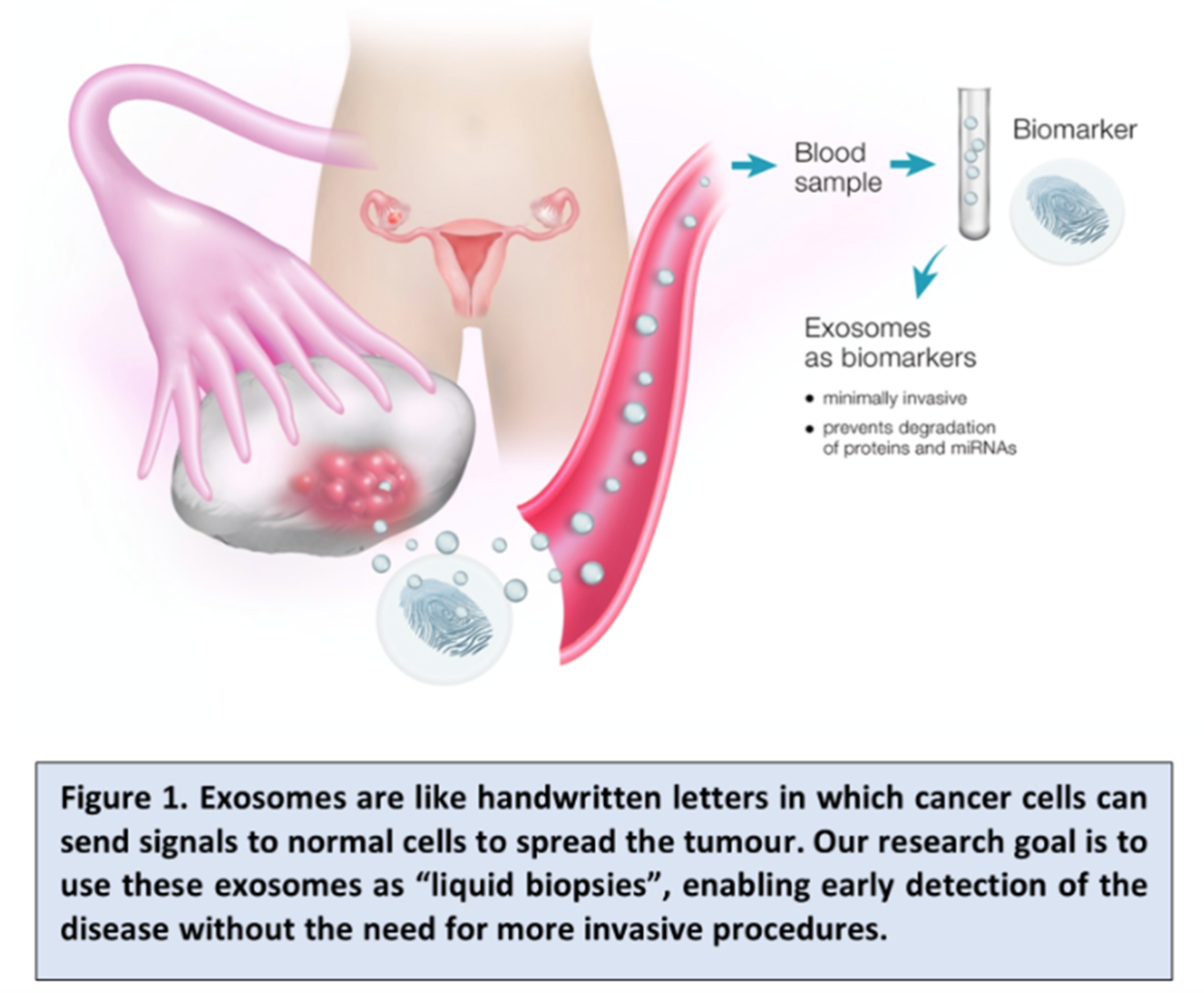
The test is based on a type of extracellular vesicle called ‘exosomes’: tiny bubble-like structures that are secreted or ‘spat out’ by cancerous cells into the bloodstream. With previous OCRF-funding, the team was able to identify a panel of biomarkers extracted from exosomes that can indicate the presence of ovarian cancer.
Why is the key to this test called the OCRF-7?
The biomarker panel and algorithm at the heart of this test is called the OCRF-7 — why? It is named in recognition of sustained OCRF community support since 2017. OCRF funding has seen Professor Salomon Gallo’s approach grow from an innovative idea through to the promising test it has become today.
This significant project is part of the bigger picture for ovarian cancer early detection
This partnership is exciting news for early detection of high-grade serous ovarian cancer. At the OCRF we know that subtypes of ovarian cancer, genetics and accessibility can all impact the suitability of an early detection test. For these reasons we will continue to support diverse early detection approaches with the hope that all facets and subtypes of this complex disease are addressed in future, and to achieve equity in access to early detection for all those impacted.
Ovarian cancer is a complex disease and designing an accurate early detection is not an easy feat, but the OCRF is pleased to see such momentum in this space. As recognised by Professor Salomon Gallo the progression of this research would not have been possible without the commitment and generosity of you — the OCRF Community.
Please read more about Professor Salomon Gallo’s research and early detection:
- NHMRC Release
- Hear Professor Salomon Gallo talk about his rapid blood test for ovarian cancer early detection
- A glimpse into the collaborative global network informing Prof Carlos Salomon Gallo’s ovarian cancer research
- Progress in ovarian cancer early detection
- Collaboration propels OCRF-7
- Medical Journal Australia: Ovarian cancer: silent, deadly, no diagnostic test - yet
References:
- Cancer Australia: https://www.canceraustralia.gov.au/cancer-types/ovarian-cancer/statistics
- SEER Explorer: an interactive website for SEER cancer statistics. Surveillance Research Program, National Cancer Institute; April 17, 2024. https://seer.cancer.gov/statistics-network/explorer/. Accessed Aug 16, 2024. Data source(s): SEER Incidence Data, November 2023 Submission (1975-2021), SEER 22 registries (excluding Illinois and Massachusetts).
- The Lancet: Ovarian cancer population screening and mortality after long-term follow-up in the UK Collaborative Trial of Ovarian Cancer Screening (UKCTOCS): a randomised controlled trial. https://www.thelancet.com/article/S0140-6736(21)00731-5/fulltext
- The circulating extracellular vesicles in ovarian cancer study (OCRF-7). J Extracellular Vesicles 2024. Annual Meeting of the International Society of Extracellular Vesicles, DOI: https://doi.org/10.1002/jev2.12444.
- Sharma S, Salomon C. Techniques Associated with Exosome Isolation for Biomarker Development: Liquid Biopsies for Ovarian Cancer Detection. Methods Mol Biol 2020; 2055: 181-99.