[read time: 3 min approx.]
Story written by Ken Eastwood
Professor Michael Jennings from Griffith University, Queensland is one of the three recently awarded researchers to receive a funding grant from the Ovarian Cancer Research Foundation. His team is investigating a specific sugar-based biomarker that is produced in ovarian cancer cells from early stages.
An emerging field of medical research, called glycomics, has made substantial breakthroughs in the search for a simple detection test for the presence of ovarian cancer. Glycomics is the study of sugars, and the Institute for Glycomics at Griffith University in Queensland is one of just a handful of facilities in the world able to look for links between sugars and diseases. Researchers do this by using state-of-the-art equipment at the multi-million-dollar facility, established in 2000, which includes glycan and lectin array technologies and mass spectrometry.
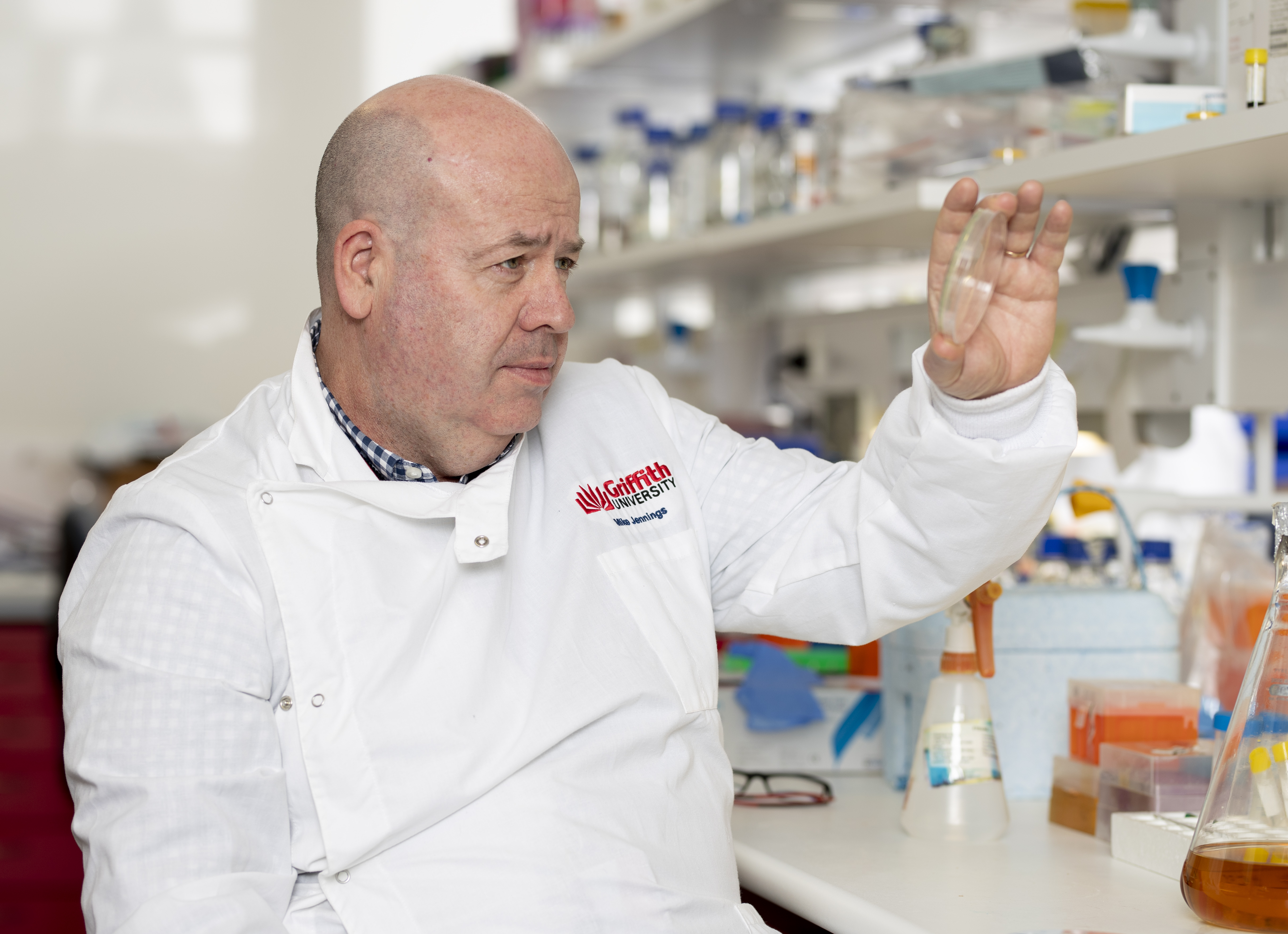 Pictured: Professor Michael Jennings of Griffith University, Queensland.
A rare sugar found in ovarian cancer cells:
Deputy director and a principal research leader of the Institute, Professor Mike Jennings, says work on another project guided the Institute to discoveries that could lead to early detection of ovarian cancer. “Half of the work in my lab is in infectious diseases, and the other half is in cancer,” he says. “We were researching a toxin that binds to a sugar known as Neu5Gc.”

Although common in many mammals, this sugar isn’t usually produced by normal human cells. Yet, it is found in some cancers, including breast, bladder, melanoma and ovarian cancers.."
In collaboration with colleagues at the University of Adelaide, Professor Jennings and his team created a world-first technology to detect the presence of Neu5Gc in blood using a lectin called SubB2M. “Because this sugar is not made in normal human tissue, we made a reagent to specifically recognise Neu5Gc,” Professor Jennings says. “It gives you a unique ‘handle’ that isn’t present in other tissues.”
Published studies during the past few years have demonstrated SubB2M can differentiate between people with ovarian cancer and healthy controls. “Controls have very low levels of Neu5Gc, and then Neu5Gc levels go up with stage and severity of cancer,” Professor Jennings says.
We saw statistically significant elevation of Neu5Gc at stage one of the disease and we could resolve with confidence the difference between stage one and cancer free controls."
The next steps in Prof. Jennings' ovarian cancer research:
The Ovarian Cancer Research Foundation recently granted Professor Jennings and his team $444,203 to continue this work with clinicians at the Mater and Princess Alexandra hospitals in Brisbane. Using mass spectrometry approaches, they are now determining which biomolecules in the blood of ovarian cancer patients are carrying Neu5Gc. It is hoped this will enable the development of a blood test to specifically indicate the presence of ovarian cancer.
Professor Jennings says the funding will initially allow for testing on 48 patients having biopsies to determine if they have ovarian cancer. “The study participants will have all the appropriate scans, blood tests and MRIs in parallel with our sample collection. When we do isolate the biomarker, every single aspect of their treatment and their condition can be correlated with our biomarker studies. If you really want to drill down, this is the way to get the best information – to collect it purposely from the start.”
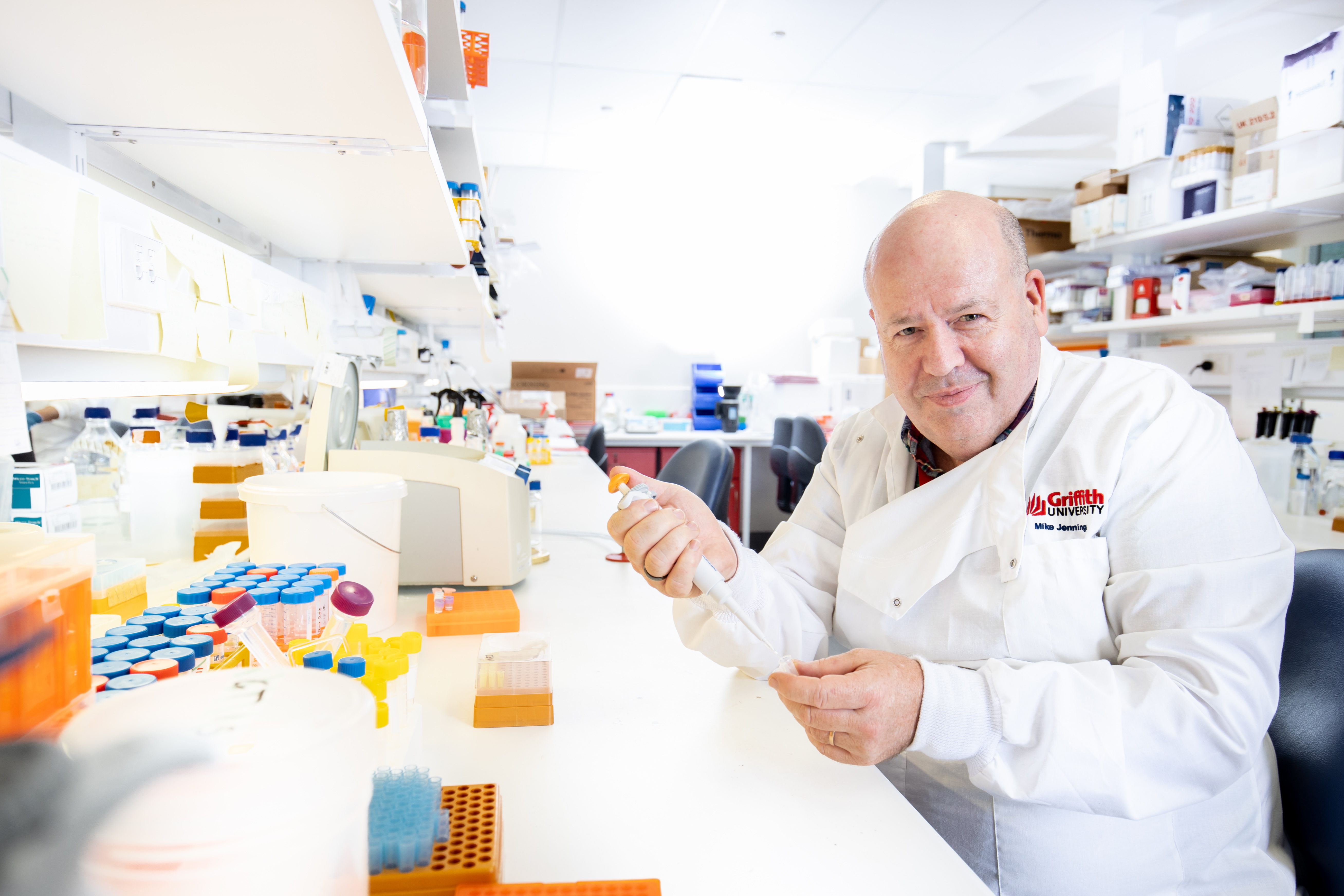
A possible early detection test for ovarian cancer?
Professor Jennings acknowledges the pressing need to find a tool for early diagnosis of ovarian cancer. “Many people are diagnosed with late-stage disease because the symptoms are not very obvious,” he says. “In my dealings with OCRF, they’re terrific – the role they play in lobbying for better treatments and early diagnosis.
If you could diagnose everyone at an early stage, the prospects for a successful outcome would be significantly improved."
Neu5Gc and other carbohydrate biomarkers have not previously been explored for ovarian or other cancers because of a lack of specific detection tools, Professor Jennings says. “Glycoscience is still an emerging field, but our institute is at the forefront of research in this area.”
Want to learn more? Read more about the OCRF's research strategy here.
This article has been reviewed and approved by Professor Michael Jennings.