ABOUT US
Learn more about why the OCRF exists and our expertise in ovarian cancer research.
WHY WE EXIST
FUNDING OVARIAN CANCER RESEARCH TO SAVE LIVES
Ovarian cancer kills three women in Australia every day. It is the most lethal female cancer. This year, around 1,815 Australian women will be diagnosed with ovarian cancer. Only 49% of these women will still be alive in five years.
Despite the tragic human cost in terms of women and girls’ lives lost and families devastated, ovarian cancer research remains critically underfunded. As a result, not enough progress has been made in the last 45 years to prevent, detect and treat ovarian cancer. This is unacceptable.
IMPROVING OVARIAN CANCER SURVIVAL RATES
The Ovarian Cancer Research Foundation (OCRF) was established to address part of this funding gap. We fund research that is often unable to access funding from other sources because it is in early stages.
The majority of ovarian cancer research seeks to understand disease development and progression. The OCRF funds researchers who investigate cutting edge techniques for early detection and improved treatment to slow or stop disease progression.
In short, the OCRF exists to improve survivability for women and girls facing an ovarian cancer diagnosis.
ADVOCATING FOR CHANGE
The five-year survival rate for ovarian cancer is 49%, compared with 92% for breast cancer, 84% for uterine cancer and 74% for cervical cancer.
Improvements in survival rates for breast cancer came from dedicated research, early detection tests, public campaigns and advocacy. We should be proud that the federal government and Australians were steadfast in standing up for women with breast cancer. Now it’s ovarian cancer’s turn. Women and girls have waited too long.
Raising awareness is not enough to save lives. Ovarian cancer symptoms are often vague and many women have no apparent symptoms until the cancer has spread – and in most cases it’s too late to treat effectively. In fact, an advanced stage disease diagnosis has a five-year survival rate of just 29%.
That’s why the OCRF is fighting this deadly disease in the lab. We fund research that will have the greatest impact on the largest number of Australian women and girls. Our research helps those living with ovarian cancer today – and will save the lives of mothers, daughters, sisters and friends tomorrow.
We are also proud to have played a role in growing future opportunities for researchers through our advocacy work, which succeeded in generating significant government investment in the early detection and prevention of ovarian cancer through the National Women’s Health Strategy 2020–2030.
DEVELOPING EFFECTIVE EARLY DETECTION OF OVARIAN CANCER
The lack of an early detection test for ovarian cancer remains the biggest barrier to improving survival rates. We have screening tests for early detection of breast and cervical cancer. But a cervical screening test (‘Pap Test’ or HPV Test) does not detect ovarian cancer. And there’s nothing – yet – to detect ovarian cancer in its early stages.
State of the Nation in Ovarian Cancer: Research Audit
The State of the Nation in Ovarian Cancer: Research Audit found that early screening could save the lives of more than 8000 Australian women and 1.3 million worldwide over a decade.

MORE ABOUT US
Governance
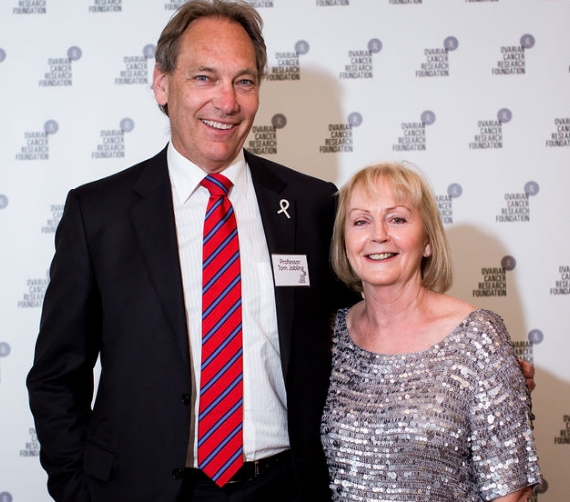
The OCRF is governed by a Committee of Management supported by four expert subcommittees.
History of the OCRF
Learn about our founders and the progress we’ve made from humble beginnings.

Annual Reports & Publications
Read all of our recent achievements as a community.

Get the latest news, stories & updates.
