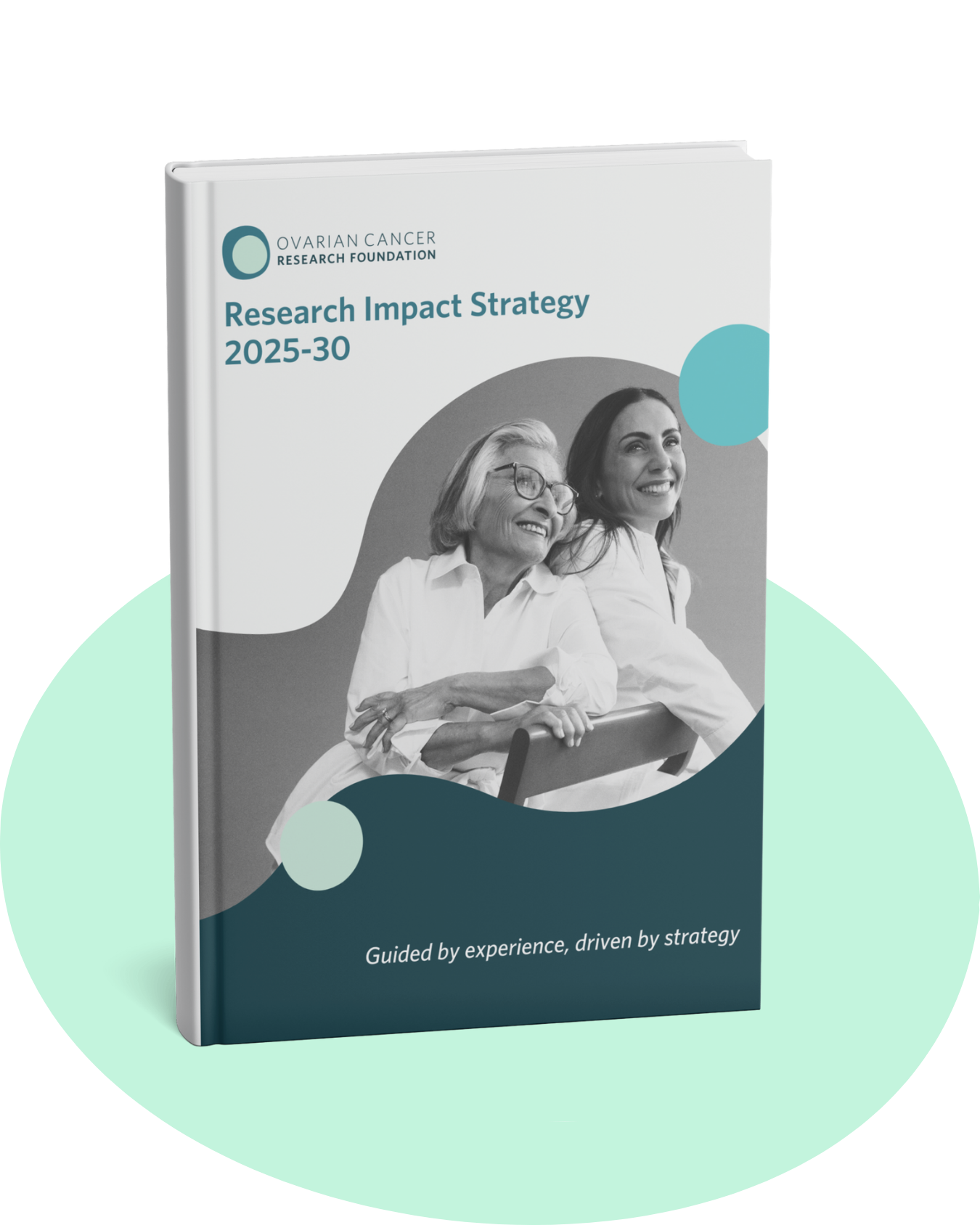
Research Impact Strategy 2025-30
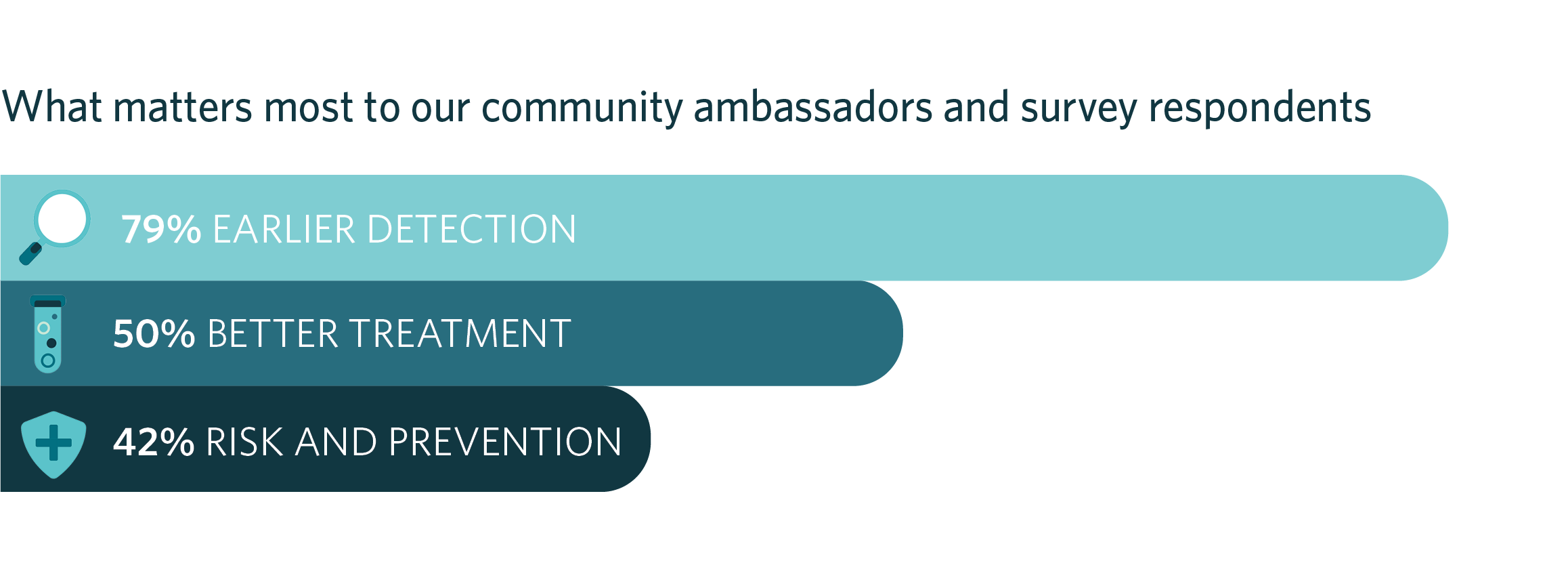
As Australia’s leading voice on ovarian cancer research, the OCRF consulted with over 420 stakeholders, including 362 people with lived experience and 60 researchers, to devise a strategic research plan that prioritises what matters most to those who know the issues best.
Their answers were categoric: earlier detection, more effective treatments, and prevention.
These three focus areas are the central objectives of the OCRF’s Research Impact Strategy — our roadmap to faster progress built on evidence, scientific excellence, genuine collaboration, and an unequivocal commitment to gender equity in research.
Why this matters
Ovarian cancer is the most lethal gynaecological cancer in Australia. It’s a complex disease that will require multiple modes of detection, innovative treatment options, and increased investment in prevention approaches to improve outcomes. The ovarian cancer community has suffered from structural underfunding and addressing gender inequity is an urgent health priority including barriers for First Nations women, those living in rural and remote areas, people from culturally and linguistically diverse (CALD) communities, members of the LGBTQIA+ community, and those with limited financial or social support.
Every advance to date has been hard won by determined researchers. Yet, the field remains under-researched and under-resourced. We need more research, and we need it now. That’s why the OCRF is working to build the scale needed to change the story.
The facts we can't ignore
Ovarian cancer received less than 1% of Australian government medical research funding in the past 15 years despite being the most lethal gynaecological cancer.

Survival gaps* remain—49% 5-year survival for ovarian cancer versus 92% for breast cancer, 84% for uterine, 96% for prostate, 94% for melanoma. These higher survival rates are the clear result of sustain research and appropriate investment. *October 2025

Legacy of impact:
Founded in 2000 the OCRF is the largest independent funder of ovarian cancer research in Australia, second only to the Australian Government and it fills a critical gap, the only targeted funder of ovarian cancer discovery research.
Evidence-driven strategy
The OCRF is sincerely grateful to the 400+ people whose insights directly guided this strategy, including people with lived experience, researchers, policy-makers and representatives from peer organisations. We asked patients, survivors, carers, high-risk individuals what research areas mattered to them and whether they’d like to be involved in research—an overwhelming 81% said yes!
From consultations with more than 60 scientists, clinicians, and academics, we heard a clear story about what’s holding research back: career instability, fragmented infrastructure, lack of access to samples and data, and sustained funding. The lived experience community and researchers have given us renewed focus. The new strategy directs how we will fund vital research, advocate, share knowledge and expand collaboration.
Research Impact Strategy: Full Report
Lived Experience of Ovarian Cancer: Insights Report
Academic Sector Engagement: Insights Report
Research objectives: priorities with purpose
The Research Impact Strategy 2025–30 objectives focus our efforts where they can make the greatest impact. Our three research objectives are: detect ovarian cancer earlier; improve treatment outcomes; and prevent the disease altogether. Together, they give us a path to progress — so we can deliver the outcomes that matter most.
The challenge:
There is no method of testing or screening for ovarian cancer - yet. More than 70% of people with ovarian cancer are diagnosed with advanced-stage disease – when treatment is harder, recurrence is common, and outcomes worsen.
The opportunity:
Researchers are making headway in developing new tools—from blood-based biomarkers and exosome panels to better imaging and triage systems. But these innovations require consistent long-term investment and validation to translate into real-world care.
OCRF strategic focus:
We support research that makes earlier detection more accurate and accessible, and we fund the biobanking infrastructure that underpins this, as well as other types of research.
“Early detection may have allowed my mum to have had her cancer caught in stage 1 or 2 and not stage 4. While she beat the cancer off twice, it came back — so the prevention of recurrence is vital.” Lived experience survey respondent
The challenge:
Ovarian cancer treatment hasn’t kept pace with progress in other cancers. Chemotherapy and surgery remain the standard, but they can be blunt and invasive tools with harsh side effects, limited effectiveness for some ovarian cancer subtypes, and a high chance of recurrence remains.
The opportunity:
There’s growing potential to personalise treatment and manage recurrence — including managing recurrence — using genomics, immune-oncology, and targeted drug development. Research is also uncovering ways to repurpose existing therapies and improve quality of life.
OCRF strategic focus:
We fund bold, patient-centred research into more effective and less toxic treatments — and help bring promising new options closer to clinical use.
“I’m tired of having to choose between a long life and a good quality of life.” Lived experience survey respondent
The challenge:
We still don’t fully understand what causes ovarian cancer or how to prevent it. For people with known genetic risk, preventative options are limited and invasive. Removing the fallopian tubes during other surgeries (opportunistic salpingectomy) reduces risk but doesn’t prevent all disease subtypes.
The opportunity:
Research into inherited mutations, hormonal and environmental factors, and early disease development can help people make informed choices and reduce personal risk — now and into the future.
OCRF strategic focus:
We support prevention science — from investigating the origins and progression of ovarian cancer to identifying genetic, environmental and modifiable risk factors. This research enables personalised risk prediction and informed decision-making. Prevention isn’t a future hope — it’s an active research focus and a vital part of our strategy.
“Because I have two daughters and two granddaughters who may be at risk... prevention [research is essential]. Knowing the risks is important to me.” Lived experience survey respondent
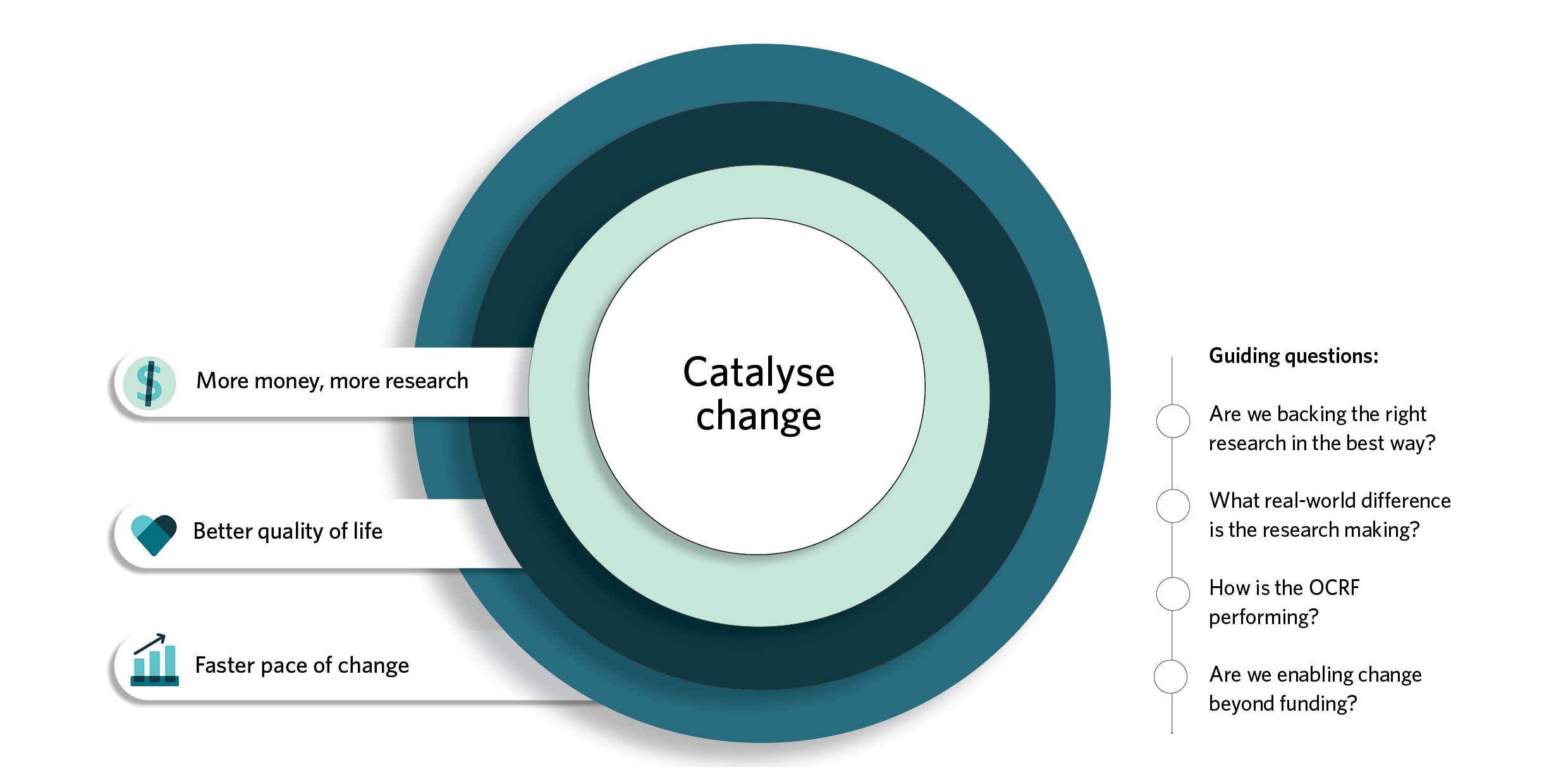
Targeted research programs: More. Better. Faster.
The OCRF supports not just the science but the systems, people, and partnerships that help research succeed. We will deliver three interconnected programs: funding, knowledge sharing and advocacy. These programs, designed for measurable and enduring impact, are supported by collaborative effort, scientific expertise, and lived experience —strengths enabling us to deliver better outcomes for the community
Here’s how we’ll get catalyse change!
Funding
The OCRF will support bold and credible science, across the ovarian cancer continuum, through OCRF’s National Research Grants Program.
A new Partnership Grants Program will support large-scale, multi-institutional research, encourage collaboration across disciplines; connect and foster national and international expertise.

Knowledge Sharing
We know research progresses faster when people and ideas are connected.
Therefore, the OCRF will strengthen the research ecosystem by sharing evidence through hubs, networking, webinars, community workshops, symposia and digests.

Advocacy
The OCRF will champion the need for increased research investment, policy change, and practices that reflect the evidence and can improve equity for the ovarian cancer community and transform outcomes.
We will support our community with lived experience to contribute to national conversations to drive change to improve and save lives for this generation and the next.

How we will measure progress and impact
By the end of the decade, successful delivery of this strategy should result in:
- Connected, collaborative research at an accelerated pace.
- Greater number of effective collaborations, partnerships and alliances.
- Greater equity in who leads and participates in ovarian cancer research.
Research developments that we expect to see from this strategy include:
- Promising early detection tools are moving closer to clinical use.
- New treatments that are more effective and less toxic, with less recurrence.
- Stronger options for prevention and personalised risk assessment.
Statement on the use of gendered terms within the strategy
Throughout this strategy, we use the term ‘women’ in recognition of the significant burden of ovarian cancer on women’s health. However, we acknowledge that ovarian cancer can affect all people with ovaries, including but not limited to transgender men, non-binary people, gender diverse, and intersex individuals.

Get the latest news, stories & updates.
