ABOUT US
Learn more about why the OCRF exists and our expertise in ovarian cancer research.
HISTORY
OUR FOUNDERS
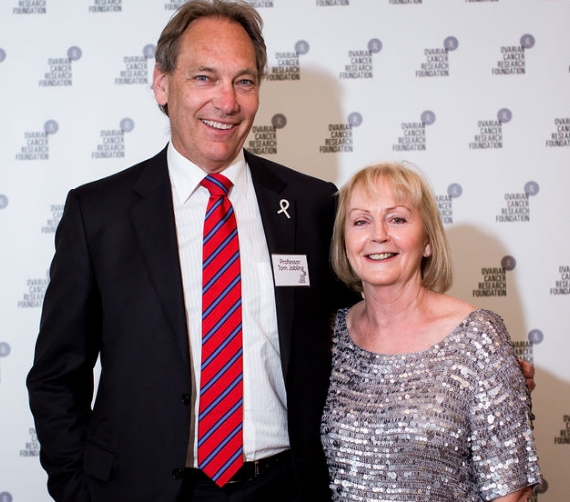
The Ovarian Cancer Research Foundation (OCRF) was founded by Professor Tom Jobling and Liz Heliotis in 2000.
Professor Jobling, one of Australia's leading ovarian cancer oncologists, had grown frustrated with the lack of direct funding for ovarian cancer research. He saw many of the women that he treated experience the same cucle of surgery , chemotherapy, a brief period of respite, then a series of recurrences until the disease eventually took their lives. Professor Jobling resolved to change the status quo - and so the OCRF was established.
Liz Heliotis was inspired to bring ovarian cancer into the consciousness of more researches, women, philanthropists and the wider community after sharing a ward with many women living through the reality of ovarian cancer. Learning that there is no early detection test for ovarian cancer, Liz connected with Professor Tom Jobling in developing the Ovarian Cancer Research Foundation. The White Shirt Campaign is a testament to Liz's lasting legacy of developing key partnerships.
The OCRF model was developed to provide ovarian cancer researchers with access to funding that simply wasn't available elsewhere. Large financial supporters such as Witchery were engaged and asked to commit to a sustained period of support that helped the first ovarian cancer research projects get off the ground. The goal was to attract more researchers to focus on ovarian cancer and specifically, to investigate early detection targets as the primary method to improve survivability.


OUR BEGINNING
The OCRF’s first funded research was conducted at Prince Henry’s Institute of Medical Research (now the Hudson Institute of Medical Research). As funding opportunities grew, so did the pool of research projects seeking grants. Over time, the OCRF refined the parameters of our funding process around three research pillars:
- Prevention
- Detection
- Treatment
To ensure that the most promising research projects were selected, the OCRF appointed a panel of global and Australian experts to assess all grant applications, provide recommendations on which projects met the criteria for funding and to continue to review projects as they moved through their milestones.
Research process
Many of the early research projects sought to understand disease biology. OCRF-funded research contributed to significant knowledge around the basic biology of ovarian cancer. This includes better understanding of disease subtypes, cancer origin, cancer growth and spread. This foundational understanding is paving the way for future research.
Several discoveries have been made by OCRF funded researchers over the past 20 years. These include the discovery of potential biomarkers such as the hormone inhibin and the CXCL10 protein, the ROR1 and ROR2 proteins as potential drug targets, a multi-marker exosome panel for the early detection of ovarian cancer, as well as an autoantibody with potential application in early detection.
More about us
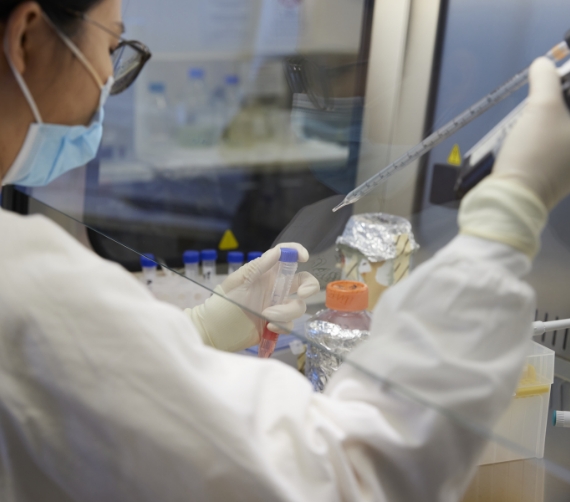
Why We Exist
Learn more about why the OCRF exists in Australia and how we’re tackling ovarian cancer.
Governance
The OCRF is governed by a Committee of Management supported by four expert subcommittees.

Annual Reports & Publications
Read all of our recent achievements as a community.

Get the latest news, stories & updates.
