Could ovarian cancer be stopped before it even begins? Risk and prevention symposium highlights that better understanding individual risk is the first step
Reading time: 2.5 minutes
Assessing individual risk of cancer and mapping your own web of risk factors is no easy task. Beyond understanding personal medical histories, it requires keeping up to date on latest research — the Ovarian Cancer Research Foundation (OCRF), recently bought researchers and community together to help with the latter.
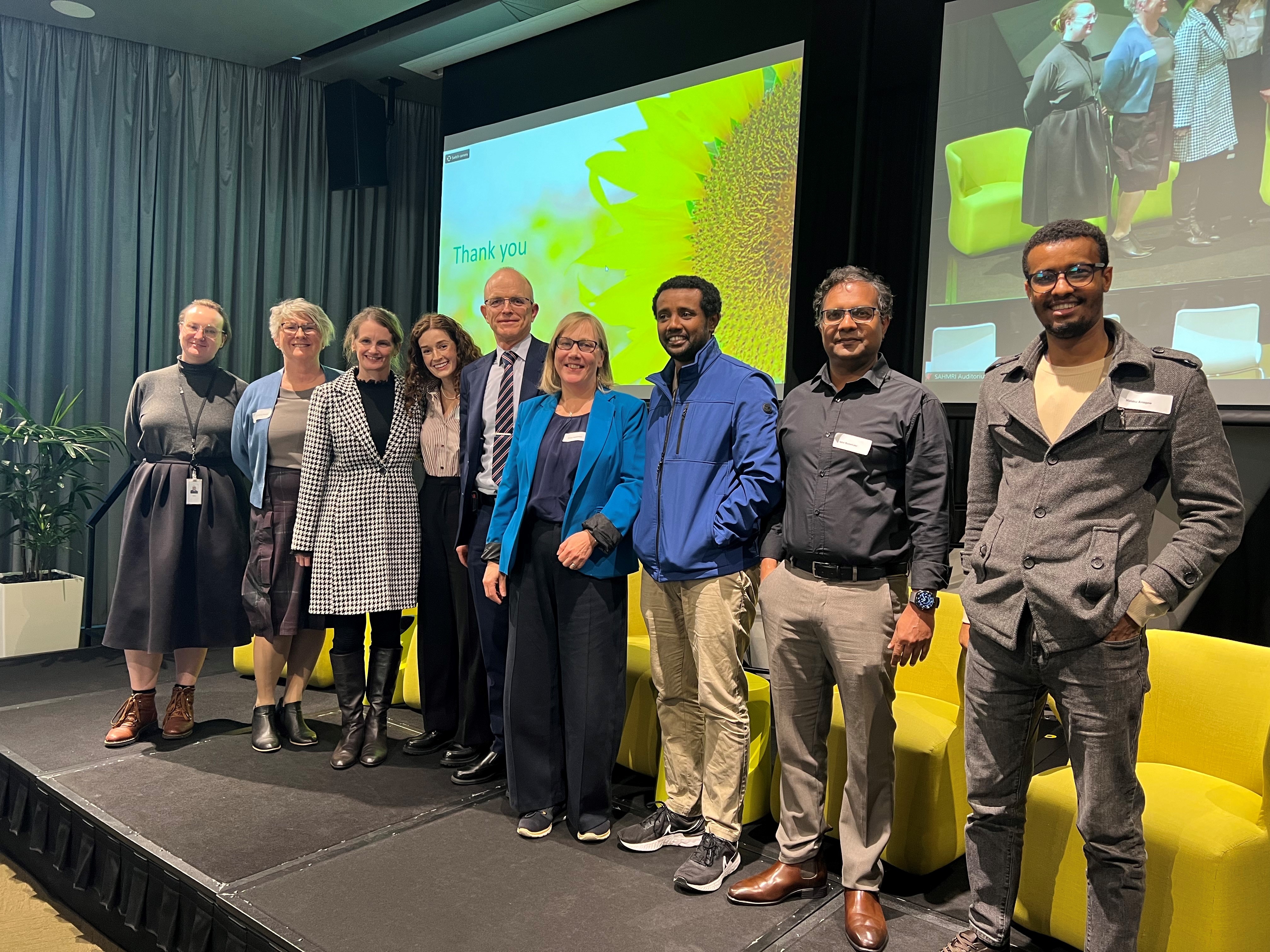
Image provided by Prof. Elina Hyppönen (Centre) of her research team and presenters.
Sponsored by the OCRF A Public Symposium: Prediction in Ovarian Cancer was held last month. The afternoon saw South Australian researchers, clinicians and community come together to share findings on risk factors and prevention strategies with the ovarian cancer community.
Lived experience leads to better research
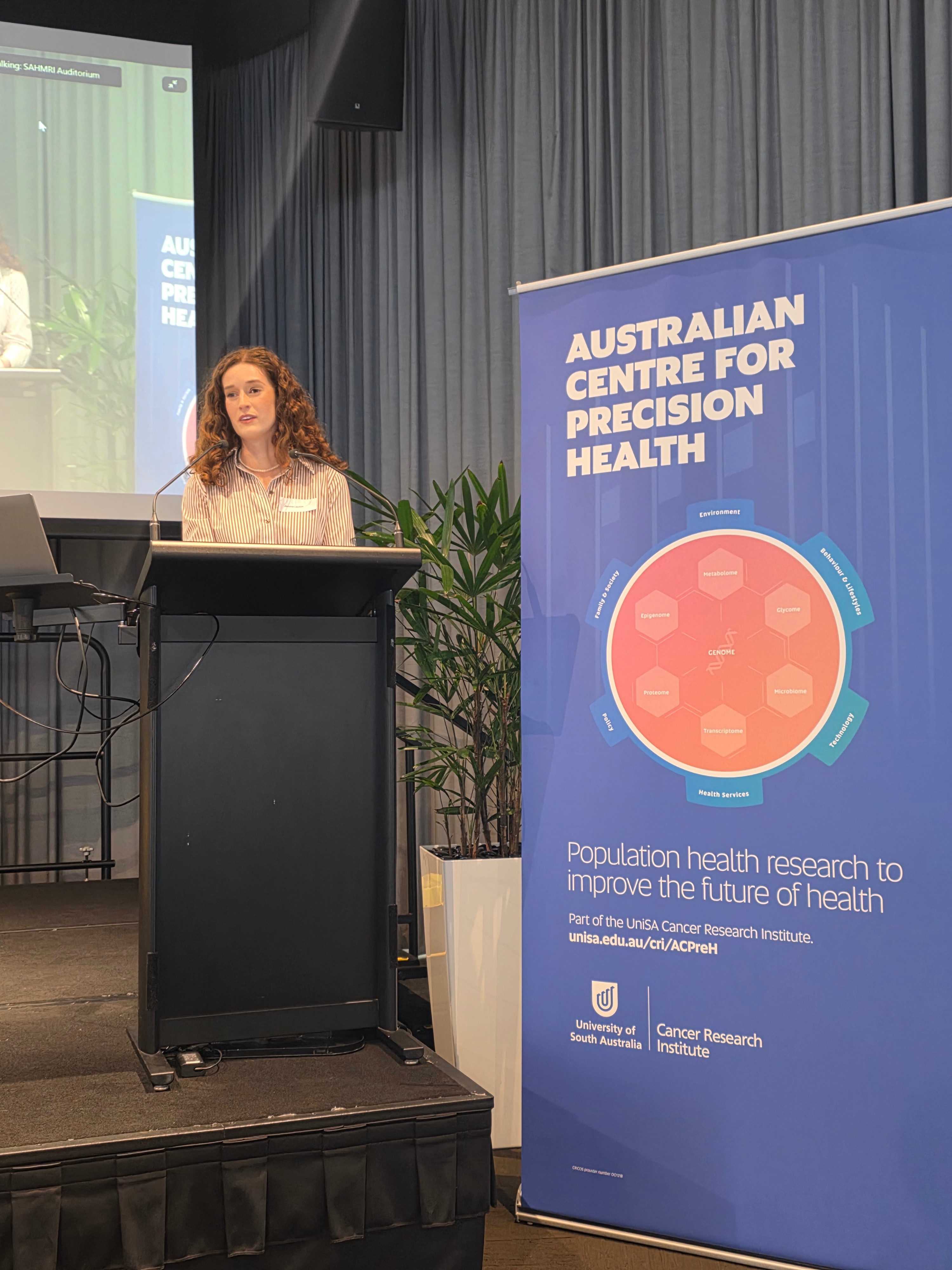
Expertly chaired by OCRF Ambassador, Ovarian Cancer Survivor and member of the OCRF’s Lived Experience Advisory Panel, Jemima Leydon emphasised, "It was very special to be part of this symposium showcasing the hard work of an incredible team of researchers. The event highlighted the critical role of research in improving outcomes for those diagnosed with ovarian cancer. This work in particular gives me hope that with continued advances in knowledge, we will see earlier detection and more lives saved."
Jemima and Jacinta Frawley shared important personal stories with the group, speaking of their diagnosis experiences and reflections on the liminal space and stressful waiting periods between treatments. These moving experiences emphasised the importance of ovarian cancer prevention and empowering the community with better information on risk factors.
Image provided by Jemima Leydon
Latest research on ovarian cancer risk
Professor Elina Hyppönen, from the University of South Australia shared that her preliminary studies had shown that, unlike many other cancers, ovarian cancer risk didn’t seem to reduce significantly when healthy lifestyle guidelines were followed — why?
This question catalysed Professor Hyppönen and her team, including Jemima and Jacinta, to harness the power of AI to identify ovarian cancer risk factors by analysing over 2900 genetic, lifestyle and environmental factors such as age, socio-demographics, medical history, biomarkers like hormones and more.
They found that of the top 87 ranked factors oral contraceptive use and having more children were among the factors that could reduce risk of ovarian cancer, acknowledging that medication use should be considered with a medical practitioner and an individual’s unique medical profile. Their findings were published in the International Journal of Gynaecological Cancer in January.
Professor Hyppönen confirmed that their large-scale study continues with work to build risk factor and symptom profiles on ovarian cancer. They hope to develop a digital tool to identify risk in a broader population, leading to fast-tracked diagnosis.
Professor Martin Oehler discussed risk management strategies available, which mostly involves risk-reduction surgery. As a clinician and a researcher at the Royal Adelaide Hospital, he sees ovarian cancer in the clinic every day and takes a tailored approach to risk-reduction where possible, highlighting side effects of surgery including medically induced menopause and osteoporosis. He is keeping an eye on the TUBA WISP II trial, which is investigating if removing only fallopian tubes — to delay side effects of removing ovaries straight away — then removing ovaries later, has a similar overall risk reduction to upfront ovary and fallopian tube removal. If this is the case, it could mean an additional option for those at high-risk to delay side effects like surgically induced menopause.
“Understanding risk can help people make informed choices,” said OCRF Research Director David Hunt, indicating that, while there’s a long way to go, symposiums like these are important to ensure emerging evidence is shared to better inform the community.
“People with a lived experience are passionately and selflessly invested in a future where others don’t have to go through the same thing. Today, their stories highlighted how important this research is.”
We look forward to sharing more updates as these, and other important risk and prevention studies, progress.
Read more about risk factors.

Get the latest news, stories & updates.
