Global Ovarian Cancer Research Consortium announces US$1M+ AI grant with Microsoft recipients
February 18, 2026

- $2.8 million* global investment to harness AI for ovarian cancer treatment: The inaugural AI Accelerator Grant from the Global Ovarian Cancer Research Consortium combines $1.4 million in research funding with $1.4 million in cloud compute support from Microsoft’s AI for Good Lab.
- Groundbreaking international collaboration: Leading researchers from the United States, Australia, Canada and the United Kingdom will apply advanced AI models to one of the largest ovarian cancer datasets ever assembled. The researchers will examine whether artificial intelligence (AI) can improve how survival and treatment responses are predicted in ovarian cancer.
- Personalised treatment potential: Using AI to reveal patterns in tumour, clinical, and genetic data, the project aims to help researchers and doctors to more accurately predict treatment response, reduce side effects, and improve survival outcomes for women worldwide.
Following a competitive international call for submissions, the Global Ovarian Cancer Research Consortium (GOCRC) today announced the recipient of their inaugural AI Accelerator Grant.
The successful project, AI to Predict Exceptional and Poor Survival from Real-World Biomarkers for Clinical Application, focuses on high-grade serous ovarian cancer (HGSOC), the most common and deadly form of the disease. Despite advances in treatment, clinicians still have limited ability to predict how an individual’s cancer will behave or which therapies are most likely to be effective.
The AI Accelerator Grant is a $1.4 million (USD $1M) global research award, with an additional $1.4 million (USD $1M) in compute support from Microsoft’s AI for Good Lab.
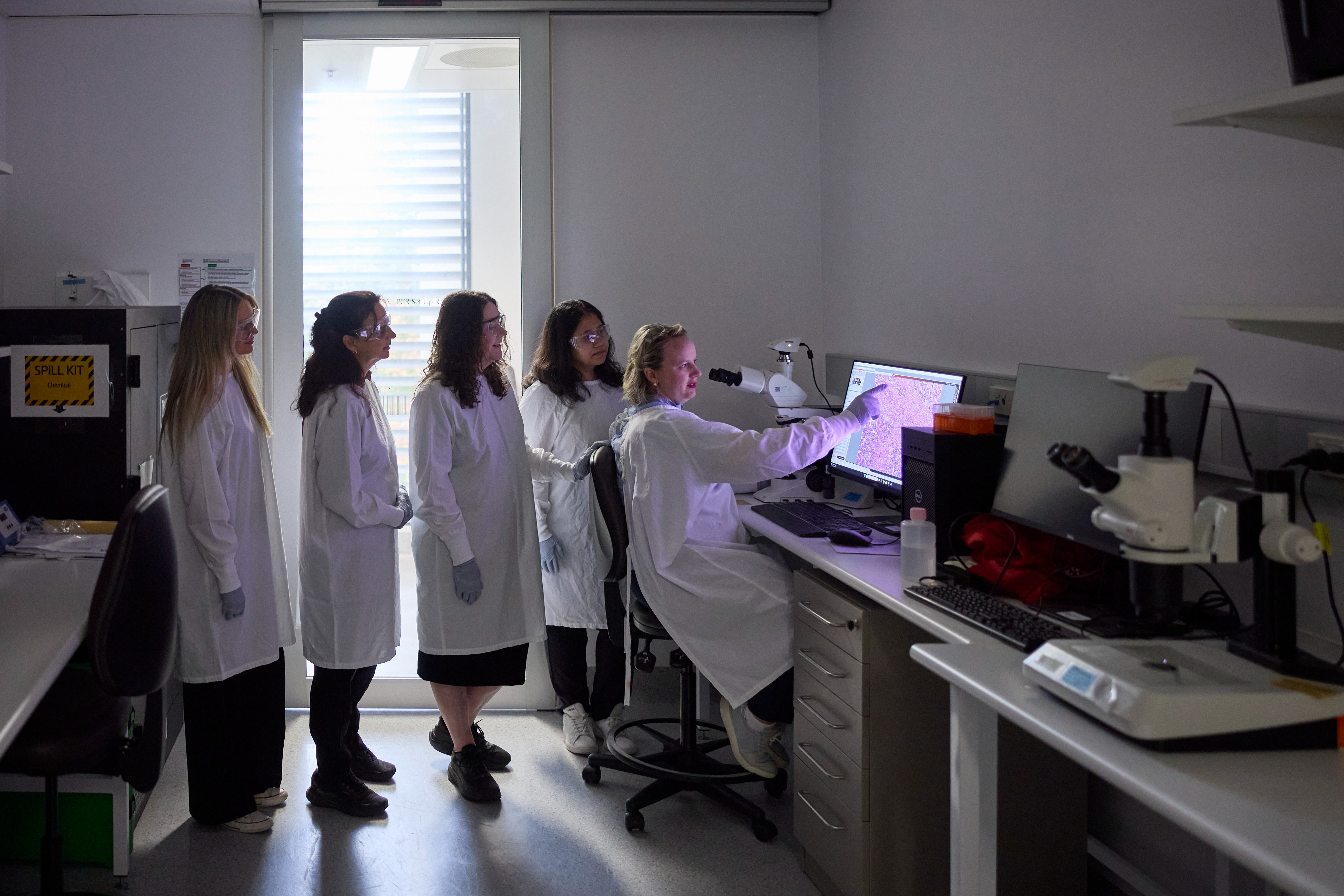
Pictured: Professor Susan Ramus and her team at UNSW
International collaboration to accelerate progress
The large research team behind the successful project is led by experts from four countries, representing epidemiology, molecular oncology, artificial intelligence, and clinical medicine, bringing complementary skills to the project:
- Dr. (Celeste) Leigh Pearce, Lead Researcher, Professor, Rogel Cancer Center and Department of Epidemiology, University of Michigan, United States;
- Professor Susan Ramus, Professor in the School of Clinical Medicine and Lead, Molecular Oncology Group, University of New South Wales Sydney, Australia;
- Dr. Ali Bashashati, Director of Artificial Intelligence Research, Ovarian Cancer Research Program (OVCARE), University of British Columbia, Canada; and
- Professor James Brenton, Professor of Ovarian Cancer Medicine, Senior Group Leader and Honorary Consultant in Medical Oncology, University of Cambridge, United Kingdom.
In total, researchers from 10 institutes are involved, including three more from Australia: Peter MacCallum Cancer Centre, QIMR Berghofer Medical Research Institute and Westmead Institute for Medical Research, as well as an Australian lived experience advisor, Ms Bronwyn Grout.
The team will analyse one of the largest international collections of ovarian cancer data, combining tumour samples, clinical records, immune profiles, genetics, and lifestyle factors from thousands of patients worldwide. Using AI, they will identify patterns linked to survival and treatment response that current methods miss. The models will be tested in historical and modern patient groups, including those on new therapies, to develop decision-support tools for hospital use. By better matching patients to treatments and trials, the project aims to personalise care, reduce side effects, and improve survival for people with ovarian cancer.
Australian Chief Investigator on the project, Professor Susan Ramus from UNSW Sydney said:
“Despite robust data, conventional statistical models have had limited success identifying distinct markers of longer survival. The goal is to use AI to uncover more complex patterns and develop robust tools to personalise treatment and improve patient outcomes.”
Robin Penty, CEO of the Ovarian Cancer Research Foundation, the Australian partner in the GOCRC, said the nature of this grant offers the innovation that is so desperately needed for this devastating disease: “For too long, ovarian cancer has been left in the shadows – complex, underfunded, and devastating for too many women. This new project, enhanced by the generous support of Microsoft’s AI for Good Lab, could signal a turning point. By harnessing the best of artificial intelligence, scientific collaboration, and global philanthropy, we can finally start unlocking the answers that have held back progress for decades,” she said.
“February is Ovarian Cancer Awareness Month in Australasia. OCRF is proud to stand with our international colleagues at the forefront of this effort – because women deserve nothing less than bold research that drives real change and transforms survival outcomes worldwide.”
Harnessing technology to drive real change
Microsoft is generously partnering on this grant through its AI for Good Lab, donating up to $1.4 million in in-kind Azure compute credits to the project. This computing support will enable the research team to accelerate large-scale data analysis essential to the project’s goals.
“New discoveries are urgently needed to unlock lifesaving treatments for ovarian cancer,” said Juan Lavista Ferres, Microsoft Chief Data Scientist and Director of Microsoft’s AI for Good Lab. “This work demonstrates what becomes possible when deep scientific expertise is paired with cutting‑edge AI. By equipping leading researchers around the world with advanced AI tools and computing resources, we can accelerate their critical efforts that have the potential to save lives.
*Dollar values are expressed in AUD as at 17/2/26. The grant will be paid in USD $1 million plus USD $1 million in-kind from Microsoft’s AI for Good Lab.
About the GOCRC
The Consortium, formed in October 2024, brings together leading philanthropic ovarian cancer organisations: Ovarian Cancer Research Alliance (OCRA) (United States), Ovarian Cancer Research Foundation (Australia), Ovarian Cancer Canada (Canada), and Ovarian Cancer Action (United Kingdom). Their mission: to combine forces, resources, and determination to urgently accelerate progress. Supported by Microsoft's technological capabilities and expertise, the Consortium is poised to have a major impact on ovarian cancer research.
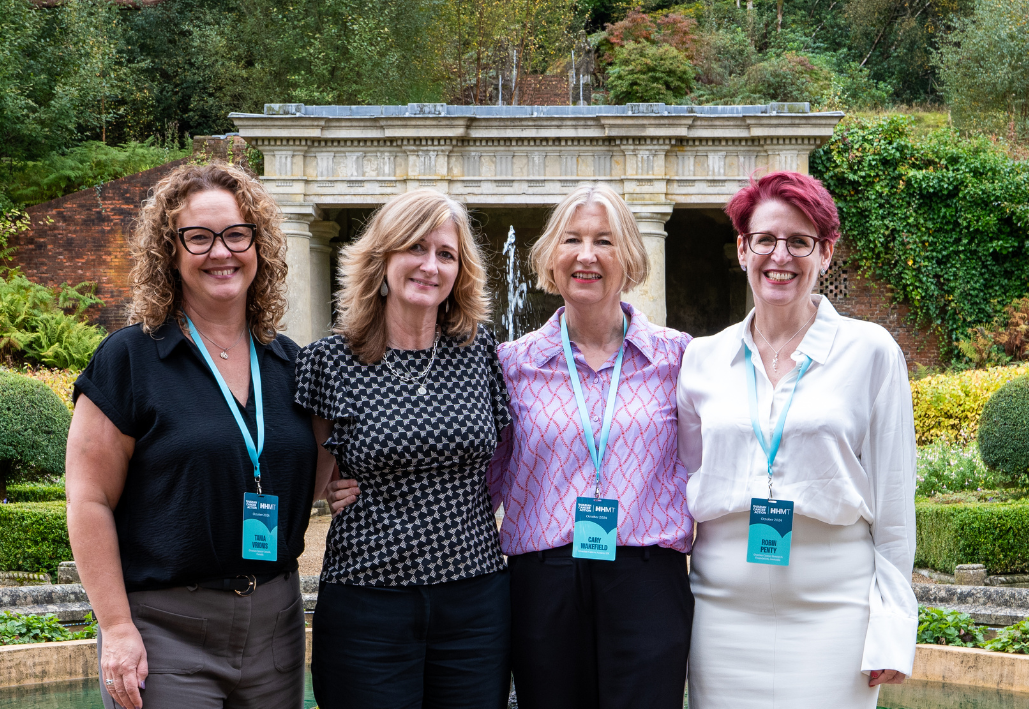
Pictured L-R: CEOs from the GOCRC organisations, Tania Vrionis, CEO, Ovarian Cancer Canada, Audra Moran, President and CEO, Ovarian Cancer Research Alliance, Cary Wakefield, CEO, Ovarian Cancer Action, and Robin Penty, CEO, Ovarian Cancer Research Foundation.

Get the latest news, stories & updates.
