Global roadmap sets urgent research priorities to improve ovarian cancer survival
May 08, 2026
A major new roadmap for ovarian cancer research has been published in Nature Reviews Cancer. Developed by 38 leading global researchers and informed by patient voices, the paper identifies five urgent priorities for improving survival in high-grade serous ovarian cancer (HGSOC). OCRF co-authored accompanying lay summaries with partner charities Ovarian Cancer Action (UK), Ovarian Cancer Canada, and Ovarian Cancer Research Alliance (USA).
Reading time: 3 minutes

A future where research discoveries become new treatments that reach patients faster, are more tailored to individuals , where early-stage diagnosis is possible and survivability is substantially increased, is the ambitious vision of a new global roadmap for ovarian cancer.
The roadmap, outlined in a landmark paper published in the journal Nature Reviews Cancer, highlights five urgent research priorities to improve survival of high-grade serous ovarian cancer – the most common form of ovarian cancer.
The roadmap is the culmination of work started in 2024 involving four international ovarian cancer research charities - Ovarian Cancer Action (UK), Ovarian Cancer Research Alliance (USA), Ovarian Cancer Canada, and the Ovarian Cancer Research Foundation (Australia) - that now make up the Global Ovarian Cancer Research Consortium (GOCRC). The roadmap draws on the expertise of 38 leading global ovarian cancer researchers and, importantly, the lived experiences of patients.
Five urgent research priorities
The roadmap, entitled Rethinking Ovarian Cancer III: The Past Decade and Future Directions, identified the following priorities for urgent global action to improve ovarian cancer survival:
- Prevention, initiation and early detection: improving risk reduction strategies and developing new tools to detect ovarian cancer earlier.
- Tumour ecosystem: understanding the environment surrounding cancers to inform more personalised treatment options.
- Immunity and immunotherapy: harnessing the immune system to fight ovarian cancer and identifying which patients are most likely to benefit.
- Resistance to current treatments: understanding how and why cancers stop responding to treatment and finding ways to detect resistance earlier.
- New therapies and better trial design: developing new targeted treatments and designing faster, smarter clinical trials that match therapies to the right patients.

What would success look like?
The roadmap envisions a future where new discoveries move more rapidly from laboratory to clinical trial – reaching patients sooner. Treatments would be better matched to the right patients, trials would be faster and more reflective of real-world care, and there would be a substantial increase in patient survival.
Critically, the roadmap emphasises stopping the repetition of research approaches that have not worked and building on those that have.
How did it come about?
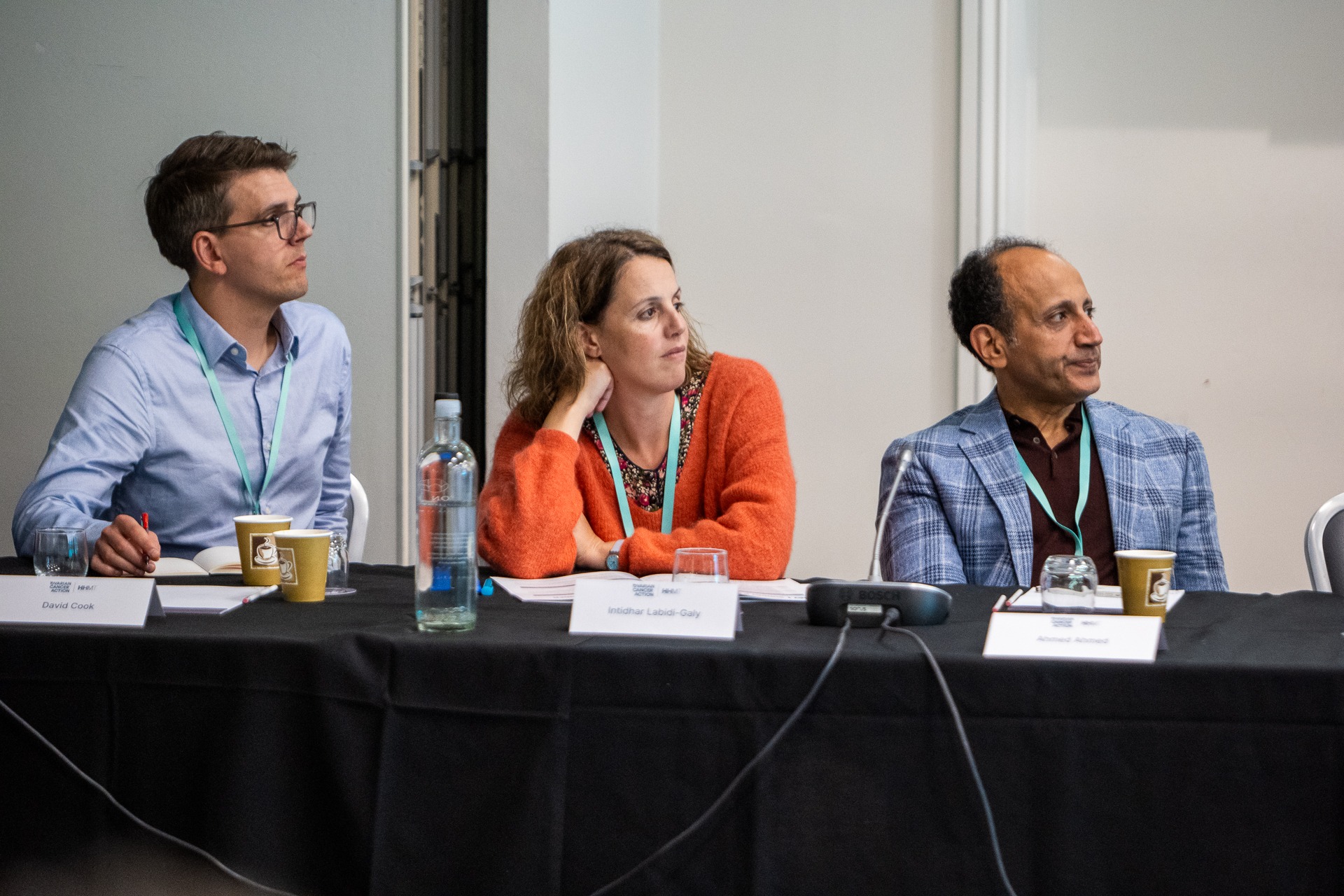
The roadmap emerged from the 15th Helene Harris Memorial Trust (HHMT) International Forum on ovarian cancer held in October 2024, which was co-sponsored by the four international ovarian cancer research charities. It is the third in a series of roadmap papers originating from the Forum. The previous two, published in 2011 and 2015, have together been cited more than 3,000 times by researchers worldwide.

What happens next?
The previous two roadmaps have shaped the direction of global ovarian cancer research. This third edition, strengthened by patient input and wider collaboration, will inform future funding decisions, influence trial design and research strategies, and shape conversations with policymakers and health systems globally. The goal is measurable change in survival outcomes for women with ovarian cancer.
Making the research accessible to everyone
Alongside the scientific paper, the four charity partners came together to create something that has never been done before for this series – patient-informed lay summaries that translate the roadmap into plain language. These summaries ensure that the research priorities shaping the future of ovarian cancer are not just accessible to scientists, but can be easily understood by patients, families and communities around the world.
These summaries are available below:
Lay Summary: Rethinking Ovarian Cancer III (Long version)
Lay Summary: Rethinking Ovarian Cancer III (Short version)
Why do we need a global roadmap for ovarian cancer research?
Ovarian cancer is the most lethal gynaecological cancer worldwide, with more than 324,000 women diagnosed each year. Because there is no reliable early detection test, many cases are found at an advanced stage when treatments are more difficult.
However, scientific understanding of this disease has advanced significantly in recent years. Therapies such as PARP inhibitors have already improved outcomes for patients with BRCA1 or BRCA2 mutations, and researchers are working to extend these benefits more broadly. At the same time, new approaches to earlier detection, overcoming drug resistance, new treatments, and preventing recurrence are gaining real momentum, making now a pivotal time for ovarian cancer research.

- Balkwill FR, Laumont CM, Burdett N, et al. Rethinking ovarian cancer III: the past decade and future directions. Nature Reviews Cancer. 2026. doi: 10.1038/s41568-026-00916-0
- BRCA1/BRCA2: Genes that help repair damaged DNA. When these genes are mutated, cells are less able to fix DNA damage, increasing cancer risk. These mutations also influence how well certain treatments, such as PARP inhibitors, work.
- Homologous recombination deficiency (HRD): A condition where cancer cells cannot properly repair DNA damage. Tumours with HRD are often more sensitive to platinum chemotherapy and PARP inhibitors.
Immunotherapy: A type of cancer treatment that helps the body's own immune system recognise and attack cancer cells. Several forms of immunotherapy are being explored in ovarian cancer, including immune checkpoint inhibitors, CAR therapy and cancer vaccines.
Initiation: The earliest stage of cancer development, when normal cells first develop the changes that set them on the path toward becoming cancerous.
PARP inhibitors: A class of drugs that block a DNA repair process in cancer cells. They are particularly effective in cancers with BRCA mutations or other DNA repair deficiencies.
Tumour microenvironment: The ecosystem of cells, blood vessels, structural tissue and molecules surrounding a tumour that can influence its growth, spread and response to treatment.

Get the latest news, stories & updates.
