Developing interferon epsilon as a novel immunotherapy for ovarian cancer treatment
Dr Campbell and her team aim to develop a new immunotherapy that targets high-grade serous ovarian cancer by focusing on a protein, naturally produced by the body, that can help activate the immune system: interferon epsilon (IFNε).
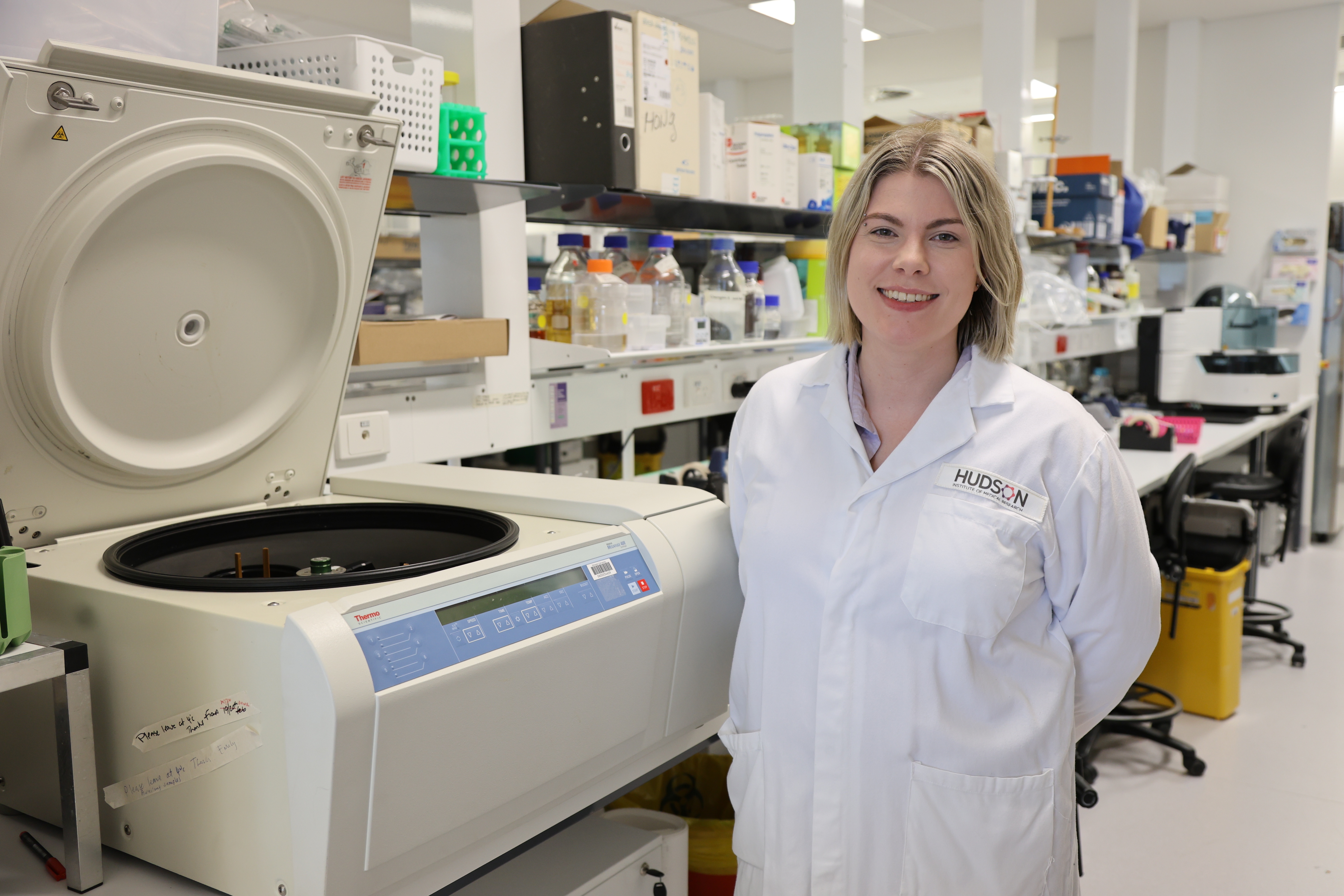
Lead researcher: Dr Nicole Campbell
OCRF research priorities: Finding new and effective treatments, Managing Recurrence
Grant received: $892, 212 over three years
Research institution: Hudson Institute of Medical Research
Image: Dr Nicole Campbell
Supported by the Mother’s Day Classic Foundation in association with the Ovarian Cancer Research Foundation.
Project Details
Dr Nicole Campbell is investigating how a protein naturally produced by the body, interferon epsilon (IFNε), could be harnessed as an effective immunotherapy to better treat high-grade serous ovarian cancer. This approach aims to target ovarian cancer cells that have metastasised (or spread), or that are resistant to currently available treatments.
Because many cases of ovarian cancer are diagnosed in the later stages, when the cancer has spread, the likelihood of it coming back, or recurring, after initial treatment is high and therefore this research could provide an important new treatment option for metastatic or recurrent ovarian cancer.
Immunotherapies that harness the power of the immune system against cancer, have previously been considered ineffective for ovarian cancer due to the ways the microenvironment surrounding ovarian cancers work to block immunotherapies.
In previous studies, overseen by Professor Paul Hertzog at the Centre for Innate Immunity and Infectious Diseases at the Hudson Institute of Medical Research, the team discovered how important the protein interferon epsilon (IFNε) could be in activating the immune system against cancer. IFNε is a type of signalling protein called a cytokine which occurs naturally in the body as an ‘immune booster’ and can limit the growth and survival of cancer cells. Cytokines are regulators that can help immune cells communicate with other cells and activate the immune system against ovarian cancer. Levels of IFNε in the female reproductive tract is regulated by hormones, with levels of IFNε becoming undetectable following menopause.
Dr Nicole Campbell later uncovered how IFNε prompted this anti-cancer response in ovarian cancer. Working with patient samples, in collaboration with Professor Clare Scott from the Walter and Eliza Hall Institute (WEHI), she found that while IFNε can directly inhibit the growth of ovarian tumour cells, many patient tumours were resistant to the treatment. However, because IFNε also acts on the immune system, it was able to control even resistant tumours by activating the anti-tumour immune response. Expanding on this exciting discovery, the team demonstrated in lab models that IFNε could be used as a treatment approach to stop ovarian tumours from spreading. They showed that IFNε did this by ‘re-programming’ the immune environment in the peritoneal cavity, blocking the immune cells that assist tumours to grow and activating the immune cells which can kill tumours.
Progress update: March 2025
OCRF funding will allow us to investigate several ways to optimise our interferon epsilon-based immunotherapy. We know it works well in the lab, but this project enables us to gather the data we need to begin taking it into the clinic, ensuring it’s effective, safe, accessible and ready to be tested in clinical trials.
Dr Nicole Campbell
Aims
This OCRF funded project will allow the team to determine how to develop this promising science into a feasible treatment that could be used in a clinic.
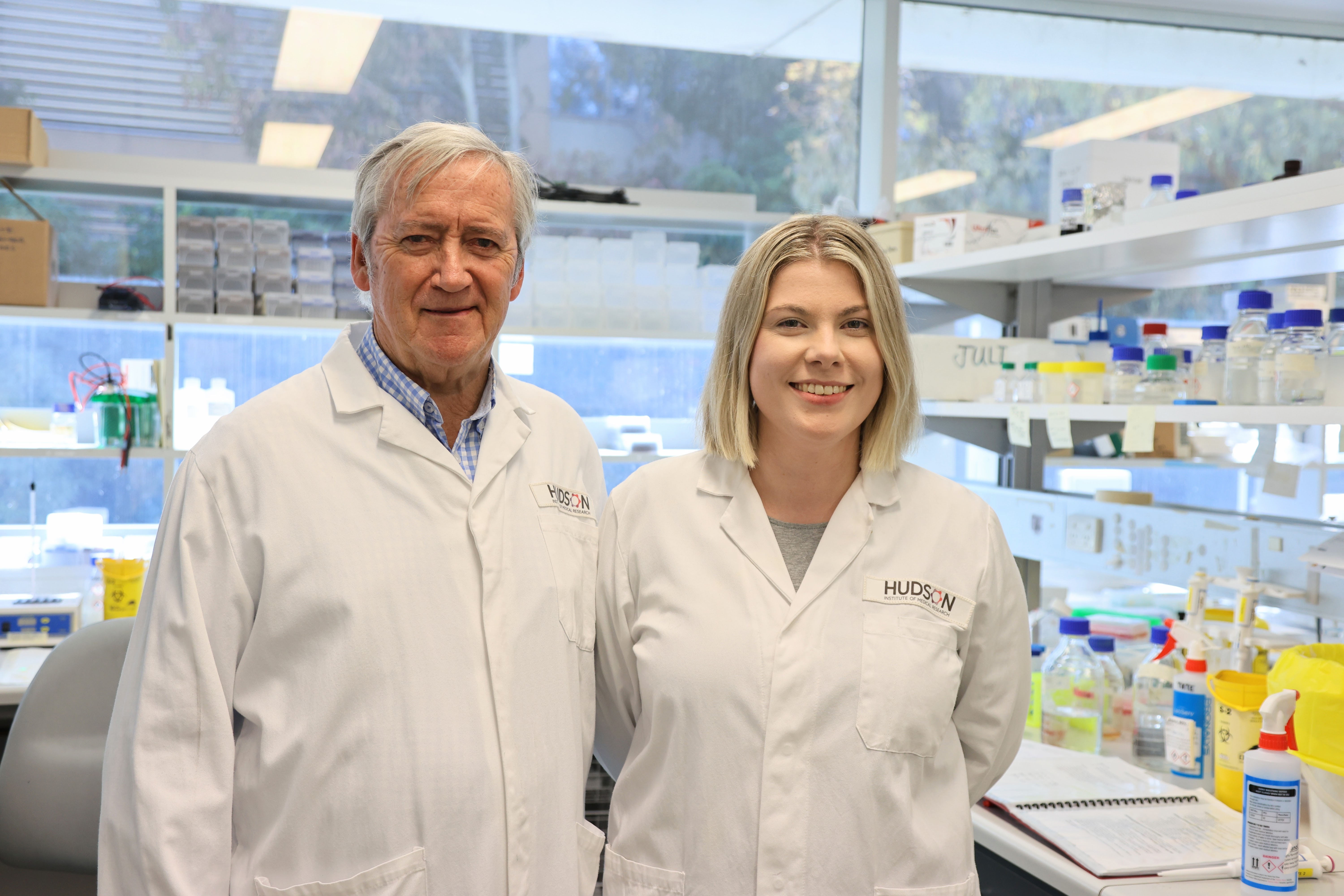
Image: Research Group Head Professor Paul Hertzog with Dr Nicole Campbell in the lab
Approach
Building on their previous work on IFNε, the team will use both lab models and patient samples in order to study the potential of IFNε as a treatment for ovarian cancer.
Ambition and outcomes
This project allows the team to optimise their IFNε immunotherapy and gather important data required to demonstrate its effectiveness and safety — providing a promising treatment approach to those with metastatic or resistant high-grade serous ovarian cancer.
Dr Campbell’s team may also identify biomarkers, or indicators, that tell them how well a patient sample is responding to the treatment, helping them identify which patients are most likely to benefit from the treatment.
With promising results following this project, the team hope this treatment could progress to a Phase 1 clinical trial within a few years.
Project status
This ovarian cancer research project is at the preclinical stage where researchers are conducting extensive studies in the lab with samples and models to verify the effectiveness of their approach as well as evaluating how safe it is likely to be for humans.
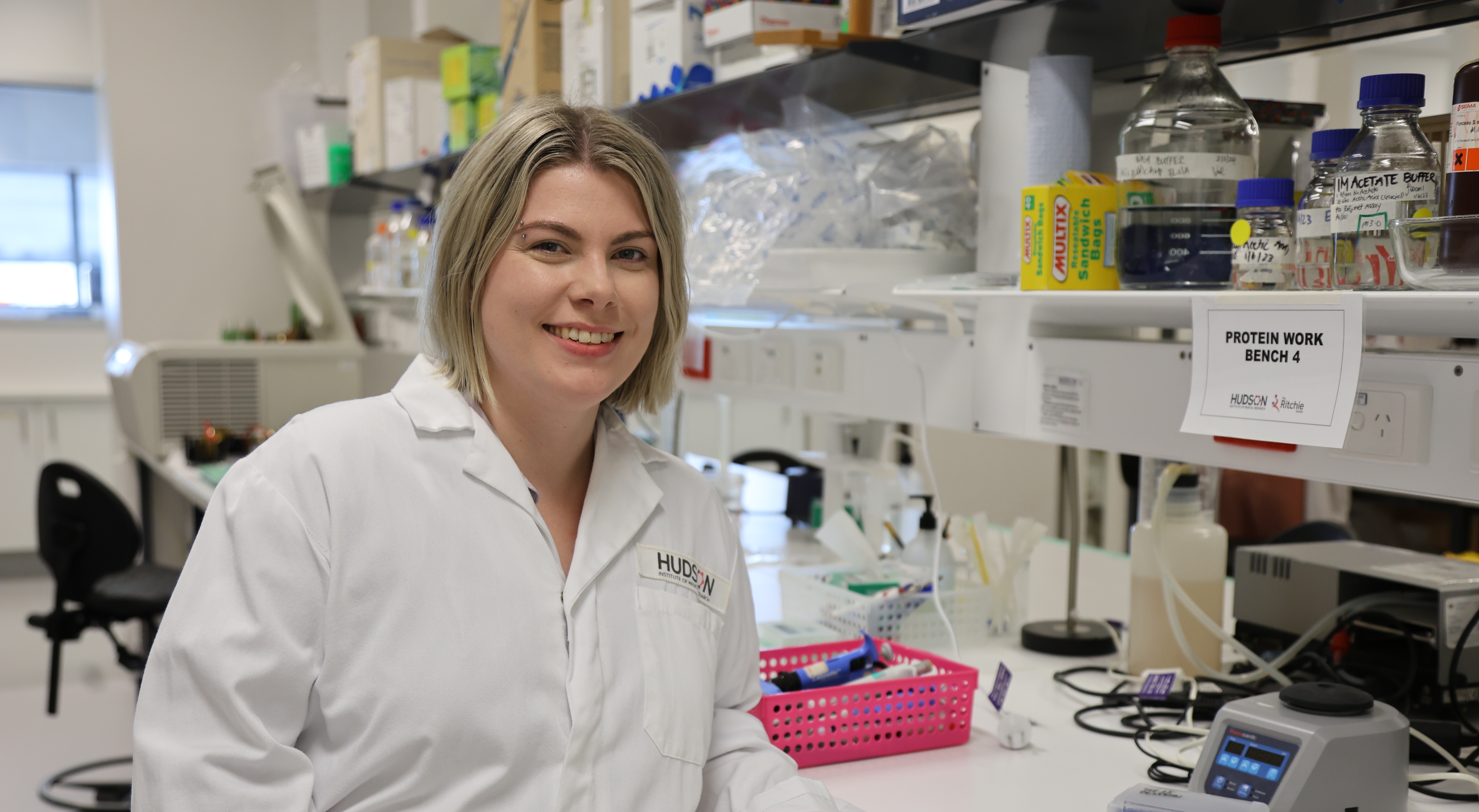
Image: Dr Nicole Campbell
Key terms
Immunology: The study of the immune system.
Immunotherapy: A type of cancer treatment that works by stimulating the immune system.
Read more
- Nature: Interferon-ε is a tumour suppressor and restricts ovarian cancer. Marks, Z.R.C., Campbell, N.K., Mangan, N.E. et al. (2023)

Get the latest news, stories & updates.
