OCRF donations elevate the next generation of ovarian cancer researchers — reflections from OCRF-funded PhD student Teharn Hegarty
Without the OCRF, PhD student Teharn Hegarty wouldn’t have spent the last three years advancing our understanding of a rare subtype of ovarian cancer called granulosa cell tumours, which can also impact younger women. This OCRF-funded position in Associate Professor Simon Chu’s lab at the Hudson Institute of Medical Research, has been a launchpad — cementing her career ambitions in ovarian cancer research and women’s health. We spoke with Teharn about the opportunities OCRF funding has afforded, and why community connection has been so inspiring.
Reading time: 2 minutes
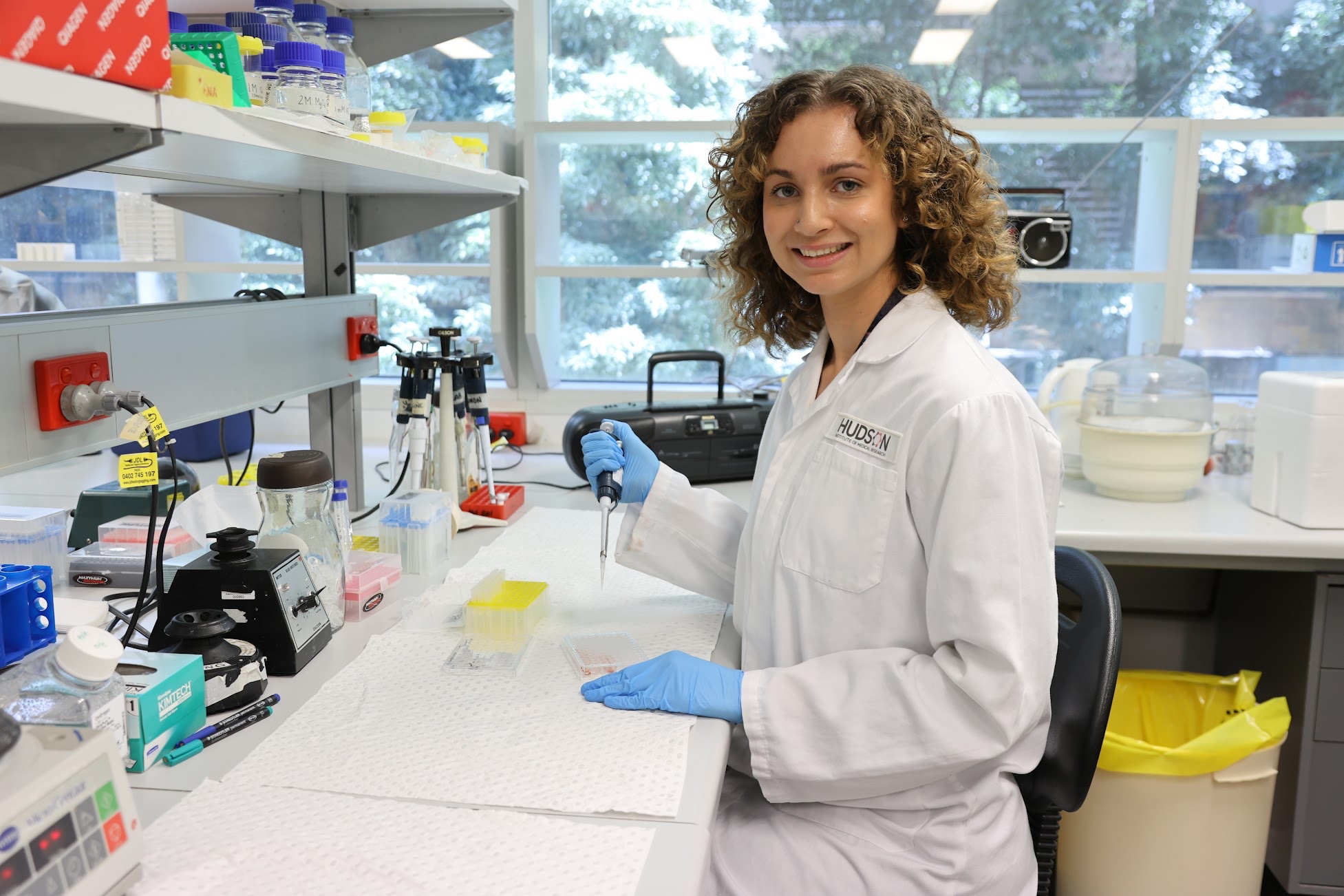
Tell us about your experience studying a rare ovarian cancer…
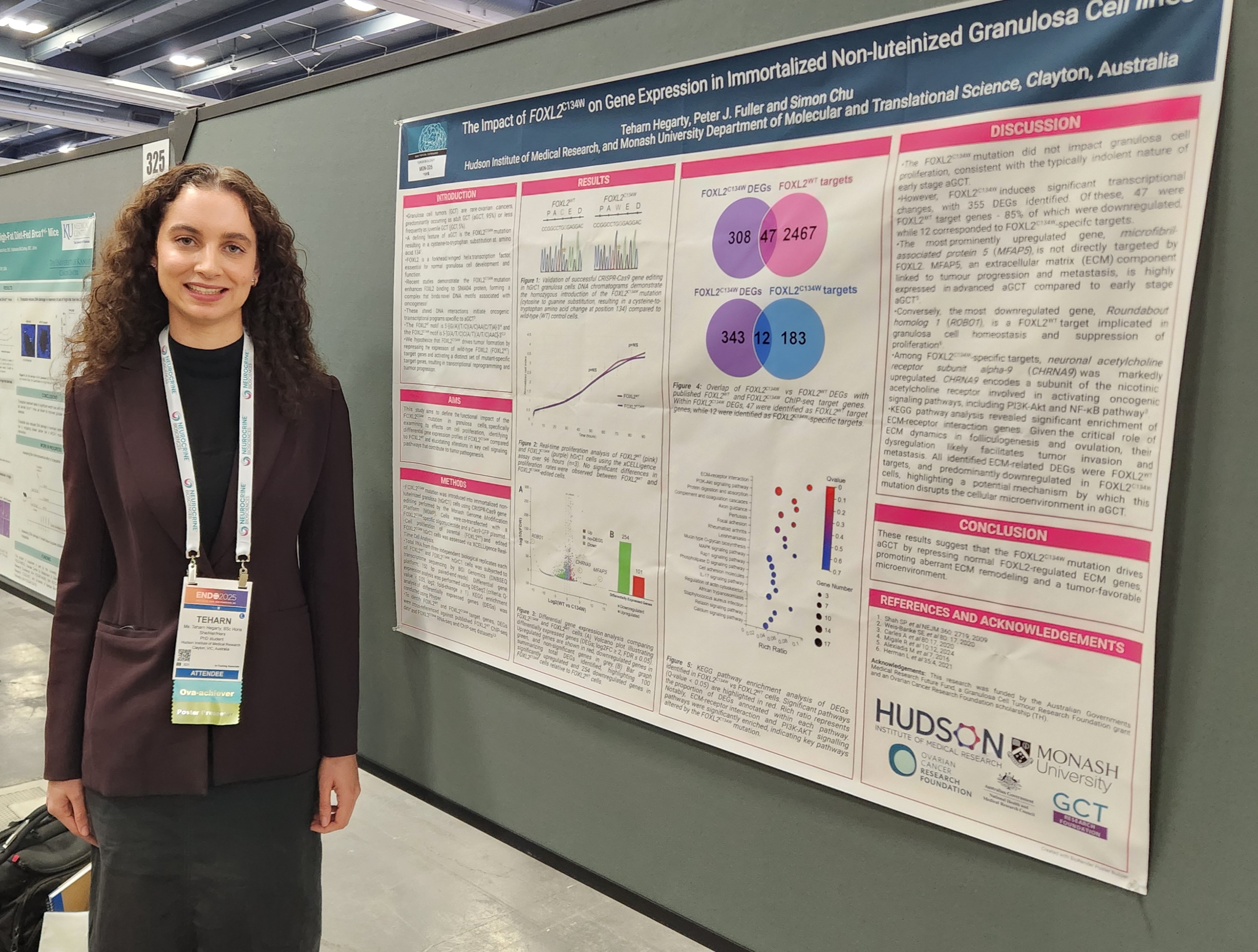
One of the most rewarding surprises has been realising that our lab is one of only a handful worldwide dedicated to finding targeted therapies for adult granulosa cell tumours. Each time an experiment is successful, I know I am helping push the field closer to discovering new treatments and that’s an incredibly exciting feeling. In July, I attended ENDO 2025 in San Francisco, a conference bringing together leading experts and I presented my PhD research on adult granulosa cell tumours. This was such a great opportunity to learn about the latest research and connect with experts in tumour biology. I particularly enjoyed learning about ovarian biology and cancer genetics.
As you approach PhD completion, what has this OCRF-funded position meant for your career aspirations?
My goal is to continue contributing to women’s health research, particularly in ovarian cancer, either by expanding my current work on adult granulosa cell tumours or researching another type of ovarian cancer. I’m also passionate about ovarian biology and fertility research. Working in Associate Professor Simon Chu’s group has given me a strong foundation in cancer biology and the skills to design and carry out experiments that advance our understanding of adult granulosa cell tumours. What motivates me most is helping to close the gender gap in health research and working towards better outcomes for women’s health.
OCRF donations fund many PhD positions, why does funding early-career researchers make a long-term impact?
Not-for-profit funded PhD scholarships are incredibly important support and help us connect with patients, caregivers, and other researchers to better understand the impact of our work. University scholarships are highly competitive, and many talented students miss out, so these scholarships open doors for emerging researchers who are passionate about making a difference. This experience is setting me up for a long-term career in women’s health research, and I feel very excited about the opportunities ahead.
Image: supplied by Teharn, presenting data at ENDO 2025
It feels special to know that my research is supported by the OCRF community. Every donation represents someone’s belief in the importance of this work and their hope for better treatments. That support motivates me, and I feel deeply grateful to be part of this collective effort to improve the lives of women affected by ovarian cancer.
PhD student Teharn Hegarty
Research takes a team and myriad specialised skills and, often, a long period of time. OCRF donations that support the salaries of team members driving breakthroughs behind the scenes remain crucial. They are an investment in the essential training of the next generation of researchers of this complex disease, ensuring knowledge is passed on, skillsets build and future leaders are supported to achieve life-changing advancements for all those impacted by ovarian cancer.
If you’d like to help support researchers like Teharn, register for Frocktober!

Get the latest news, stories & updates.
