OCRF-funded research indicates a promising new treatment approach
March 03, 2025
Reported in the Herald Sun this week, Dr Maree Bilandzic and her team at the Hudson Institute of Medical Research, Melbourne, published results of their OCRF-funded research in Cell Reports.
A diagnosis of ovarian cancer carries a dual threat – the disease itself and the danger of the cancer spreading – but the latest research from Hudson Institute has uncovered a crucial factor, leader cells, that could hold the key to both.
The study reveals that they found that when these cells are eliminated, their ability to spread is disrupted and the immune system is better able to recognise the cancer. These findings indicate a potential novel treatment approach to combatting ovarian cancer progression and chemoresistance.
The team are now entering the next phase to develop a treatment designed to specifically target leader cells.
Current treatment options for ovarian cancer are limited, having hardly improved in decades with most ovarian cancer patients experiencing a recurrence of the disease, where it returns more aggressively and less responsive to available treatments, such as chemotherapy. Developing more targeted therapies for ovarian cancer is crucial to increasing the five-year survival rate above 49 per cent.
This funding by the OCRF for Dr Bilandzic and her team would not have been possible without the generosity of the OCRF community. Community fundraising, donations and continued support has enabled sustained funding for the team at Hudson and provided the launchpad for this crucial treatment progress.
This article was originally featured in the Herald Sun and written by Robyn Riley.
Liv Curtis was diagnosed with a lethal cancer and had a complicated and dangerous operation to remove a tumour the size of a full-term baby. Now, a new medical discovery has given her hope. Herald Sun
An Australian-grown discovery has collared the culprit causing deadly ovarian cancer to return and spread after treatment.
Hudson Institute of Medical Research scientist Dr Maree Bilandzic was the first to discover the role of these rogue leader cells that she calls the "back seat drivers" of the disease.
Ovarian cancer is the most lethal gynaecological cancer with just 50 per cent of women surviving beyond five years.
Dr Bilandzic, who is head of the Metastasis Biology and Therapeutics Research Group at the Hudson Institute, said identifying the cause of the disease returning soon after treatment offers women hope that they can defeat this cancer.
She found the leader cells sneakily suppress the immune systems so that treatments are not as effective, making it easier for the cancer to survive.
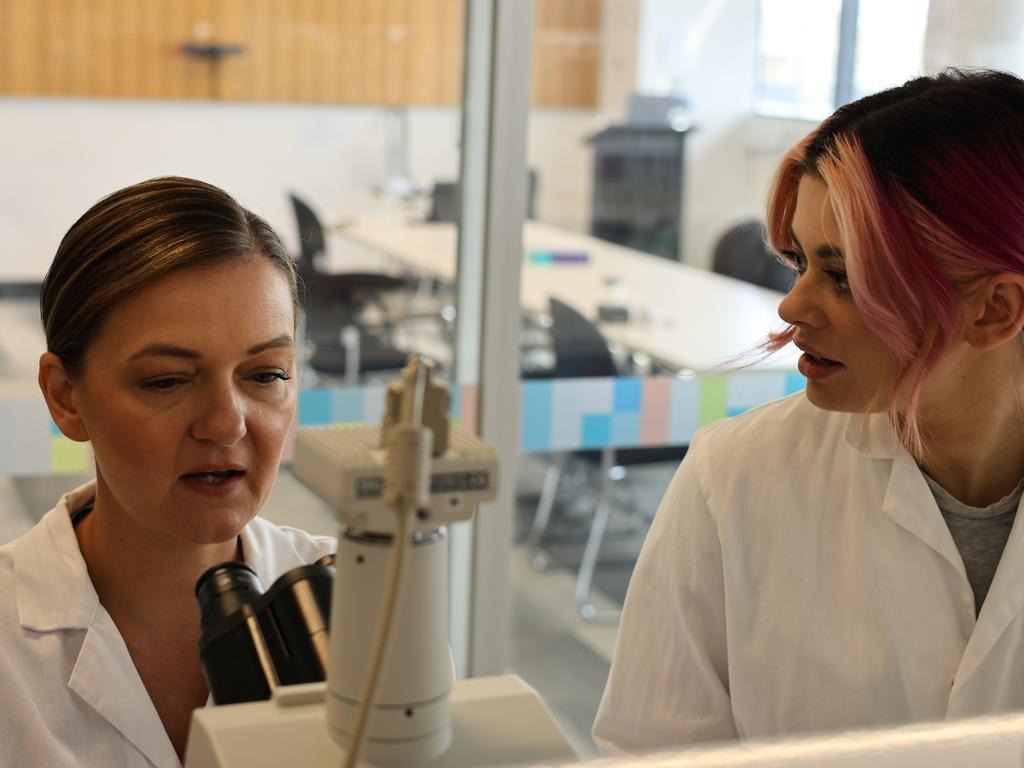
Dr Maree Bilandzic (left) and Dr Amy Wilson from the Hudson Institute of Medical Research. Image: Supplied.
The good news, Dr Bilandzic says, is that understanding what these leader cells are up to should also help deliver new treatments and improve outcomes for patients for a cancer that currently has no early detection test or cure.
"We believe by targeting these cells we can reinvigorate the immune system and also make the current treatments that we have more effective," she said.
Dr Bilandzic said often patients were told there was no evidence of disease (following initial treatment)."They are told it has been managed with chemotherapy and intense surgical procedures, but the disease comes back within an 18-month period and this time it will be resistant to the original therapies that they received and they are left with limited options," she said.
The leader cells, Dr Bilandzic said, start out good in a normal context, but they go very bad in cancer.
"They're playing a little bit of a back seat role because they're not the bulk of the tumour, they're a small population within the tumour, but they are driving the outcome."
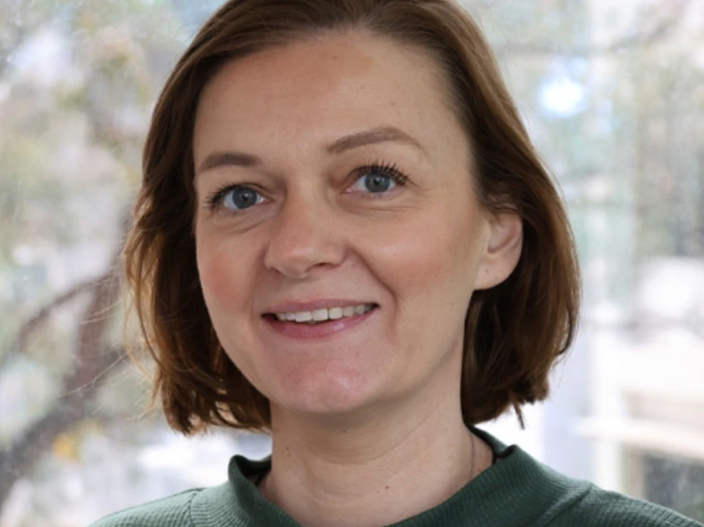
Hudson Institute of Medical Research scientist Dr Maree Bilandzic discovered the rogue leader cells causing ovarian cancer to return and spread. Image: Supplied.
Dr Bilandzic said the way ovarian cancer is treated globally hasn't progressed in over 20 years and that tor most women the disease is not tound until it is already in a late stage.
This, she said, was because of often ''vague" symptoms such as bloating and tiredness.
Her discovery, reported in the journal Cell Reports, is focused on the small population of these leader cells within the largest part of the tumour that are the non-responding cells.
"If successful, this therapy could prevent metastasis, improve treatment response, and extend survival, potentially setting a new standard of care for patients with limited treatment options," Dr Bilandzic said.
The team's research has been supported by the Ovarian Cancer Research Foundation (OCRF).
"At the OCRF we represent a passionate and committed community who for 25 years have tirelessly fundraised and donated over $25M," CEO Robin Penty said.
"This has enabled the OCRF to provide sustained support and a launch pad for ovarian cancer researchers like Dr Bilandzic. By uncovering the drivers of metastasis and recurrence, her work represents crucial progress and a new source of hope for the ovarian cancer community."
Clinical trials are expected to start early next year, putting scientists back in the driver's seat for a cure.
'I had dangerous surgery to remove tumour the size of full-term baby - this discovery gives me hope'
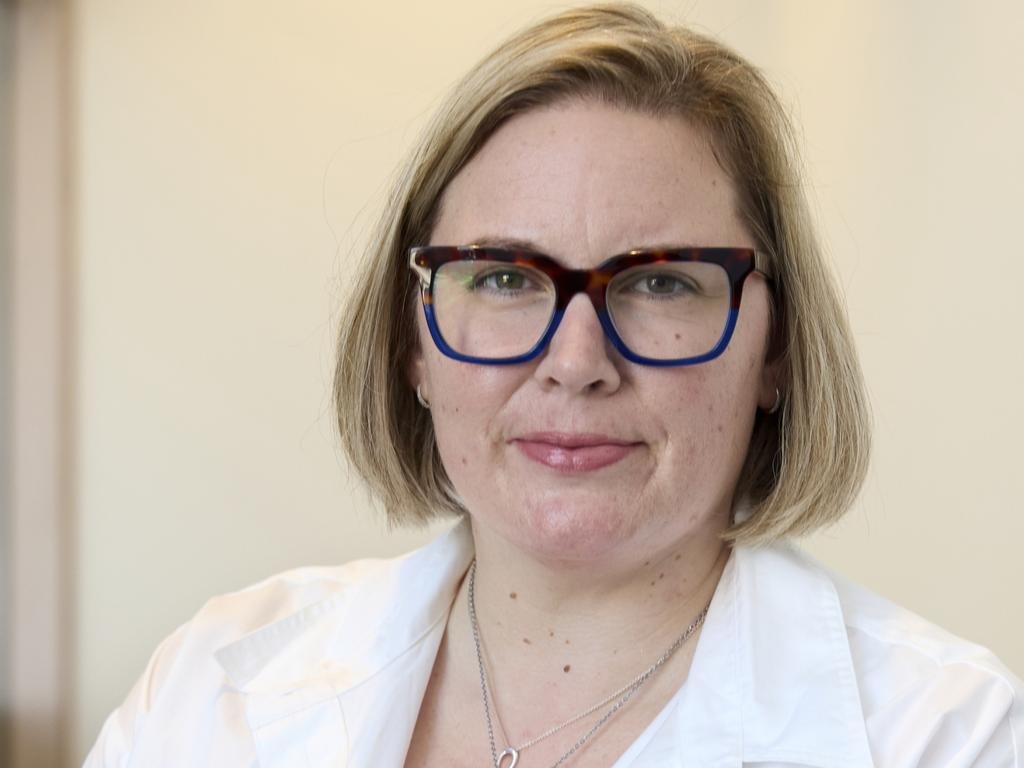
Liv Curtis who was diagnosed with ovarian cancer in 2020. She said it was the worst day of her life and her only thought was that her kids needed their mum. Image: Supplied.
Liv Curtis said when she was diagnosed with ovarian cancer in 2020 her first thoughts were for her family. With husband Kevin she has three children Lilly 14, William 13 and Violet 9.
Ms Curtis was 35 and told she had stage four cancer, a tumour she called her unwanted guest, "because I just wanted it the hell out of there".
It turned out to be more like an octopus strangling the young mum's organs and gripping so tight it took nine hours and five specialist consultants to remove.
"No one imagined how complicated, radical or dangerous the operation would become," she wrote in a letter for the Ovarian Cancer Research Foundation.
When it was removed, the tumour weighed 3 kilos, as large as a full-term baby.
"Along with it, they took out my ovaries, my uterus, my cervix, 50cm of my bowel, part of my liver, my omentum and my spleen," she said.
"They rebuilt the tube between my bladder and kidney, which had been strangled. They carefully peeled away the tumour and scraped cancer off my diaphragm and stomach and removed 26 lymph nodes, 12 of which showed malignancy."
That was just the beginning.
Ms Curtis told the Herald Sun she has just come out of six months of the most debilitating chemotherapy. "A 30 year old treatment that has proven mostly ineffective in ovarian cancer," she said.
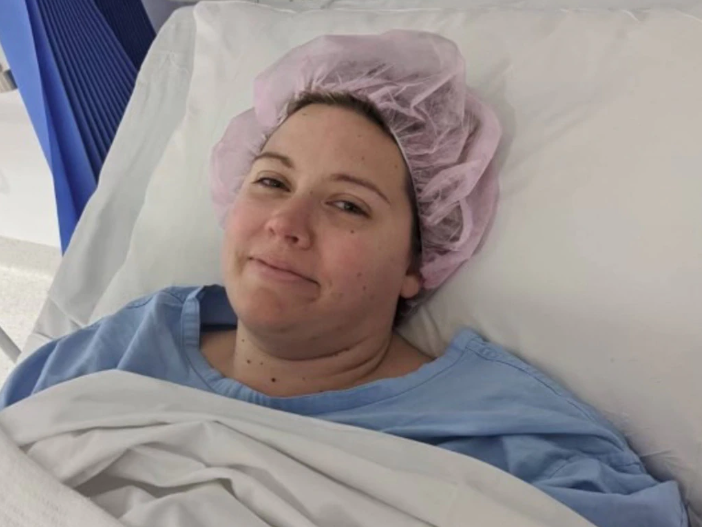
Liv Curtis was diagnosed with ovarian cancer in 2020. She says she has huge hope for the leader cell research. Image: Supplied.
"Unfortunately this chemo did little more than keep my disease relatively stable, but the cost was a full six months in bed peppered with serious blood clots on my lungs (resulting from the chemo) and multiple hospital admissions to deal with severe dehydration from vomiting and diarrhoea."
She has huge hope for the leader cell research.
"Because my motto at the moment is that I just have to roll with the punches and find something that works long enough for the next thing to come along; and hopefully it is a treatment that allows me to continue my important work as a mum!"
This research is so vital because nothing seems to hold this horrible thing at bay. I see it as a war of attrition that I am slowly winning."

Get the latest news, stories & updates.
