OCRF x Jaggad: Lisa's Story
February 17, 2025
How the ocean provided strength, stability and calm amidst an ovarian cancer diagnosis. This is a tale of hope and determination.
Trigger Warning: A courtesy note that this post features a story of death and loss – reader discretion advised.
The Ovarian Cancer Research Foundation (OCRF) is proud to partner with Australian high performance activewear brand Jaggad, to release a special collection raising funds for ovarian cancer research. The inaugural campaign centres on the personal story of Lisa Kendall following her diagnosis with ovarian cancer in 2019, as told by her two children, Aimee and Mitch Kendall.
Lisa’s legacy will help us change the tide for ovarian cancer.
Our mum, Lisa Kendall, was the best person we knew. To us—Aimee and Mitch—she was more than just a mother. She was a force of nature, a beacon of positivity, and the glue that held our family together. Growing up along the beautiful coastline of Western Australia in the 90s, our childhood was shaped by her love of the ocean, her unyielding optimism, and relentless drive to embrace life fully.
That love of the ocean was something she passed on to both Mitch and me. It was Mum’s steadfast rule that you haven’t been for a swim unless you dunk your head underwater at least three times. There were many times, even as adults, where we’d fly home to Perth and first thing in the morning, Mum would be there insisting we fully submerge, no matter how cold the water was.
She instilled in us the belief that challenges were meant to be faced with courage and determination. That’s how she approached every day, even as ovarian cancer turned our world upside down.
When Mum was diagnosed, we were naïve about what was to come. Ovarian cancer was an unfamiliar story in our lives, and like many others, we didn’t fully grasp the challenges ahead. No one can rewrite our ending, but we can share her story to raise awareness and advocate for increased funding for ovarian cancer research.
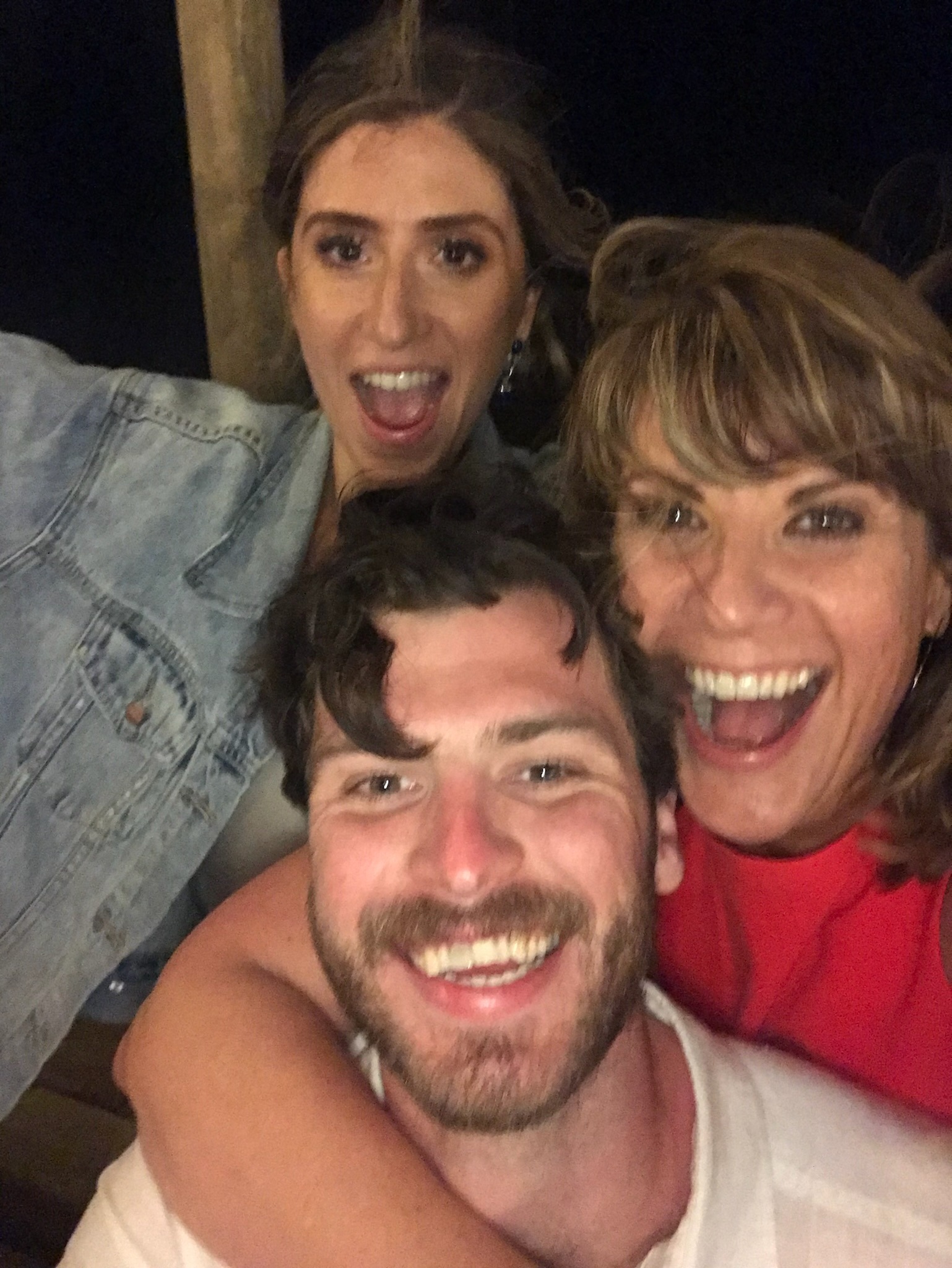
Pictured above L-R: Aimee, Mitch, and Lisa Kendall
The early signs of ovarian cancer
Mum’s symptoms began subtly, like they do for so many women: chronic back pain, weight loss, and discomfort. At first, she brushed it off as part of her busy, active lifestyle. Even when she started losing weight rapidly, we assumed it was a result of her fitness routine. But after a trip to Sri Lanka left her in severe pain, she finally sought answers.
After a week of tests in the emergency department in December of 2019, Mum was told her devastating diagnosis: stage 3C ovarian cancer. This was the first time we’d heard of the disease. Mitch and I had no idea how serious it was, like many, we assumed she would recover. Mum was healthy, strong, and full of life—surely that would be enough.
The gruelling treatment for ovarian cancer
Her first rounds of chemotherapy began before Christmas. At 14 hours per session, it was gruelling, but Mum faced it with her unwavering positive attitude. On Christmas Eve, as her hair began falling out in clumps, we gathered as a family to shave her head. The next morning, she was down at the beach, her sarong wrapped around her head, embracing the sea as she always had.
Mum’s journey was marked by resilience. She underwent debulking surgery, a procedure that left her with a scar running from her breastbone to her pelvis and she wore it proudly. When the immunotherapy trial she participated in didn’t work, she took solace in knowing her efforts would contribute to future research. She would always remark that while the trial didn’t work for her “someone else’s mum will benefit”. That was who she was: always thinking of others, even when things weren’t going her way.
Mum passed two and a half years after her diagnosis. Despite the setbacks and the harsh realities of ovarian cancer, she never gave up. She continued her ocean swims until chemo made it impossible, at which point she walked along the beach instead.
Her final weeks were spent at home, surrounded by family. Mitch and I slept on the floor of her room, taking turns to care for her through the night. Even then, she was planning her next swim, holding onto hope for just a little more time.
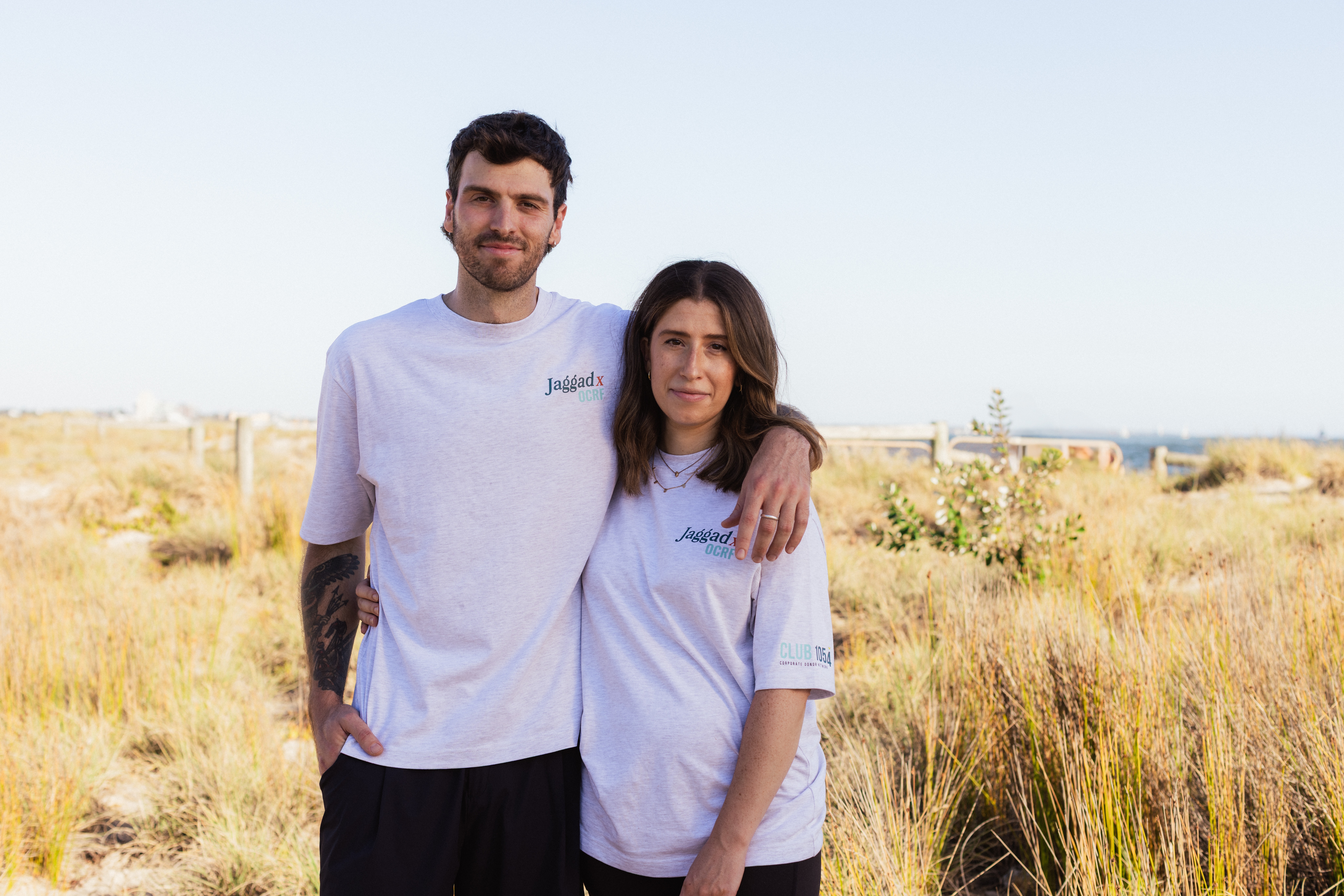
Pictured on right: Siblings Mitch and Aimee Kendall
Honouring Lisa’s love for the ocean with Jaggad
For Mum, being in the ocean was healing, whenever she was at the beach, her anxieties around her treatment and diagnosis dissipated. Even now, we can’t look at the ocean without thinking of her. Every time we wade into the water, Mum’s voice is there reminding us to dive under three times.
In those final days with her, we witnessed incredible orange sunsets that lit up the evening sky and gave the ocean a golden glow. Now, whenever the sky mirrors those colours, it feels like a little sign from her to us.
That is why when designing the t-shirt print in collaboration with Jaggad, I wanted it to embody mum’s spirit and reflect her love for the ocean, the place she turned to for healing and strength. The print design features calming sea hues and wave-inspired patterns, a tribute to her daily swims and walks along the beach, her place of solace. It’s not just activewear; it’s a message of hope and resilience.
Thanks to incredible generosity from Jaggad, 100% of gross proceeds from the purchase of the Turquoise Bay t-shirt and teal sweater will be donated to the OCRF, to support their vision of a future where those impacted by ovarian cancer can live vital, healthy lives. Investing in research is key to bringing us closer to a future where stories like Mum’s have different endings.
Since Mum’s diagnosis in December 2019, we’ve learned that ovarian cancer is a silent disease, often diagnosed too late. Those diagnosed today face a 49 per cent chance of surviving five years – much less if diagnosed at a late stage like mum. There is no early detection test and treatment options have barely improved in decades. But with more investment into research, this can all change. That’s why we’re sharing her story. To inspire change, to advocate for better outcomes, and to honour the woman who taught us what it means to be resilient, vulnerable and unerringly positive.
This Jaggad collection is more than clothing; it’s a movement. By supporting this campaign, you’re helping to change the tide on ovarian cancer. Together, we can ensure that future generations have the tools and treatments needed to change outcomes for this disease.

Get the latest news, stories & updates.
