OCRF-funded research project
GRANULOSA CELL TUMOUR: TOWARDS A NEW ERA
Institution: Hudson Institute of Medical Research
Lead Researcher: Dr Simon Chu
Funding Awarded: $44,250
Total Collaborative Funding: $2,128,630
Year/s: 2020-2024
Project Description:
Dr Simon Chu’s Hormone Cancer Therapeutics team at Hudson Institute of Medical Research is working with collaborators to improve outcomes for women with hormonally active granulosa cell tumours (GCT) – a rare type of ovarian cancer. Granulosa cell tumours (GCT) arise from granulosa cells (GC) of the ovarian follicle and represent a specific subset of malignant ovarian tumours with an unexplained propensity for late recurrence; ~80% of patients with aggressive or recurrent tumours die from their disease. At present there are no reliable methods for predicting relapse and, aside from surgery, no therapeutic modalities have proven effective. Therefore, it is critically important to understand the impact of this unique ovarian cancer on women afflicted with the disease and address their lack of options by identifying the molecular mechanisms contributing to the pathogenesis of GCT.
The project to combat ovarian GCT received MRFF from 2020-2024 with supplementary funding from the OCRF. Dr Chu says the grant will allow the team to build on progress already made from research previously funded by the OCRF in understanding and fighting GCT, which accounts for 5-10 per cent of ovarian cancers and can occur at any age.
“Part of the work is to look at the genomic landscape and the mutations that are causing a tumour to become more aggressive,” Dr Chu explains. “When the tumours recur, they’re particularly aggressive and can’t be treated.”
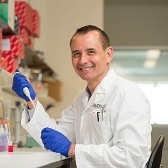
Dr Chu
Expected/Achieved Outcomes:
Knowledge Building: The team will analyse a database of those who have had GCT to understand the treatment they had, the impact of this treatment on their well-being, and any recurrence. This could inform treatment strategies and facilitate knowledge sharing. Additionally, the team will aim to identify the mutations, genes, and/or pathways that lead to a poor outcome through recurrence and/or aggressive disease, and to identify novel targets and therapeutic strategies could lead to a personalised approach to GCT treatment.
Project Status:
The project is currently underway.

Get the latest news, stories & updates.
