Patient-centred research strategy reflects the human story of ovarian cancer
On Thursday 30 November 2025, the OCRF held its first-ever event in Parliament House Canberra – the launch of our new Research Impact Strategy 2025-30.
This was significant for several reasons, bringing together OCRF community members and ambassadors with senior MPs and senators, departmental officials, policymakers, researchers and peer organisations to ensure ovarian cancer is seen, heard and acted upon.
Most people reading this won’t need reminding of the statistics, which remain confronting, but we need to keep repeating them. This year, over 1900 Australian women will be diagnosed, and more than 1000 will lose their lives to this disease. The five-year survival rate is just 49%, a figure that has stubbornly remained below 50% for decades. Sadly, only 1 in 3 women diagnosed today will survive for ten years. Aboriginal and Ashkenazi Jewish women are especially vulnerable, facing higher rates and distinct barriers to diagnosis. Early detection remains out of reach, with vague symptoms leading to mis- and delayed diagnoses, and up to 80% recurrence following treatment
Why the Time Is Now
As our CEO, Robin Penty, said in her address, in an advanced health care system, these statistics are almost unbelievable. But the reality is that gynaecological cancers still suffer from underfunding, underrepresentation, and gender inequity in research. Ovarian cancer has received less than one per cent of Government medical research funding despite the impact of the disease. While there are promising signs of change, including new investments in women’s health, ovarian cancer has yet to benefit from a true gender lens in national policy and funding. That’s why we held this event in Canberra and why it really mattered to have decision-makers and influencers in the room.
Guests were also searingly reminded that behind every statistic is a life, thanks to a heartrending tribute and call for action by Chad Barnier, partner of Heidi D’Elboux Barnier, who died in July this year, aged 35.
“Heidi was diagnosed with Stage IV Ovarian Cancer on April 7th. She died on July 7th. Three months.
Heidi is the strongest person I’ve ever known. She was always in control. Fiercely independent. She always had a plan.
Cancer — and the treatments that promised to save her — took each of those things from her. They promised to give them back, but instead, they took her too.
When we found out about her cancer, Heidi said to me:
“I’m not a statistic. I don’t want to hear numbers. Those tests weren’t done on my body. I make my own statistics.”
She was adamant that every dot on a graph — from the top to the bottom of a curve or a cluster — represented a life. A whole person worth knowing. Worth fighting for.”
Chad Barnier
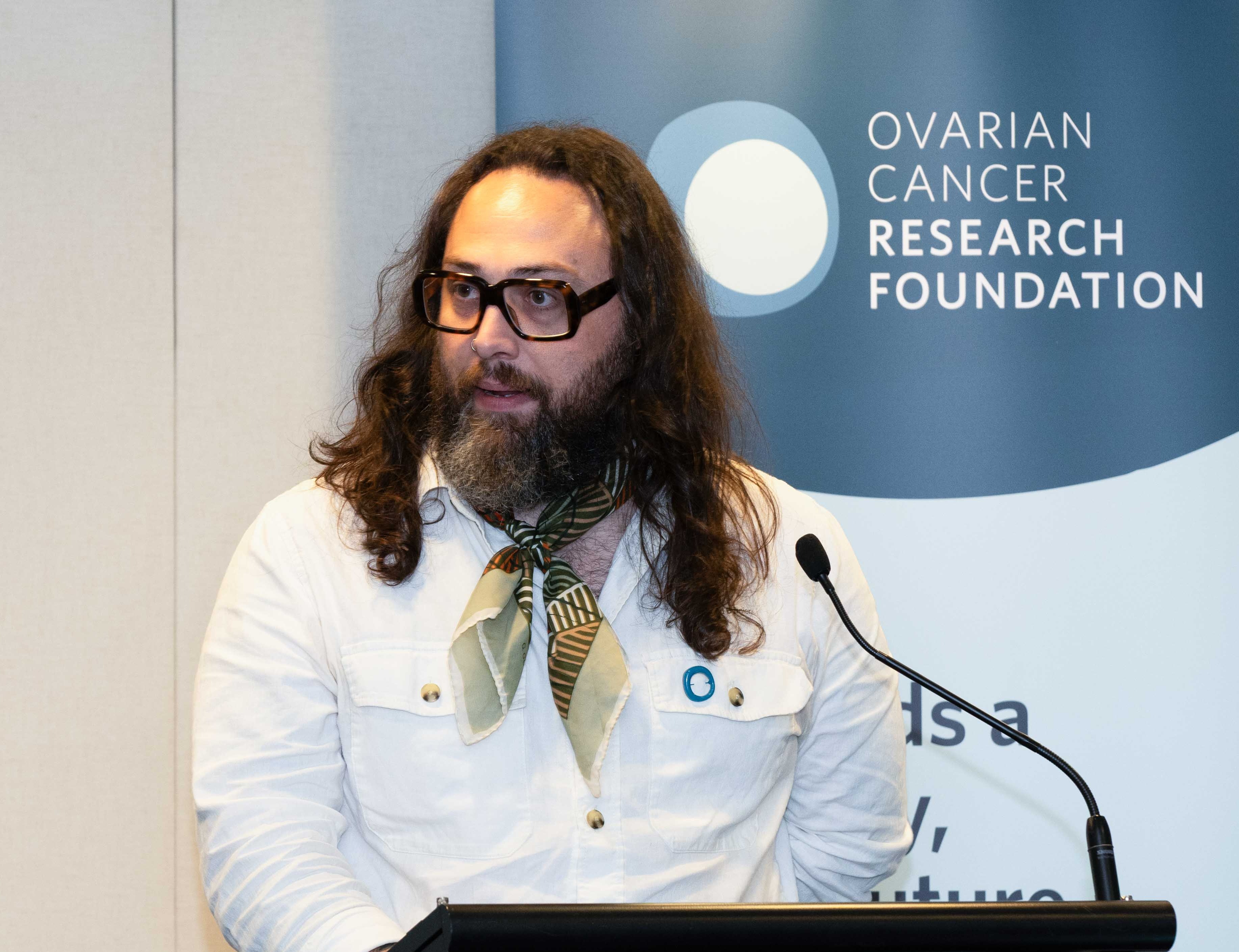
Read Chad’s incredible speech – there wasn’t a dry eye in the room.
Research Impact Strategy: What’s Next
Hard as they are to hear, it’s vital that we listen to stories like Chad’s - people who have lived with the impact of this devastating disease, to ensure our priorities are what’s needed and wanted by those who are directly affected. In developing the Research Impact Strategy, we listened to more than 400 people, including those with lived experience and medical researchers across the country. The resulting approach in our Research Impact Strategy centres on Detect, Treat, Prevent—integrated efforts to improve early detection, develop effective treatments, and advance prevention. Our programs will enhance knowledge sharing, foster collaboration nationally and internationally, and fund research in new and innovative ways.
This work sets a new pathway for the OCRF within the research ecosystem: a deeply collaborative, broad-minded, scientific approach, fundamentally centred on the needs and realities of those affected by ovarian cancer.
Although the challenge ahead is significant, OCRF CEO Robin Penty closed the event with words of encouragement and hope,
“We know it’s easy to be overwhelmed by what has not yet changed. Going back to our science fiction analogy, the writer Isaac Asimov once said there are only three plots in science fiction: ‘What if?’ ‘If only’, and…’If this goes on’.
Well, it won’t go on now. Because you’re here, and we know there is collective will, genuine interest, donor and community support, increasing awareness, and growing coordinated action for ovarian cancer research. We are harnessing this hope and momentum toward genuine transformation for all gynaecological cancers.
Remember, hope is a tangible thing. It is currency. You know what we say about hope: You can try to cut down our most beautiful flowers, but you can’t prevent spring from coming.
Well, spring is coming, and with your support, we will change the future for generations of women and girls.”
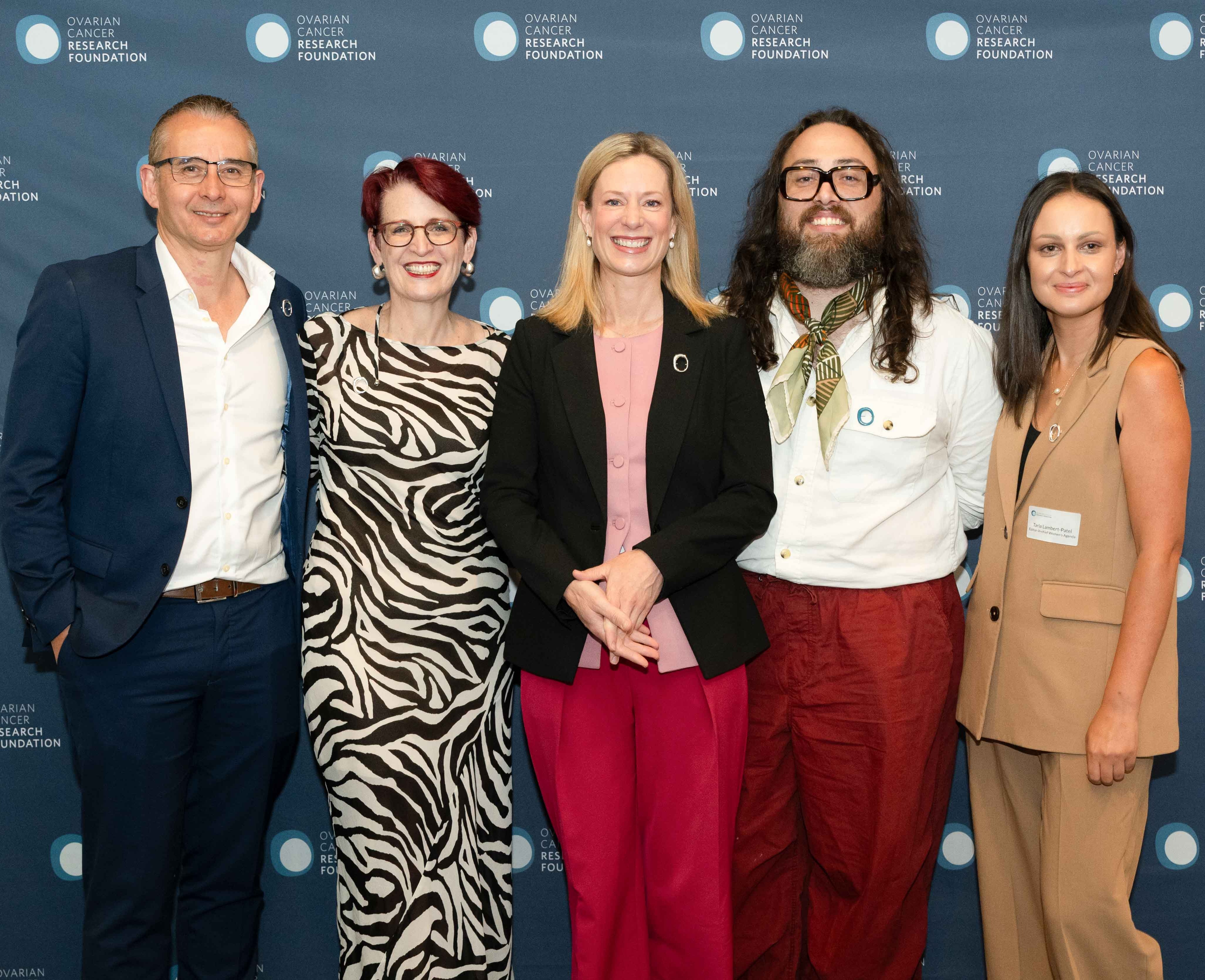
Our sincere thanks to everyone who attended this milestone event, including The Hon Rebecca White MP, Assistant Minister for Health and Ageing, Indigenous Health and Women, and Senator The Hon Anne Ruston MP, Shadow Minister for Health and Ageing, who both addressed the audience and expressed their support for the cause and the OCRF.
The OCRF Research team will host a webinar to introduce the RIS later this month – stay tuned for details.
Pictured: Assoc Prof Simon Chu, CEO Robin Penty, The Hon Rebecca White, Chad Barnier, Tarla Lambert-Patel

Get the latest news, stories & updates.
