A novel vaccine for ovarian cancer
The aim of this project is to develop a vaccine that treats ovarian cancer by improving the immune system’s ability to recognise and eliminate cancer cells.
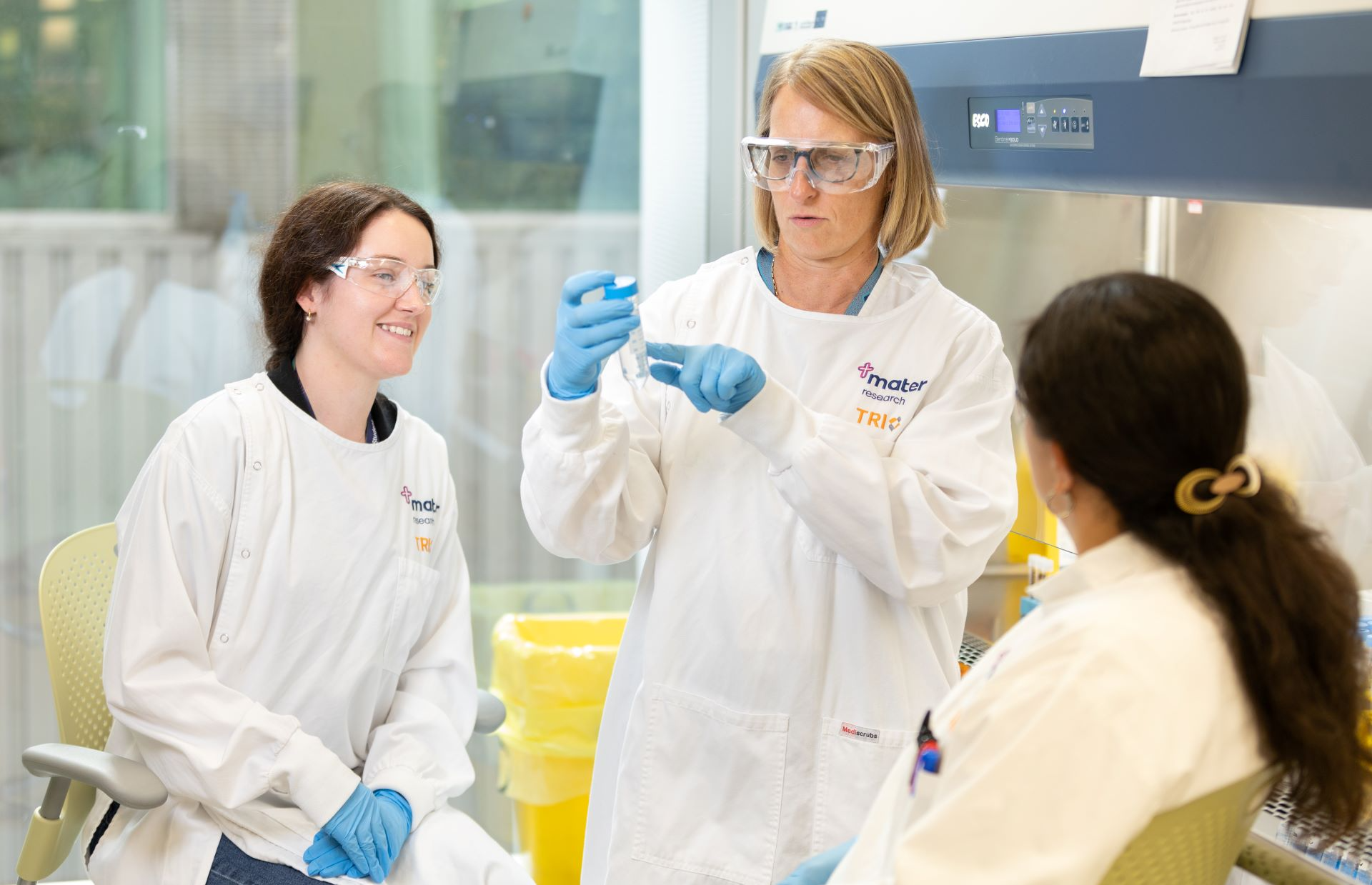
Lead researcher: Professor Kristen Radford
OCRF research priorities: new and effective treatments, managing recurrence
Grant received: $672,000 over three years
Research institution: Mater Research
Funded institution: The University of Queensland
Associated institution: Icahn School of Medicine, Mt Sinai
Image provided by Professor Kristen Radford
PRoject details
Professor Radford believes dendritic cells within the immune system are not functioning correctly in ovarian cancer patients and hopes to create a targeted vaccine, initially focusing on high-grade serous ovarian cancer.
A working immune system recognises dangerous cells it needs to defend against. Viruses have proteins on the cell surface that the immune system recognises. However, cancer grows inside the body, so the body doesn’t easily recognise those cancerous cells as dangerous. Therefore, a cancer vaccine needs to train the immune system to recognise cancerous cells and respond against them. Not all cancers are the same, so an ovarian cancer vaccine also needs to be tailorable.
Professor Radford explains her OCRF-funded project: a novel vaccine for ovarian cancer
Video provided by Professor Radford.
Aims:
- Demonstrate which type of dendritic cells activate immunity and identify what happens in the body that stops them from working against ovarian cancer.
- Identify which molecules on the surface of dendritic cells should be targeted with a vaccine to activate the immune system most effectively against ovarian cancer.
Approach:
With OCRF funding researchers will:
- Observe the way dendritic cells function in ovarian cancer samples to determine why they don’t kick start the immune system to respond against ovarian cancer.
- Compare the differences in dendritic cell function between healthy donors and ovarian cancer patient samples.
- Identify molecules on the surface of dendritic cells that could best activate the immune system against ovarian cancer and design a vaccine to target them.
- Test the use of a dendritic cell-based vaccine on patient samples.
Ambition and outcomes:
By demonstrating exactly how and why dendritic cells function differently when faced with ovarian cancer, Professor Radford’s team could uncover the foundations of a targeted vaccine.
The project could also assist in avoiding disease recurrence through a vaccine treatment that prompts an individual’s immune system to recognise their specific ovarian cancer type.
Immunotherapies have shown promise in treating other cancers. With most ovarian cancer cases currently diagnosed in later stages, this project could provide a live-saving treatment option for future patients.
Professor Radford's project will commence in July 2024.
This article has been reviewed and approved by Professor Kristen Radford.
Key terms
Vaccines: Train the immune system to recognise and remember signs of viruses or disease so it can produce protective immunity against it.
Dendritic Cells: Cells that activate the immune system to function against disease. There are several types of dendritic cells.
read more
- International Review of Cell and Molecular Biology: Chapter Three – The role of dendritic cells in cancer
- Nature Medicine: A need in the ‘cancer vaccine’ haystack
- Journal of Experimental Medicine: Human CD141 (BDCA-3) dendritic cells represent a unique myeloid DC subset that present necrotic cell antigens
- The Prostate: Numerical and functional assessment of blood dendritic cells in prostate patients

Get the latest news, stories & updates.
