Dr Andrew Stephens
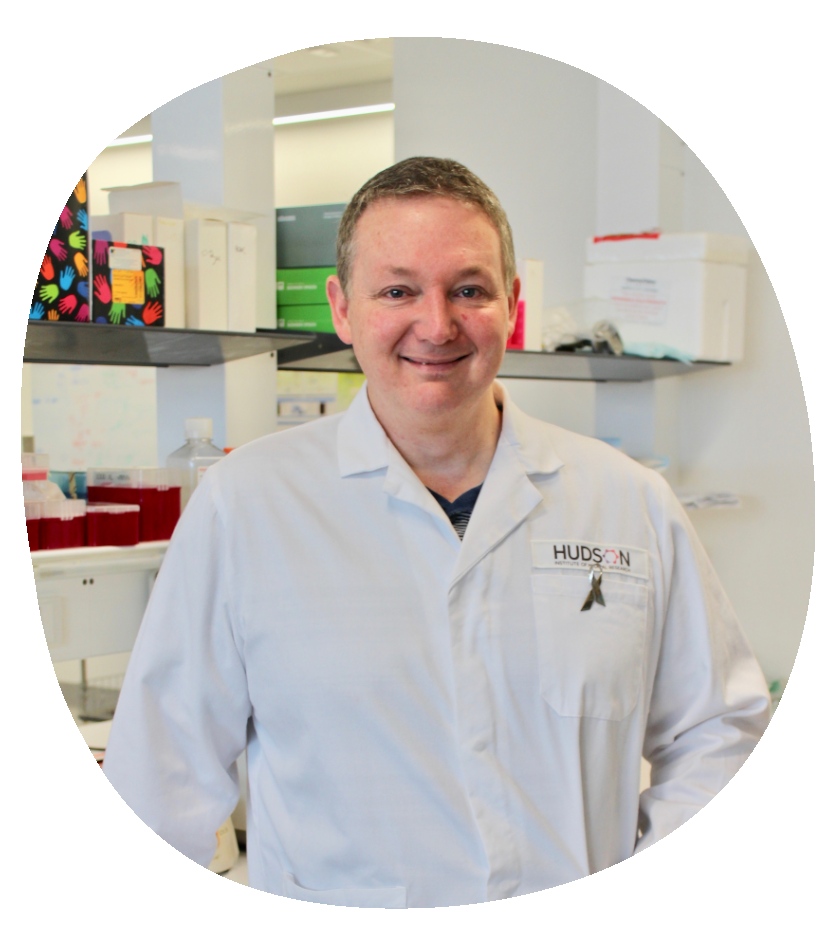
Research Institution: Hudson Institute of Medical Research
OCRF priorities the researcher addresses: Early Detection
Their OCRF-funded research projects: The Active Ratio Test: A multiple-biomarker blood test for ovarian cancer early detection
Working to take over twenty years of research into the real world, undertaking this journey, is highly motivating because it’s pragmatic and I can see a way forward for ovarian cancer early detection that could really help.”
About Dr Stephens’ research
Specialising in ovarian cancer early detection and diagnostics, Dr Andrew Stephens is Chief Scientific Officer at Cleo Diagnostics and an Honorary Research Associate in the Centre for Cancer Research at Hudson Institute of Medical Research.
Funded by the OCRF for over a decade, Dr Stephens’ team investigated biomarkers, or biological indicators, of ovarian cancer with the hope of developing an accurate diagnostic and early detection test. Now, Dr Stephens is working with biotechnology company Cleo Diagnostics to take this promising early detection approach from the lab into the clinic.
Background
Dr Stephens started an undergraduate degree in engineering before realising that medical research was the ideal outlet for his curious mind. This led him to pursue a PhD in biochemistry at Monash University before going to Sydney to work in the area of proteomics, which involves analysing the structure and function of proteins in the body. He was then recruited by Associate Professor David Robertson to move back to Melbourne to work on an ovarian cancer project in the early 2000s at the Prince Henry’s Institute, which has since merged with the Monash Institute of Medical Research to create the Hudson Institute of Medical Research. This is where Dr Stephens eventually established the Ovarian Cancer Biomarkers team.
During this project he was struck by the incredible patients he met who contributed to the research. This was the catalyst that led him to dedicate the following two decades to ovarian cancer research. He was amazed that there was so much unknown about ovarian cancer and so few treatments available.
Dr Stephens took a proteomics approach to his research, which required him to examine the profile of proteins in ovarian cancer samples and compare it to the profile of healthy samples. This enabled him to identify what proteins were present in the ovarian cancer samples but not in the healthy samples, therefore identifying potential biomarkers, or indicators, of ovarian cancer.
During this research he identified that a protein called CXCL10 is altered when an ovarian cancer starts to form and used this discovery as the basis for a potential early detection biomarker. Finding a way to detect the presence of this protein’s change, along with a panel of other biomarkers, became the foundation of the early detection test he is now working to bring to the clinic.

Career highlights
Overseeing two decades of his early detection research progress to the trial phases and towards the clinic is a significant highlight for Dr Stephens. In the treatment space, Dr Stephens co-founded AMTBio, a biotech company with Dr Maree Bilandzic and Prof Tom Jobling which is developing a new way to treat chemo-resistant ovarian cancer and progress it towards clinical trials.
Collaborative impact
Collaborating with clinicians, who can provide precious ovarian cancer samples to test, has been crucial to Dr Stephens research. Dr Stephens has worked closely over the past two decades with Professor Tom Jobling and Professor Martin Oehler who are both clinician-researchers focussed on ovarian cancer. These collaborations are particularly important in facilitating the initial research in the laboratory, but are also equally important later in the research pipeline when the science enters the manufacturing stage in a commercial environment. Clinician collaboration is required to ensure the test itself can be feasibly used in the clinic.
Now, as part of a commercial company, Dr Stephens has access to technology he didn’t previously and is forging international collaborations. Additionally, these collaborations involve working with specialists to better navigate regulatory pathways required to have an ovarian cancer early detection test approved for clinical use.
On his motivation behind dedicating decades to ovarian cancer early detection, Dr Stephens commented that the patients he works with are key.
“They’re the most fantastic people you’ll ever meet, campaigning to get their message out there. It’s very confronting, but also very motivating. One of the most powerful drivers for me and for everyone in my laboratory is that we really want to help them, to make a difference.”
For every project like this, many more can’t get underway due to a lack of funding. Support research like this to help them move forward.
Share page

Get the latest news, stories & updates.
