Professor Anna DeFazio AM
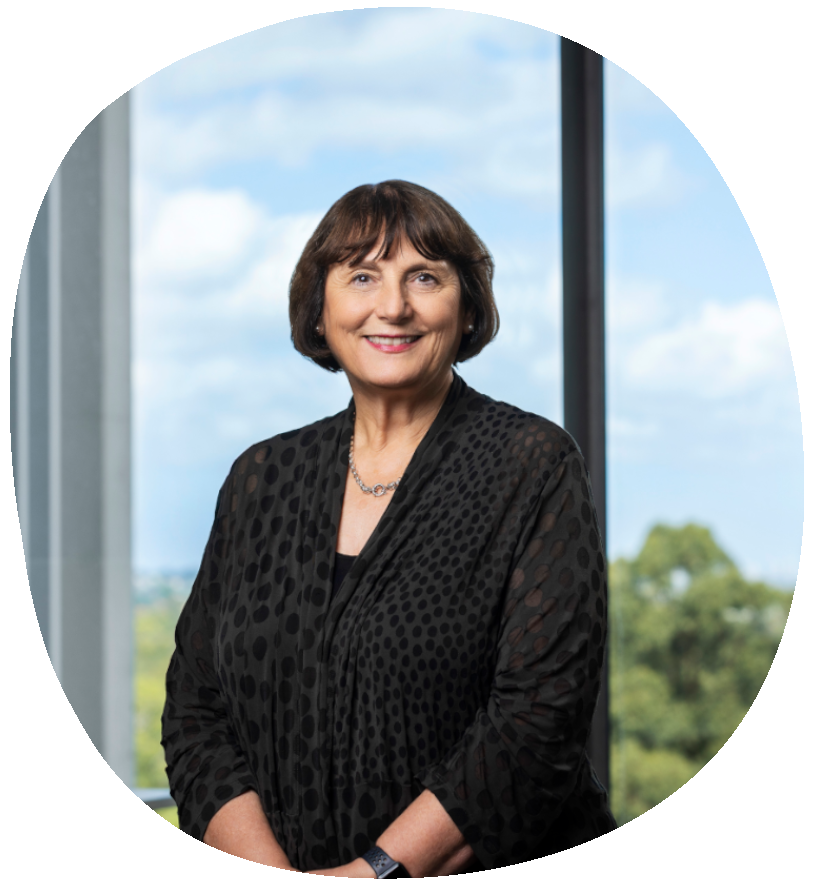
Research Institution: The University of Sydney, Westmead Institute for Medical Research, Westmead Hospital
OCRF priorities the researcher addresses: Treatment
Their OCRF-funded research projects: Advancing precision therapeutics for low-grade serous ovarian cancer
We’ve shaped our research around the problems we still see in the clinic—particularly those cases where deciding on the best treatment isn’t straightforward.”
About Professor DeFazio’s research
Professor Anna DeFazio AM is a leading translational ovarian cancer researcher. Her work focuses on understanding the molecular drivers of different ovarian cancer subtypes and using this knowledge to improve treatment options for patients, in a process known as precision medicine.
A central theme of her research is the close integration of laboratory science with clinical care. By working directly with clinicians and engaging in multidisciplinary care meetings, her research is shaped by real-world clinical challenges, particularly ones where existing treatments are less effective or outcomes remain poor.
Her work has contributed to major advances in understanding ovarian cancer as a group of distinct diseases, each with different biological drivers and treatment needs.
Background
Growing up in Broken Hill, Professor DeFazio’s interest in science began early, when she spent time in a hospital pathology laboratory as a school student.
I used to spend time in the pathology lab, and at the end of the day we’d all gather around the Professor at his microscope and he would explain new cases that had come in. I found that really fascinating—it definitely sparked my interest in science.”
She went on to study biochemistry and microbiology, where hands-on research projects further shaped her interest in medical research. An early position at the Ludwig Institute for Cancer Research was a formative experience, as she witnessed the benefits of close interactions between researchers and clinicians.
What I really loved was that the researchers and clinicians worked hand in hand. That connection to the clinical questions has stayed with me throughout my career.”
The results of this kind of integrated approach to research and clinical care has defined her career. As she recalls, the results can be remarkable.
In one of those meetings, we recognised that a patient had a particular gene alteration that was not typical in ovarian cancer. We were able to enter her onto an early phase clinical trial, based on the gene alteration found in her cancer. From a Stage 4, almost inoperable ovarian cancer, she’s still doing well, 10 years later.
We went on to develop the INOVATe program to make this molecular profiling approach available to more patients, with the hope that it will eventually become the standard of care.”
Career highlights
- Appointed Member of the Order of Australia (AM) for significant service to medical research, particularly ovarian cancer.
- Sydney West Chair of Translational Cancer Research, The University of Sydney (2013– )
- Director, Sydney Cancer Partners (2021– )
- Director, Centre for Cancer Research, Westmead Institute for Medical Research (2019– )
- Head, Gynaecological Oncology Research Laboratory, Westmead Institute for Medical Research (1995– )
- Chair of Translational Research ANZGOG (TR-ANZGOG) Steering Committee - a research initiative which adds important value to gynaecological cancer clinical trials by collecting biospecimens and conducting further clinically relevant research.
Collaborative impact
Professor DeFazio’s focus on translational research and precision medicine is fundamentally collaborative. Her work is closely integrated with clinical teams through multidisciplinary care, bringing together oncologists, pathologists, surgeons and other specialists to address complex patient cases.
She is the Steering Committee Chair of TRANZGOG, Australia and New Zealand Gynaecological Oncology Group (ANZGOG)’s translational initiative that gains research insights from clinical trials and informs new approaches.
Professor DeFazio is a key part of large-scale international studies and the head of The Gynaecological Oncology Biobank at Westmead, a vital resource supporting research into rare and understudied cancers, such as low-grade serous ovarian cancer (LGSOC).
For every project like this, many more can’t get underway due to a lack of funding. Support research like this to help them move forward.
Share page

Get the latest news, stories & updates.
