The numbers they don't see. A speech by Chad D’Elboux Barnier.
November 02, 2025
When the OCRF launched its new Research Impact Strategy at Parliament House in Canberra, one speech made time stop. Chad D’Elboux Barnier delivered a powerful and heartrending story of personal pain and loss, and the real life human toll of ovarian cancer.
There wasn’t a dry eye in the room. This is our why.
We share the deepest gratitude to Chad for so bravely sharing his and his partner Heidi's story.
Read his full speech below.
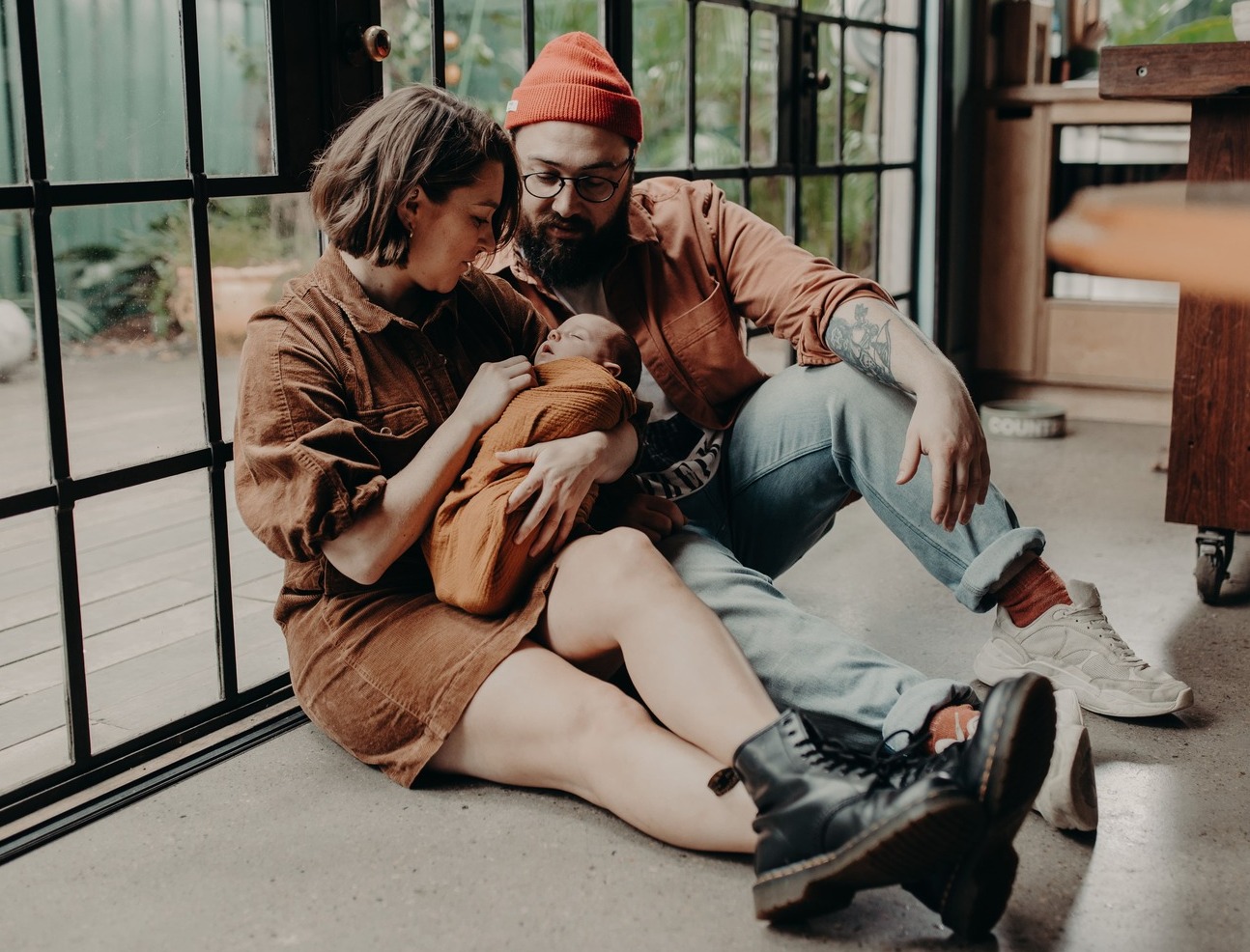
Pictured: Chad with his partner Heidi and son Dallas
Good morning.
And thank you to the OCRF for inviting me to speak today.
My name is Chad D’Elboux Barnier.
Last month, I celebrated my 13th anniversary with my partner Heidi.
I arranged a babysitter for our son, Dallas. A rare luxury. Made a booking at a restaurant that had long been on our to-try list. And a waiter seated me at the bar – tables are reserved for larger bookings, of two or more.
You see, this year, I celebrated my anniversary with Heidi alone.
Heidi was diagnosed with Stage IV Ovarian Cancer on April 7th. She died on July 7th. Three months.
Heidi is the strongest person I’ve ever known. She was always in control. Fiercely independent. She always had a plan.
Cancer — and the treatments that promised to save her — took each of those things from her. They promised to give them back, but instead, they took her too.
When we found out about her cancer, Heidi said to me:
“I’m not a statistic. I don’t want to hear numbers. Those tests weren’t done on my body. I make my own statistics.”
She was adamant that every dot on a graph — from the top to the bottom of a curve or a cluster — represented a life. A whole person worth knowing. Worth fighting for.
So while I appreciate the statistics you’ve heard, and will continue to hear today, I want to present you with some numbers you won’t find in a research strategy.
4,693 – glorious days we chose each other, from 1 September 2012 to 7 July 2025.
29,016 – kilometres on Murrays buses visiting each other when Heidi moved to Sydney to study and start her career, and we lived apart for a year.
240 – weekend markets that become a bi-weekly ritual
An unknowable amount – of market flowers arranged into fresh bouquets to brighten our home.
1 – stubborn, stupid, snoring bulldog, called Nash, who we love beyond words.
35 – Heidi's age when she was diagnosed.
2½ – My son’s age when she was diagnosed.
6 – known locations of her cancer upon diagnosis (bowel, both ovaries, both fallopian tubes, peritoneal lining, liver, and lungs).
1 – finger held inches from my face by the surgeon who said, “There will be no questions.”
1 – new vocabulary I never wanted to learn, but had to, overnight.
High Grade Serous Carcinoma. BRAF V600E mutation. Genetic testing.
A lexicon that gave us hope — only to learn that no drug targeted the exact combination that made Heidi’s cancer hers.
632 – friends, family, and strangers who donated to a GoFundMe campaign Heidi was reluctant and embarrassed to rely on.
8.1 ml – the tiny amount of the chemotherapy drug Paclitaxel that was in Heidi’s system when she reported feeling sick, hot, dizzy. Moments later, she had a violent full-body reaction and became unresponsive. That’s how we discovered she was allergic to the chemo.
2 – laps of the heated children’s pool she managed after her first round of chemo, before breaking down, saying “I feel so pathetic,”
1 – emergency stoma surgery when multiple tumours across her colon became suddenly life-threatening.
21.5 hours – the duration she had a nasogastric tube down her nose and throat pre and post stoma surgery. She could barely move, swallow, or breathe, and it robbed her of her speech. When it was finally removed, she turned to me with a quiet rage and said, “Never take away my voice.”
$27,000 – the cost of the next-in-line cancer drug offered too late — one that would have been free if Heidi had melanoma.
50 metres – how far we made it down the road after Heidi’s care team encouraged her to “try some exercise.” She collapsed on the pavement, and I carried her home, like I do my toddler.
20 kg – the weight Heidi lost in three months as she slowly became a whisper of who she was before.
1 – golden-hearted colorectal surgeon who gave Heidi her humanity, dignity, and respect throughout the entire process. I'm not a praying person, but if I was, I'd pray for him.
$1,122,000 – the selling price of a little cabin and barn in Windsor that Heidi became fixated on. Despite no money, no jobs, and mounting treatment costs, she spoke with such certainty that we would some day build a life there. Two weeks before she passed, we drove out to see it — Heidi, too weak to stand for longer than a minute, sat, watched, and dreamed one last time about the future.
92 – days after Heidi was diagnosed, she left us.
2¾ – My son's age, when she left us.
5 – photos of the sunset I found on Heidi’s phone, taken from her hospital bed the day before she died.
3 – cookbooks stacked on top of our microwave, promising to heal cancer naturally. Now gathering dust.
404 – friends and family who filled the room at her memorial service.
3 – songs we had earmarked for our wedding that instead became her memorial songs.
10ish – children’s movies I’ve put on to comfort Dallas and myself, only to be ambushed by a storyline of a dead mum.
20 – new character voices I’ve learned for Dallas’ bedtime stories, because the reality that every story will now be read by my voice is too hard to bear.
6 – people who’ve asked, “So what are your Christmas plans this year?” — not knowing their casual question collapses me inside, because there’s more time between their question and Christmas than there was between Heidi’s diagnosis and death.
5 - times since Heidi died, that Dallas has asked "Daddy, can we go to the hospital to see Mummy?"
0 – government benefits or payments to help navigate or pay for Heidi’s care, or for Dallas’.
0 – ways to make sense of such a tragic loss.
0 – the only acceptable number of people who die from ovarian cancer.
x – people in this room who chose to be here.
Choice is everything. By choosing to be here — and by choosing to keep showing up with the OCRF — you’re gifting choice to another family. You’re gifting time to another Heidi.
So, thank you — for your statistics, and for wrestling with the big picture. Because the big picture is important.
But as you work on those macro visions of what ifs and maybes, please remember this statistic:
0 – the survival rate of Heidi’s cancer in Heidi’s body.
Thank you.
Published with permission by author. Originally published on Substack.
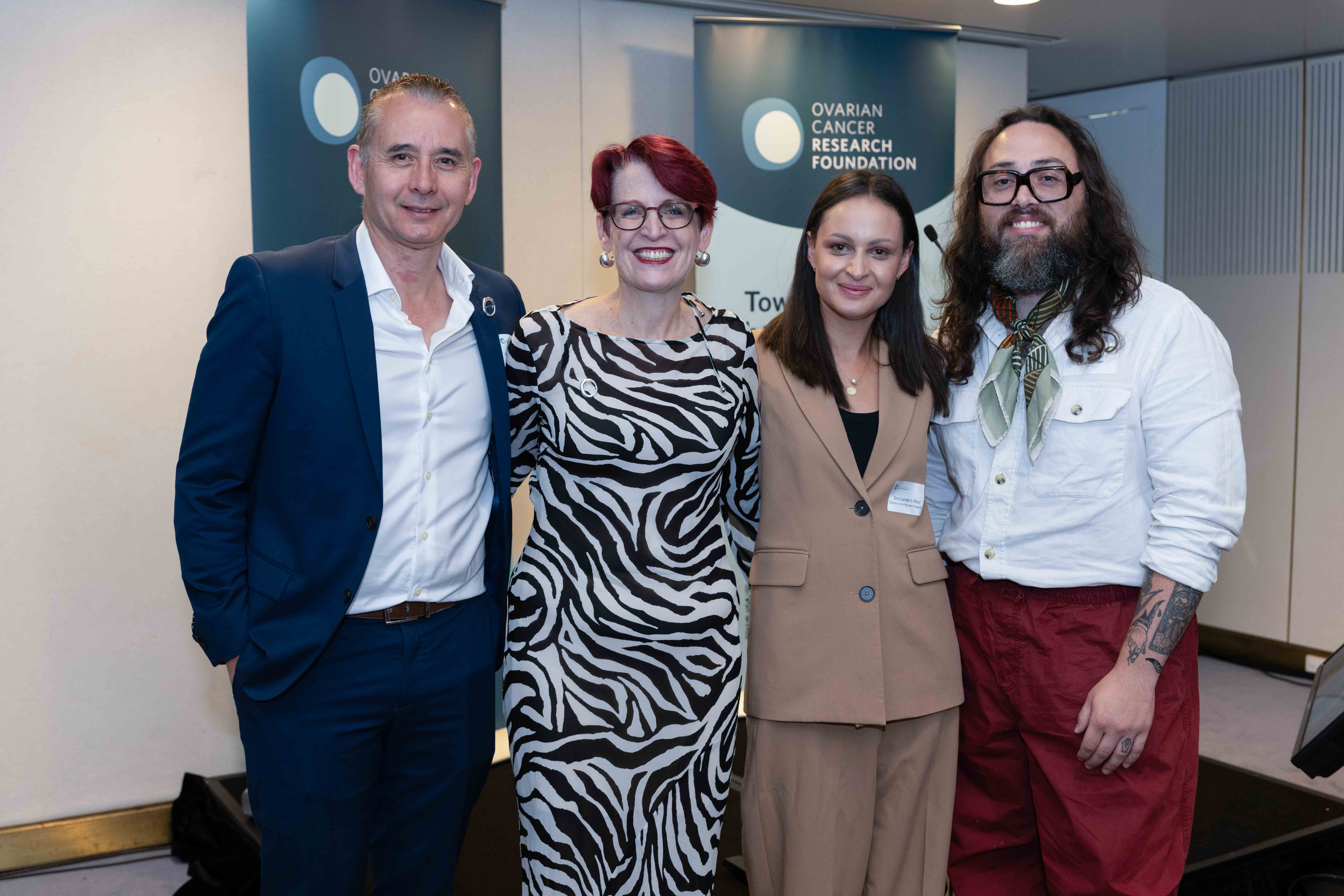
Pictured below: Assoc Prof Simon Chu, CEO Robin Penty, Tarla Lambert-Patel and Chad D’Elboux Barnier at Parliament House.

Get the latest news, stories & updates.
