We Live In Time – a personal reflection
January 23, 2025
We Live In Time, a new film directed by John Crowley and written by Nick Payne, is a romantic drama that delves into the complexities of love and loss and the fleeting nature of time. The film stars Florence Pugh as Almut, an ambitious chef, and Andrew Garfield as Tobias, a Weetabix executive, whose relationship is profoundly impacted by Almut's diagnosis of ovarian cancer.
The film brings to life many of the complex physical and emotional realities of an ovarian cancer diagnosis, particularly for women in their reproductive years.
Watching the film had a profound impact on OCRF Ambassador Dr Shabnam Gujadhur, who was forced to face similar challenges with her own experience of ovarian cancer, when she was diagnosed with two rare subtypes of ovarian cancer at the age of 30.
Shabnam has written a heartfelt response to the film’s narrative and messages, and her hope that it raises awareness and understanding of this devastating disease and the impact it can have on females of all ages and their families.
Her reflection is shared here with permission.
Watching We Live In Time left me with a heavy heart yet it’s encouraging to see ovarian cancer receiving this level of attention, as the film captures the stark realities of this grim disease.
One of the most striking features of ovarian cancer is the vagueness of the symptoms. In the movie, Almut presents to the emergency department with abdominal pain and nausea, only need to be told it is likely to be an infection.
This is a common story among many patients reflecting the reality that ovarian cancer symptoms are often subtle and easily misdiagnosed. Like Almut, many women do not experience recognisable symptoms until the disease has advanced or spread. Combined with the lack of an early detection test, this results in around 70 per cent of ovarian cancer cases being diagnosed only after the cancer has metastasised [spread].
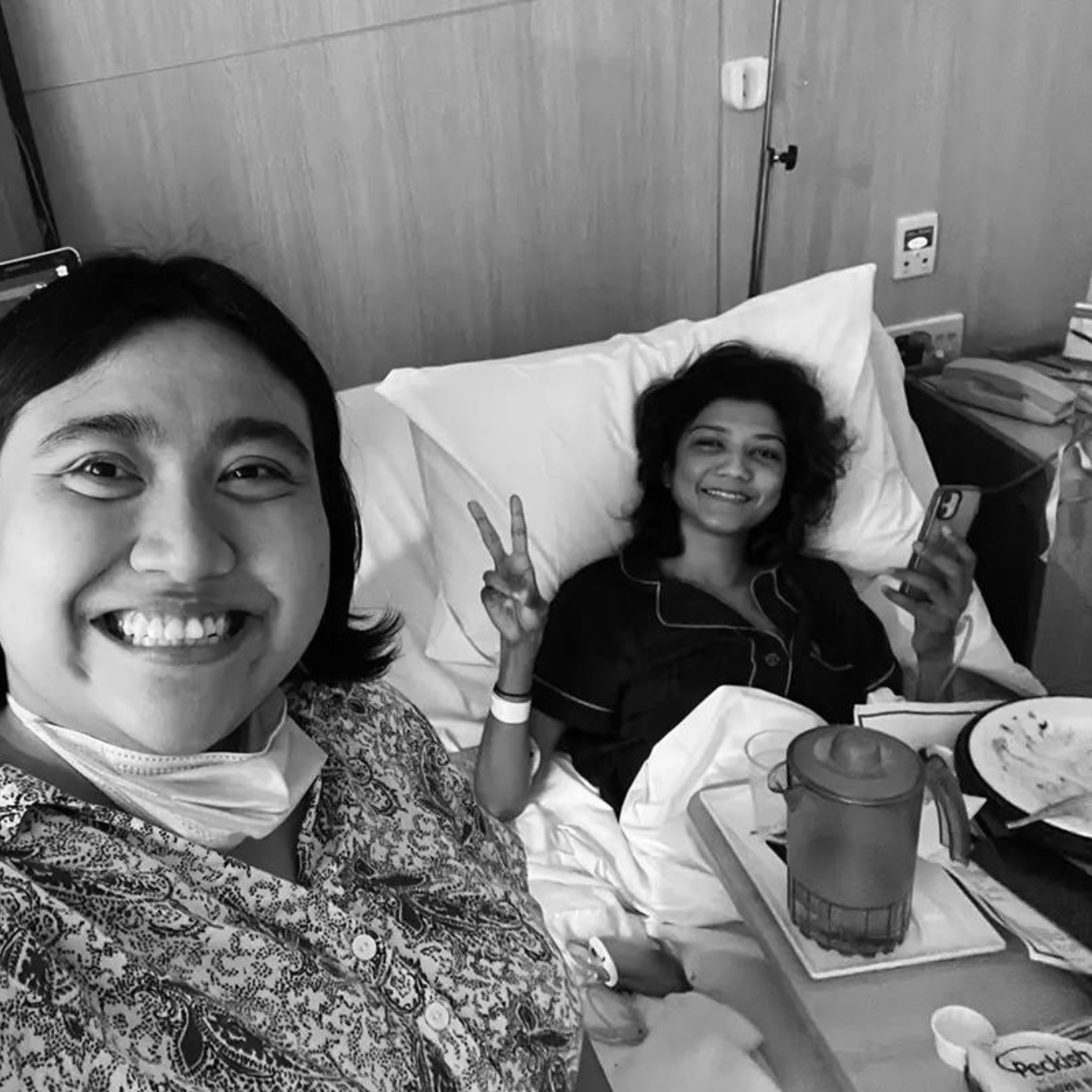
The film also shows the particular challenges women face when diagnosed in their twenties or thirties. Almut’s diagnosis forces her to confront difficult decisions regarding family planning, fertility preservation, and surgical options like hysterectomy or oophorectomy [removal of ovaries and fallopian tubes]. Many young women diagnosed at an early stage face the same sombre decisions – as was the case for me. Overnight, I had to make a significant choice to secure the future I dreamed of.
Almut’s experience of recurrence results accurately reflects the stark reality that many people with advanced cancer grapple with. At this point there are limited treatment options, and patients often endure multiple lines of chemotherapy with minimal success. The statistics are heartbreaking: only about 29% of women with advanced stage ovarian cancer are expected to survive beyond five years.
The moment when Almut expresses her fear of being forgotten was particularly poignant, as I too grappled with that fear when I was diagnosed. I remember feeling overwhelmed by the thought am ‘I am too young to be forgotten’. This realisation became my driving force for advocating for ovarian cancer.
The movie reminds us to live in the moment and to cherish what is right in front of us.
We Live in Time pulled every string of my heart. For me, there were many relatable aspects - from my own vague symptoms to having to reconcile big questions of fertility preservation, treatment options and my future career.
While the movie was absolutely heartbreaking to watch, it is heartening to see ovarian cancer receive the spotlight it deserves – helping to raise awareness and highlighting the need for more funding, more research and better tests and treatments.
About the author: Dr Shabnam Gujadhur
Shabnam is a medical doctor at the Gold Coast University Hospital and Health Service and a former medical scientist in microbiology. She is a passionate community ambassador for the Ovarian Cancer Research Foundation who seeks to elevate the conversation around ovarian cancer and its impact, and advocate for much-needed funds. She recently joined the Mother's Day Classic Foundation Queensland State Committee to champion the voice for ovarian cancer
Find out more about ovarian cancer
If this article, or the film, raised issues for you please seek support
Help OCRF find the solutions

Get the latest news, stories & updates.
