OCRF attends major international research meetings: at the forefront of latest advances and driving collaborative initiatives
Research breakthroughs don’t occur in a vacuum — they require diverse perspectives, sustained funding and international collaboration.
Exemplifying this, during Gynaecological Cancer Awareness Month in September, the Ovarian Cancer Research Foundation (OCRF) was at the forefront of catalysing change alongside international colleagues.
OCRF team members including CEO Robin Penty, Research Director David Hunt and Senior Research Advisor Dr Amy Wilson, flew to North America for two major international research meetings: the Global Ovarian Cancer Research Consortium (GOCRC) in Canada and the American Association for Cancer Research (AACR) Special Conference on ovarian cancer, in Denver, USA.
Gaining insights from leading experts, they expanded the OCRF’s international network while ensuring the Australian ovarian cancer community’s voice was represented at heart of significant international efforts.
Hear the highlights from OCRF Research Director, David Hunt and Senior Research Advisor, Dr Amy Wilson!
Reading time: 4 mins
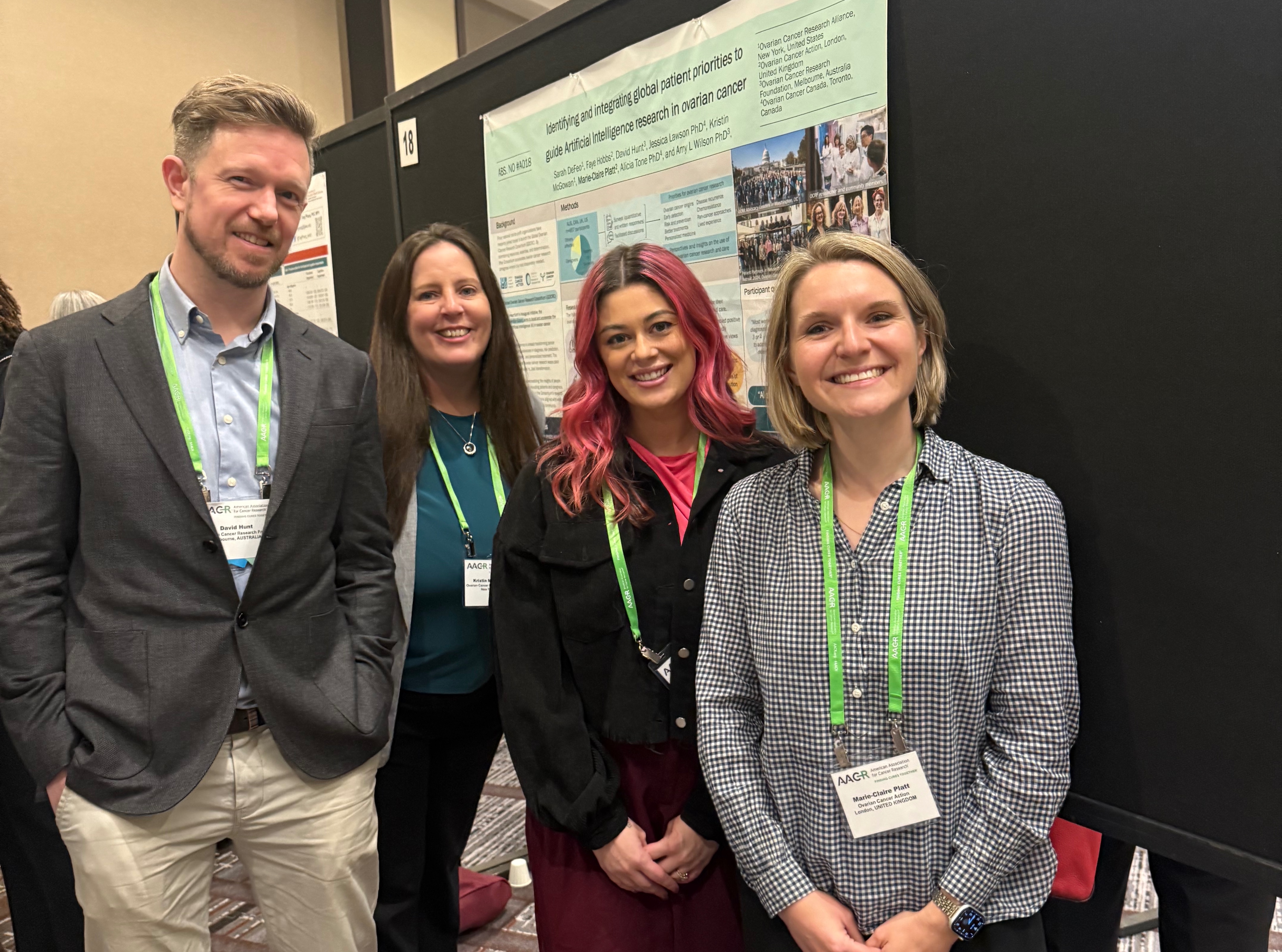
Image: OCRF David Hunt, OCRF Director Grants & Scientific Affairs Kristen McGowan, OCRF Dr Amy Wilson, OCA Canada Head of Policy and Research Marie-Claire Platt
Global Ovarian Cancer Research Consortium meeting: shaping opportunities for the international ovarian cancer research community
In Vancouver the GOCRC, including the OCRF, planned future transformational ovarian cancer research initiatives, designing them to build upon the success of the internationally co-funded $1M USD AI Accelerator Grant announced earlier this year. Stay tuned for more information as new collaborative opportunities come to life!
Consortium member, the Ovarian Cancer Research Alliance (USA), also shared their exciting development of the Community Accelerated Research Exchange (CARE). CARE aims to mobilise and support the global ovarian cancer research and lived experience communities by centralising the latest knowledge and data. It will be designed to allow US-based ovarian cancer patients to share their records consensually with researchers and clinicians through an integrated platform which will then generate a tailored list of potentially suitable clinical trials. CARE also hopes to support the global research community by curating the latest research developments, and support global collaborative research efforts by developing a freely available hub of large-scale datasets alongside access to analytical tools, including AI. The CARE is an ambitious idea with much potential and the OCRF is excited support its progress in 2026.
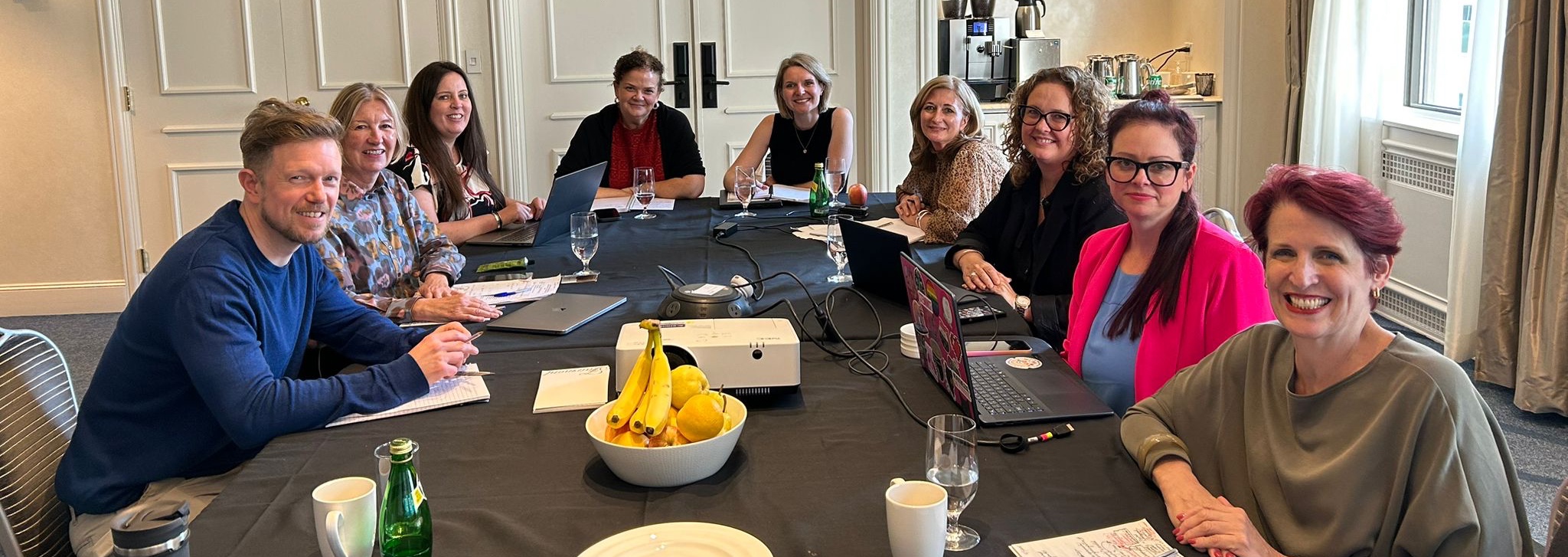
Global Ovarian Cancer Research Consortium members from leading charities come together: Ovarian Cancer Research Alliance (OCRA) (United States), Ovarian Cancer Research Foundation (Australia), Ovarian Cancer Canada (Canada), and Ovarian Cancer Action (United Kingdom).
In Vancouver it was genuinely exciting to realise the tangible opportunities to globalise research and work together purposefully to shape the right tools to enable ovarian cancer researchers.
OCRF Research Director David Hunt
American Association of Cancer Research conference: Intel from labs around the world
The OCRF research team then attended the American Association of Cancer Research (AACR) Advances in Ovarian Cancer Research Special Conference in Denver, Colorado. The conference brought together international researchers, clinicians, and advocates to share the latest advancements in tackling ovarian cancer.
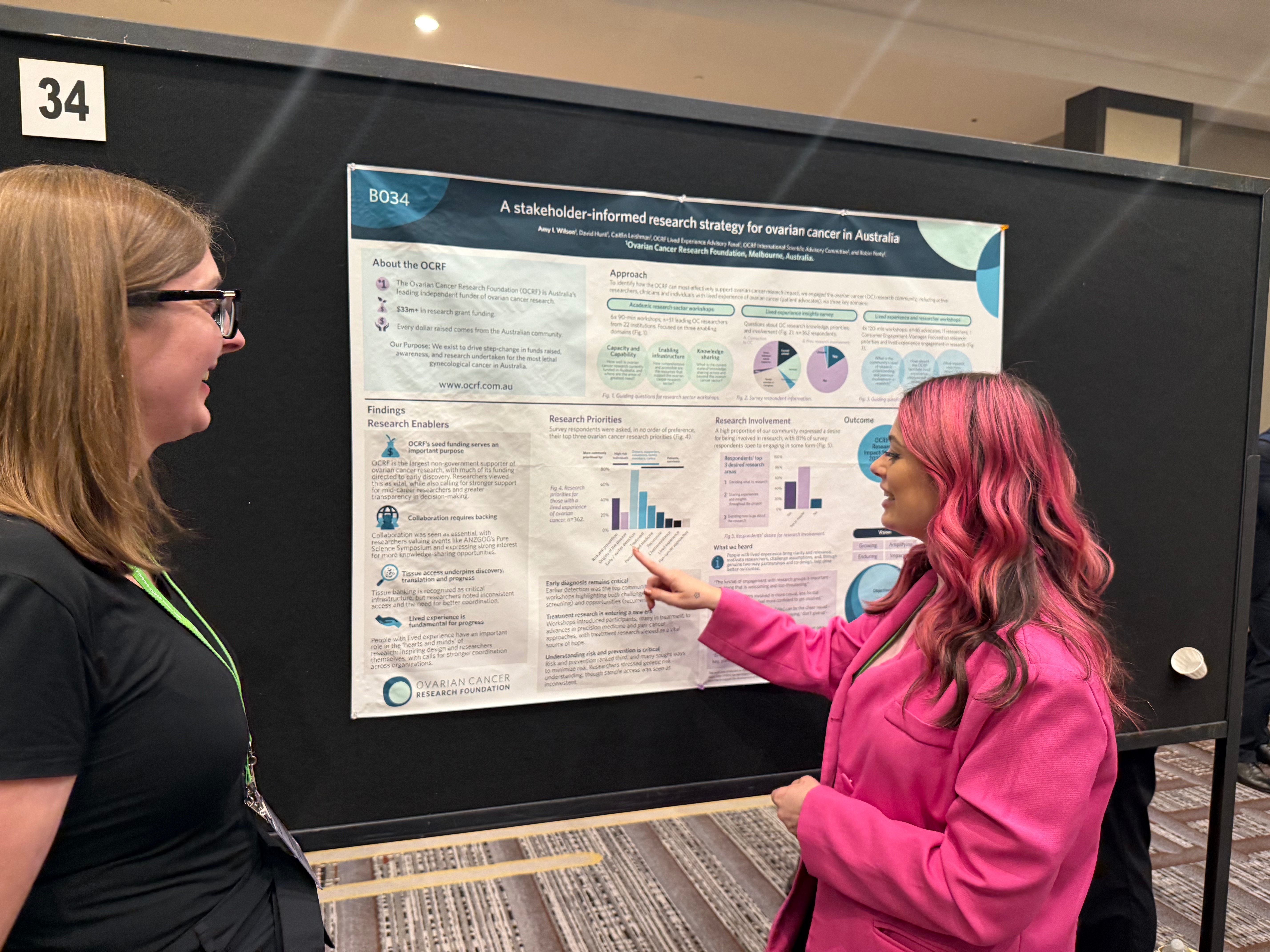
The OCRF team presented a poster detailing the extensive consultation process that informed the soon-to-be-released OCRF Research Impact Strategy 2025-2030. Feedback from international peers applauded the scale of consultations that took genuine care to listen to researchers, people with lived experience and clinicians alike, in formulating the most impactful way forward.
Gathering research intel, Dr Amy Wilson reported on the exciting progress shared by presenters...
Immunotherapy for ovarian cancer was a major theme and momentum is building
Leading immunotherapy expert Professor George Coukos, Director of the Department of Oncology at the University Hospital and University of Lausanne, Switzerland, highlighted the need to “arm” the immune system against ovarian cancer’s defences. Building on this, researchers shared new approaches, from cancer vaccines and engineered immune cells (CAR-T and CAR-NK), to drugs that can force their way through the complex tumour microenvironment.
“Collectively, these efforts signal growing momentum to make immunotherapy a real option for ovarian cancer. I’m particularly excited about the potential of chemokine-based therapies, which are signals that can switch immune cells into ‘fight’ mode — including the recent work from Dr Kathleen Kokolus and colleagues”, explained Dr Wilson.
Image: Dr Wilson presenting the OCRF's poster to Dr Elizabeth Christie, Peter MacCallum Cancer Centre
Ovarian cancer personalised medicine advances
Improving personalised treatment for diverse forms of ovarian cancer was a clear priority. Antibody-drug conjugates (ADCs) were top of the list. These drugs are designed to target cancer cells more precisely and researcher presentations indicated there’s over 200 ADCs in pre-clinical development.
Several researchers, including Assistant Professor Kalyan Banda from Fred Hutchinson Cancer Center, Washington, presented on improving testing for homologous recombination deficiency or positivity (HRD/HRP). Improved testing will allow clinicians to better predict who will benefit from PARP inhibitor treatment. Dr Elizabeth Christie from Australia’s Peter MacCallum Cancer Centre delved into why a patient’s cancer might become resistant to PARP inhibitors by focusing on genetic mutation changes and epigenetics, which are changes outside of DNA.
Dr. Sohrab Shah, from the Memorial Sloan Kettering Cancer Center, showcased how AI can help forecast treatment resistance. Predictive models could one day help doctors identify the next effective treatment before cancer becomes resistant.
International collaboration is a must for ovarian cancer early detection and prevention
Researchers highlighted that understanding how ovarian cancer begins is essential for prevention and early detection approaches. However, this relies on access to rare “pre-cancer” tissue samples, making global collaboration vital.
On the diagnostic front, there is excitement around AI, from discovering new biomarkers in blood and exosomes, to analysing circulating tumour DNA and even enhancing ultrasound imaging.
New evidence presented also suggests that mental health, including stress and depressive symptoms could play a role in ovarian cancer survival outcomes, demonstrating the need for holistic models of care.

Emphasising international collaboration as key to revolutionising enduring change beyond quick-wins, one researcher commented to the room: “If you want to go fast, go alone; if you want to go far, go together.”
The OCRF continues to gain value through representation at these important forums.
Image: OCRF International Scientific Advisory Committee member Professor Kenneth Nephew with Dr Amy Wilson
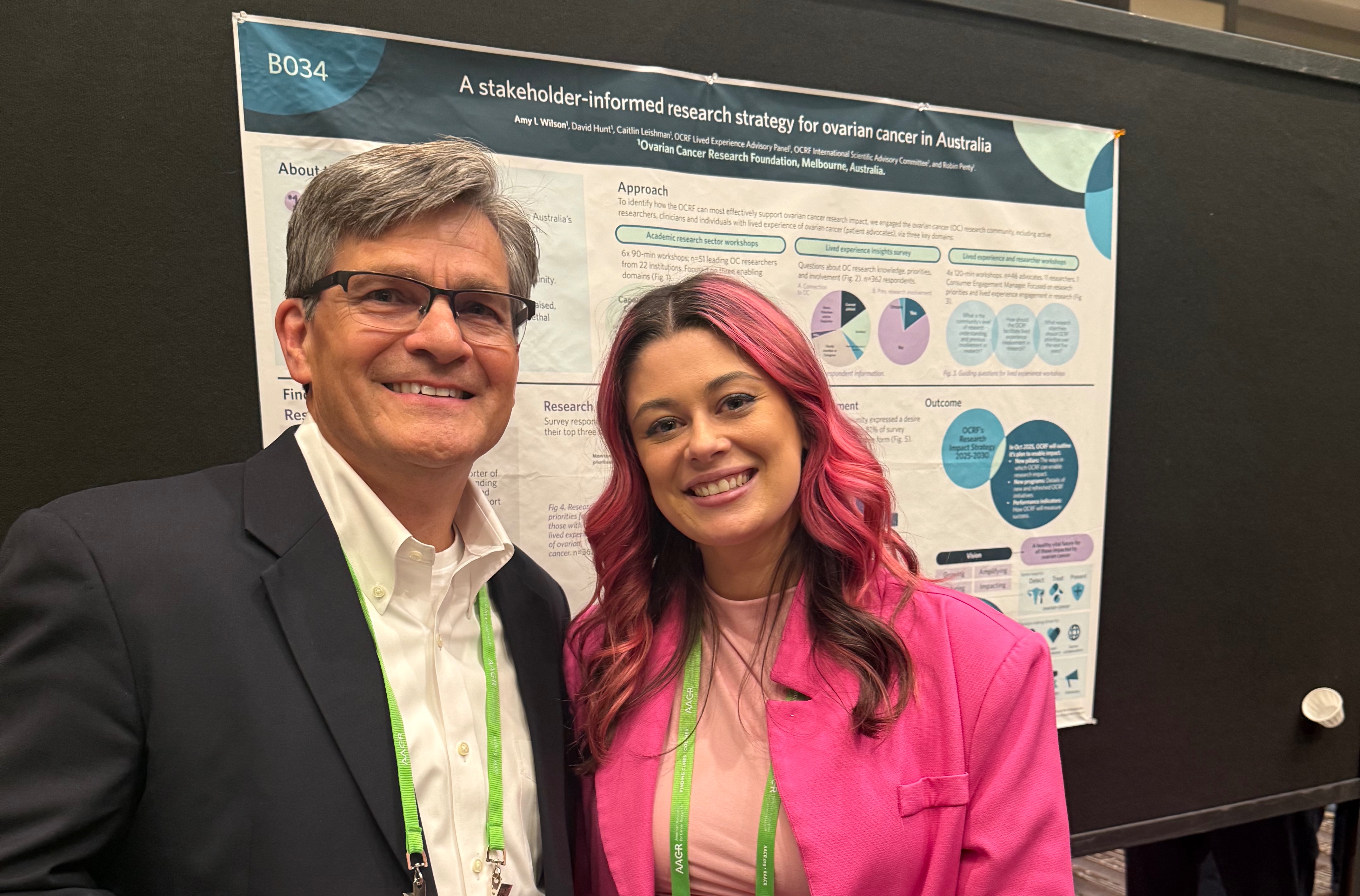
Two years ago, I felt privileged to represent the OCRF at this conference — it opened doors to the crucial connections that led to the Global Consortium. This year, the day after the conference, I was invited to the University of Colorado to meet with researchers adept at bringing multi-disciplinary experts together to solve these complex problems,” said Dr Wilson. “Undoubtedly there’s a collaborative spirit in ovarian cancer research, but you need to be in the room to build those relationships — thanks to donors, we are!
For further details on conference speakers see the conference program or AACR website.
To support ovarian cancer research, explore the fun ways that you can get involved in Frocktober!

Get the latest news, stories & updates.
