Global Ovarian Cancer Research Consortium launches US$1M+ AI grant with Microsoft
May 07, 2025

Four leading ovarian cancer research charities from four countries are funding a new AI Accelerator Grant in partnership with Microsoft’s AI For Good Lab to supercharge the next ovarian cancer research breakthrough.
8 May, 2025 - Today marks World Ovarian Cancer Day and the launch of the Global Ovarian Cancer Research Consortium — a first-of-its-kind alliance uniting four leading ovarian cancer research organizations across the United States, Australia, Canada, and the United Kingdom.
Together, the Consortium is announcing its inaugural initiative: a game-changing $US1 million grant, with an additional $US1 million in computing support from Microsoft’s AI for Good Lab, to address the global challenge in ovarian cancer survival rates. Globally, 324,000 women are diagnosed with ovarian cancer and 207,000 women die from the disease each year. In Australia, it remains the most lethal gynaecological cancer. The Consortium’s groundbreaking AI Accelerator Grant is a bold new effort to ignite a wave of innovation in AI-powered ovarian cancer research, bringing hope and potentially life-saving breakthroughs to women everywhere.
The Consortium, formed in October 2024, brings together leading philanthropic ovarian cancer organisations: Ovarian Cancer Research Alliance (OCRA) (United States), Ovarian Cancer Research Foundation (Australia), Ovarian Cancer Canada (Canada), and Ovarian Cancer Action (United Kingdom). Their mission: to combine forces, resources, and determination to urgently accelerate progress. Supported by Microsoft's technological capabilities and expertise, the Consortium is poised to have a major impact on ovarian cancer research.
Urgent catch-up
Progress in ovarian cancer research is lagging dangerously behind other diseases. It’s predicted that by 2050, the number of women around the world diagnosed with ovarian cancer will rise by more than 55% to 503,448, and the number of women dying from ovarian cancer is projected to increase to 350,956 each year.
AI is already revolutionising cancer diagnoses—from breast to brain, skin to thyroid—with stunning advances. But ovarian cancer has yet to feel the full benefit of this transformative technology. That changes now.
With this urgent call to action, the Consortium is summoning the world’s brightest minds to harness AI and tip the scales toward survival.
Researchers will be asked to form teams, including a representative from each of the four countries, to compete for the new grant.
Robin Penty, CEO of the Ovarian Cancer Research Foundation (Australia), said:
This AI Accelerator grant is a breakthrough in its own right. For the first time, international ovarian cancer charities have come together, driven by a shared determination to overcome the barriers that have kept progress in ovarian cancer in the slow lane. This exemplifies what can be achieved in the current economic and political climate through genuine collaboration and philanthropic leadership. The Ovarian Cancer Research Foundation is proud to be part of it, and excited about the possibilities this innovative grant could reveal.
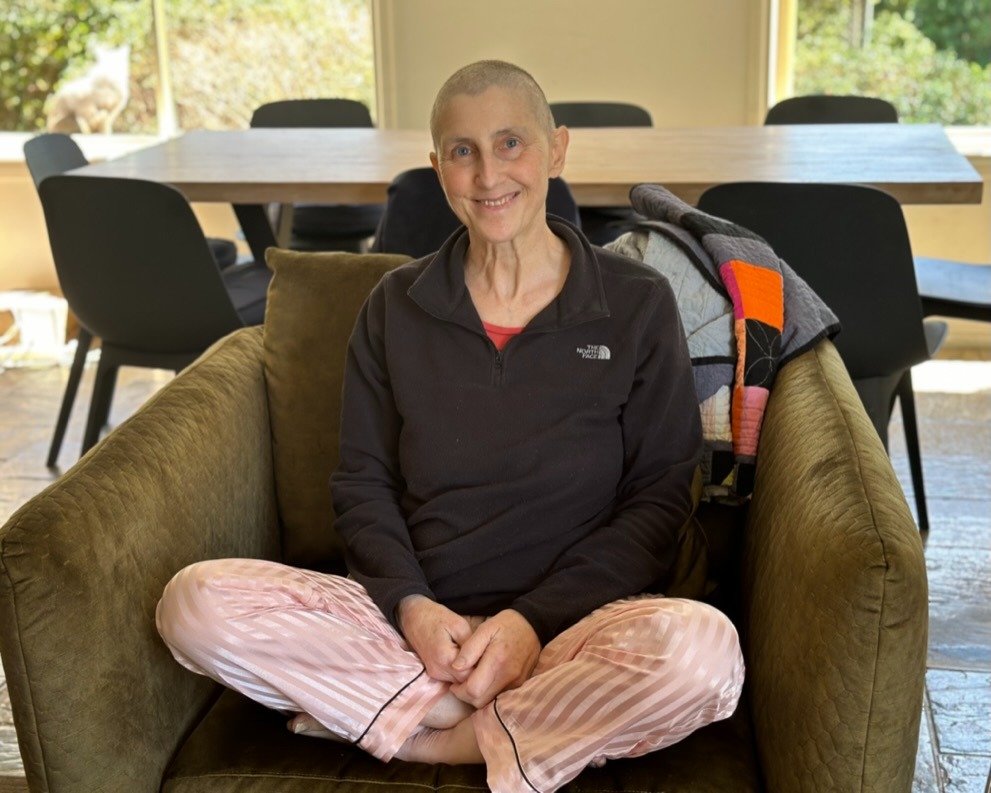
Karyn Stamp is a 57-year-old woman from Woodend, Victoria, who was diagnosed with stage 3c high-grade serous ovarian cancer in May 2024. Her story is all too common for women with this diagnosis: “Following major surgery and six rounds of chemotherapy in 2024, I was devastated to discover that there was no further treatment available to reduce the risk of my cancer returning. I am now experiencing early recurrence, only a few months after completing chemotherapy,” she said.
“I’m pleased that maintenance therapies, including PARP inhibitors, reduce the chance of recurrence for many women, but that was not an option for me. This Global Ovarian Cancer Research Collaboration gives me hope that AI will power new advancements in treatment to stop ovarian cancer recurrence for all women. The OCRF achieves so much on its own, so I am excited to think of how much more will be achieved from this global meeting of research minds, towards developing innovative new treatments or early detection tests.”
Pictured: Karyn in 2024
Juan Lavista Ferres, Microsoft Chief Data Scientist and Director of the Microsoft AI for Good Lab, said the grant holds great potential to accelerate progress: "Discoveries are needed to find lifesaving treatments for ovarian cancer, a cancer that tragically still has a low survival rate. Equipping leading researchers around the globe with powerful AI tools and computing resources will help accelerate their critical work, hopefully leading to breakthroughs that save women's lives. Microsoft's AI for Good Lab is proud to support ovarian cancer research through this grant.”
The successful grant will support any area of research that will improve survival rates. It must have a multi-jurisdictional team from across the grant-funded countries and a multi-disciplinary team, including an AI expert.
Representatives from the four consortium charities will host a webinar for researchers on Thursday 22 May from 6:00 am to 7:00 am AEST to share more about this unique funding opportunity. Register here.
To learn more about the grant, visit the OCRA website.
For further information or to arrange an interview, please contact:
Avalee Weir, Senior Communications Director, Ovarian Cancer Research Foundation
ph. +61 416 130 033 e. avalee.weir@ocrf.com.au

Get the latest news, stories & updates.
