OCRF co-funds $2.5M research centre, harnessing cutting-edge scanning techniques for those at high-risk of ovarian and breast cancer
- The Ovarian Cancer Research Foundation (OCRF) has committed $300,000 to the Australian Cancer Research Foundation (ACRF) Centre for High-Risk Breast Cancer which could also benefit those at high-risk of ovarian cancer.
- Funding will see new magnetic resonance spectroscopy (MRS) technology, pioneered by Professor Carolyn Mountford and her multidisciplinary team, able to be used in an early-stage clinical trial.
- Researchers will assess the ability of MRS scanning to non-invasively identify breast and ovarian cancer at precancerous stages, with the potential to enhance survival outcomes.
- This collaborative funding from the ACRF, OCRF and National Breast Cancer Foundation sees cutting-edge technology harnessed to advance research across cancers that disproportionately affect women.
Reading time: 2 minutes
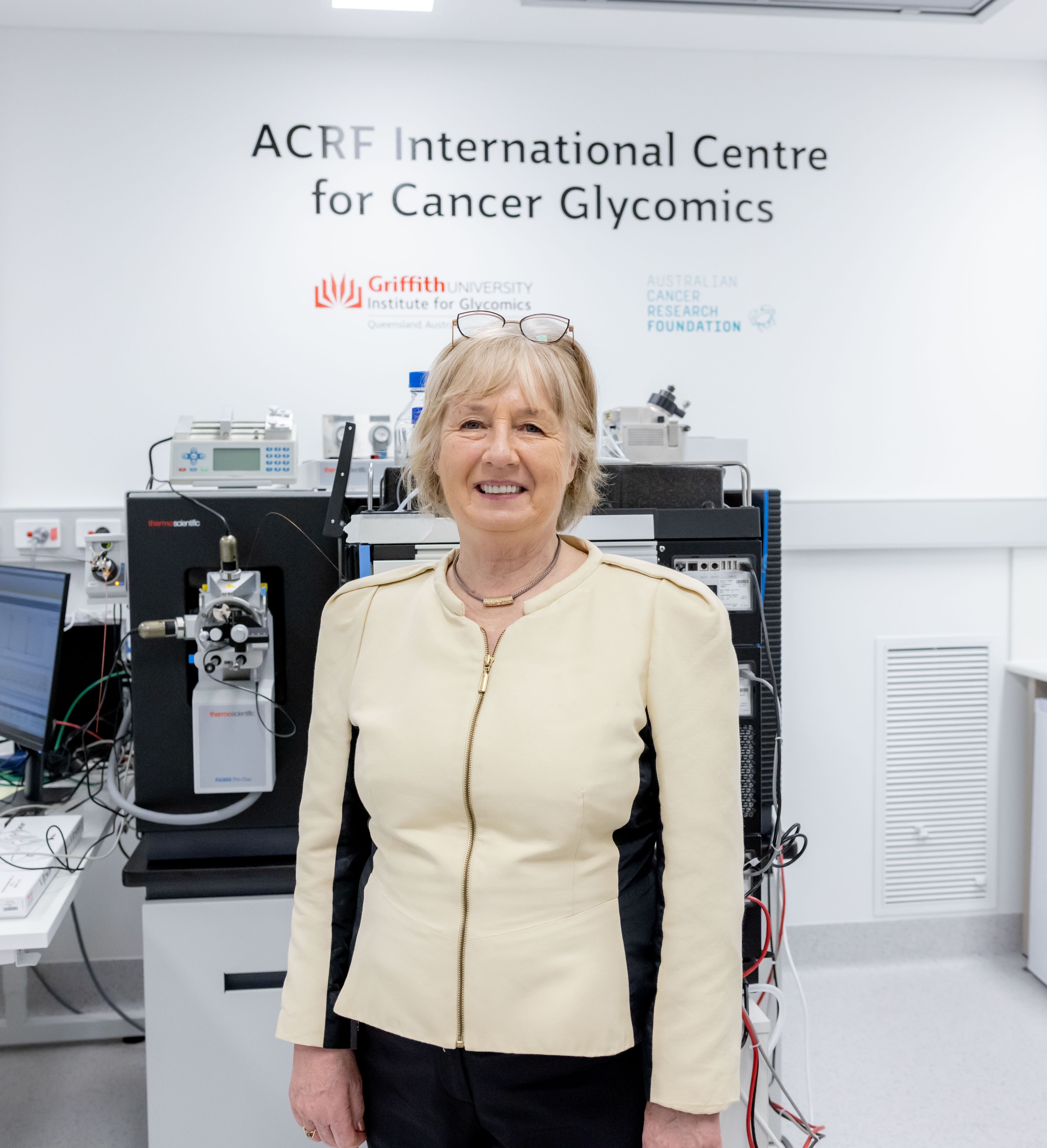
Image: Professor Carolyn Mountford
Boosting non-invasive early detection potential, the Ovarian Cancer Research Foundation (OCRF) has committed $300,000 to the Australian Cancer Research Foundation (ACRF) Centre for High-Risk Breast Cancer, which could lead to a clinical trial including people with BRCA1 and BRCA2 genetic variants who are also at a high risk of ovarian cancer.
On 2 December 2025, the ACRF announced $9.3M towards four innovative cancer research programs, including the ACRF Centre for High-Risk Breast Cancer. This $2.5M Centre will be located at the Princess Alexandra Hospital in Queensland, in collaborative with researchers from Griffith University and the SaaS company DatChem who analyses the data.
The new Centre harnesses an innovative scanning approach developed by Professor Carolyn Mountford and her team called magnetic resonance spectroscopy (MRS) technology. The Centre will use this scanning technology to detect minuscule, precancerous changes in tissue before (sometimes years before) breast cancer develops.
This funding will secure the purchase of a 3T MRI scanner, necessary to conduct this research and a future national clinical trial. Those eligible, referred from Queensland-based high-risk breast clinics, will include people with BRCA1 and BRCA2 genetic variants. Individuals with these genetic variants are also at an increased ovarian cancer risk—this project will therefore test the effectiveness of this scanning technique for ovarian cancer early detection and potentially identify women with early-stage ovarian cancer and ovarian cancer pre-cancerous tissue. The team also hope, following a trial, to make this technology available nationwide.
The OCRF is proud to be collaboratively funding this project that crucially facilitates innovative technology to accelerate outcomes across two cancers that disproportionally affect women, including ovarian cancer. Ovarian cancer remains the most lethal gynaecological cancer, therefore identifying those at the highest risk of developing the disease at pre-cancerous stages with Professor Mountford’s state-of-the-art approach, truly has potential to transform survival statistics.
Robin Penty, OCRF CEO
This innovative scanning technology also boosts precision medicine capabilities by identifying those at highest risk of breast cancer, informing risk management strategies and indicate those who can safely forego unnecessary, preventative surgeries.
This Centre complements OCRF-funded research underway at Griffith University where Professor Mountford is working with Professor Michael Jennings and with clinicians at the Princess Alexandra Hospital who are working towards identifying those at risk of ovarian cancer. Through the OCRF-funded project, the team are investigating both a blood test for ovarian cancer and technology development to ensure the MRS technology is sensitive enough to get as much information from an ovary scan as they currently can get from a breast scan. The goal is to develop accurate risk assessment based on a risk score. OCRF co-funding of this Centre will help the team gather valuable data towards this ovarian cancer early detection project.
Professor Mountford’s scanning approach represents over three decades of collaborative research. The OCRF are delighted to see the benefits of this non-invasive, state-of-the-art technology being explored for those at higher risk of ovarian cancer.
With funding from the ACRF, the National Breast Cancer Foundation ($362,000) and the OCRF, this project demonstrates the potential benefits of leveraging funding towards shared goals including better outcomes in both breast and ovarian cancer—two cancers that disproportionally affect women and girls.
If you would like to read more about the project, please visit acrf.com.au.

Get the latest news, stories & updates.
