Ovarian cancer researchers publish promising immunotherapy treatment
May 28, 2024
To date, immunotherapies have been largely ineffective at treating ovarian cancer. OCRF-funded researchers have published details of a promising new treatment approach, capable of overcoming existing barriers, with the hope of opening up the benefits of immunotherapy to ovarian cancer patients.
- Following OCRF-funding, Dr Sherry Wu’s research team has developed a promising immunotherapy treatment for ovarian cancer.
- The therapy harnesses the effects of a molecule called Let-7i which helps activate immune response.
- In pre-clinical models, the Let-7i-based therapy reduced tumour size by approximately 95%.
Reading time: approximately 3 minutes
Dr Sherry Wu and her team at The University of Queensland were originally funded by the Ovarian Cancer Research Foundation to investigate the promise of a molecule they had discovered, Let-7i, as a basis for an ovarian cancer immunotherapy treatment. Demonstrating significant progress, the team has recently had their study published in the Cancer Immunology, Immunotherapy journal[i].
What is immunotherapy and why has it been largely ineffective in treating ovarian cancer?
The immune system plays a crucial role in fighting cancer as it can direct healthy immune cells to eliminate dangerous cancer cells, assisting the body in self-defence[ii]. However, the environment surrounding a tumour can contain cells that propel tumour growth and stop the immune system from eliminating these cancer cells. In addition, cancer cells can adapt and ‘hide’ from the immune system, allowing cancer to spread.
Immunotherapies, which bolster the ability of the immune system to respond to cancer, have been revolutionary in treating some cancers — in fact, the importance of immunotherapy was recognised in 2018, with inventor James P. Allison receiving the Nobel Prize for Physiology or Medicine[iii].

Yet, this promising treatment avenue has not been effective for ovarian cancer patients. Why?
- Immunotherapy works best on early-stage disease, but there is no early detection test for ovarian cancer and diagnosis often occurs when the disease has spread.
- Ovarian cancer tumours are particularly good at creating a microenvironment around the tumour containing enzymes, cells and other factors that work together to stop the immune system from activating, and immunotherapies from boosting immune responses.
Given these characteristics, ovarian cancers can resist the way current immunotherapies work, it is crucial to develop novel strategies.
What makes this immunotherapy approach different and how could it help ovarian patients?
In 2018 the OCRF awarded a three-year grant of $363,000 to Dr Wu’s study of an innovative idea that could overcome persisting barriers to ovarian cancer immunotherapy. The researchers used bioinformatics involving computer analysis of 602 tumour samples from ovarian cancer patients. The project involved:
- Firstly, the researchers generated mouse ovarian cancer cell lines that expressed Let-7i molecules and then implanted these cells into mice models. This allowed them to compare what happened to tumours when Let-7i was present at high levels as compared to control samples where Let-7i was present at low levels.
- Secondly, they developed a delivery system to test whether this immunotherapy could be practically delivered to patients in a clinic. The immunotherapy uses nanoparticles to deliver the Let-7i to tumour cells, allowing tumours to have enhanced interactions with immune cells, increasing the ability for immune cells to activate against cancerous cells.

Results showed that when Let-7i was present in pre-clinical models it was more likely that there was an increased number of immune cells in the tumour. These cells activated immune response, either by attacking cancerous cells or boosting the immune system’s ability to alert the body. Let-7i showed potential to reduce ovarian cancer growth by approximately 95%.
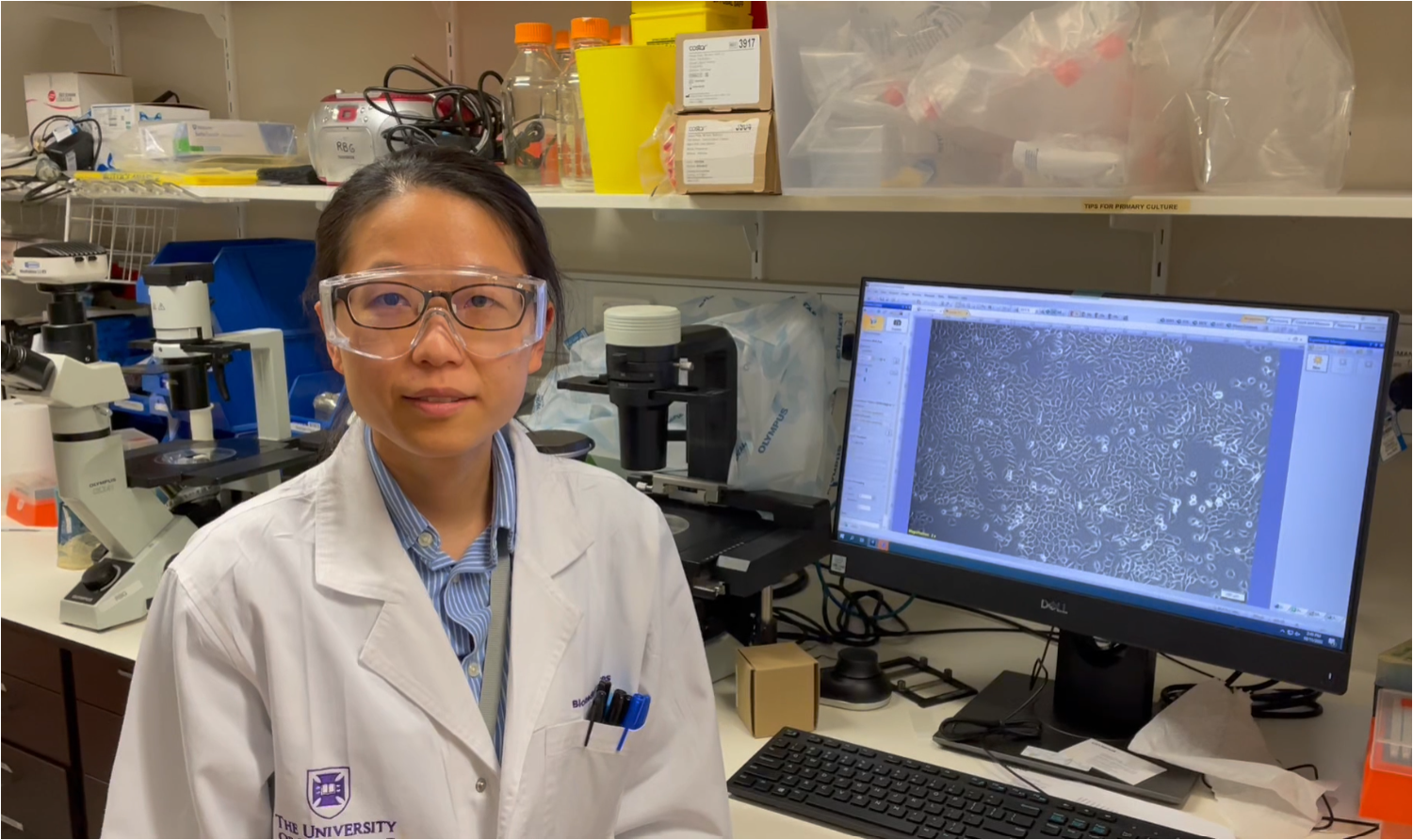
Dr Wu explains that the results are promising.
“The work can significantly enhance the interaction between tumour and immune cells and improve immune therapy response in patients with ovarian cancer. The improved ability of immune cells to interact with cancer cells is critically needed in order to significantly reduce disease recurrence in ovarian cancer,” she said.
Dr Sherry Wu
Dr Wu’s study demonstrated that Let-7i plays an important role in immunity against ovarian cancer, and that it could boost the effectiveness of immunotherapies for ovarian cancer patients. In their next phase of research, the team will further expand their models and improve the nanoparticle delivery system. They will also test their therapy in combination with other immunotherapies, chemotherapies and PARP inhibitor drugs to determine if a combination could be even more effective in patients.
With high recurrence rates and treatment pathways that have not significantly changed in decades, ovarian cancer patients urgently require new treatment options.
This project demonstrates that the OCRF acts as an essential launchpad by supporting the innovative ideas of researchers like Dr Wu, so that they can pursue solutions to this critical need.
This article was reviewed and approved by Dr Sherry Wu.
Our end of financial year appeal is now live
Your donations contribute to valuable research and drive progress. And right now your $50 gift becomes $100, thanks to our matching donors.
Key terms:
Immunotherapy: a type of cancer treatment that helps the immune system fight cancer.
Bioinformatics: a scientific discipline using computers to collect and analyse biological data.
References
[i] Cancer Immunology, Immunotherapy: https://link.springer.com/article/10.1007/s00262-024-03674-w
[ii] Stony Brook Cancer Center: https://cancer.stonybrookmedicine.edu/diagnosis-treatment/Immunotherapy[ii] Knight A, Karapetyan L, Kirkwood JM. Immunotherapy in Melanoma: Recent Advances and Future Directions. Cancers (Basel). 2023 Feb 9;15(4):1106. doi: 10.3390/cancers15041106. PMID: 36831449; PMCID: PMC9954703. https://pubmed.ncbi.nlm.nih.gov/36831449/
[iii] Knight A, Karapetyan L, Kirkwood JM. Immunotherapy in Melanoma: Recent Advances and Future Directions. Cancers (Basel). 2023 Feb 9;15(4):1106. doi: 10.3390/cancers15041106. PMID: 36831449; PMCID: PMC9954703. https://pubmed.ncbi.nlm.nih.gov/36831449/

Get the latest news, stories & updates.
