Prevention, early detection and AI on international gynaecological cancer meeting agenda
November 04, 2026
With so many exciting research developments in the pipeline, and an increased focus on national and international collaboration to help accelerate progress, the OCRF’s Research team is constantly working to keep abreast of what’s new.
Reading time: 3 minutes
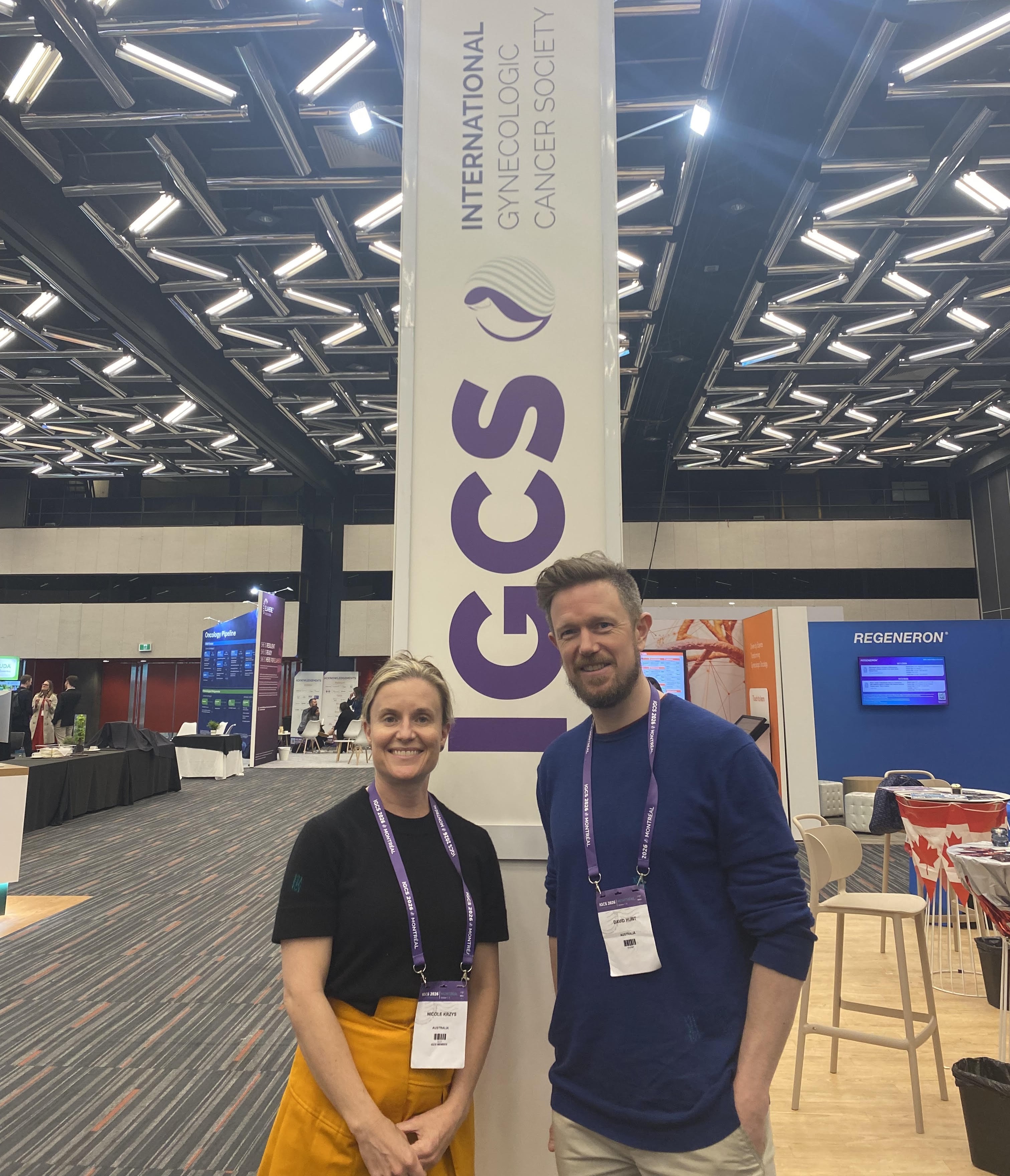
Executive Director, Research and Policy, David Hunt from the International Gynecologic Cancer Society’s 2026 Annual Global Meeting in Montreal, Canada from 1-3 October, where prevention, early detection and the opportunities and benefits of AI, were on the agenda.
What's it about?
The IGCS Annual Global Meeting brings together researchers, clinicians, policy makers, industry and lived experience advocates from all over the world.
This was a rare opportunity for the OCRF to connect face to face with the global ovarian cancer research community.
Our Board Member, Dr Nicole Krzys (pictured, left) also attended.
Why does this matter?
Ovarian cancer is the most lethal gynaecological cancer, so unsurprisingly it was a major focus of the meeting. Several themes were explored which are especially relevant to the OCRF’s work, from prevention and early detection through to artificial intelligence in research.
One of the most important sessions covered opportunistic salpingectomy - the removal of the fallopian tubes when people undergo surgery to reduce future ovarian cancer risk. Dr Gill Hanley traced the procedure’s origins in British Columbia in 2010, and the groundbreaking work done in Canada that has led to the highest level of uptake in the world. Dr Hanley took us through the robust and growing evidence base for its effectiveness, and why she feels it should be routinely offered to appropriate patients.
Early detection and Artificial Intelligence
Early detection was the focus of another important presentation, from Sudha Sundar, who explored how and whether ovarian cancer is being picked up during emergency admissions, and what happens next. Too often, delays are costing lives. She also presented the results of a large UK screening program that tested the long-standing biomarker CA125, and the results were clear: CA125 isn’t good enough. We need an early detection test that can identify ovarian cancer earlier, and more reliably, she told the conference. It was motivating to hear, as the OCRF continues to fund and advocate for research in this area.
A fascinating session on Artificial Intelligence (AI) was presented by Dr Ali Basherati, the Canadian lead on the global ‘AI Accelerator Grant’ co-funded by the OCRF. Ali presented exciting (but embargoed) Australian preliminary results from the study, explaining how AI ‘doesn’t see things we can’t see, it finds things we can’t find…and faster’.
Professor Iain McNeish’s presentation took this further, systematically exploring the opportunities and risks of AI and machine learning in research, and explaining why transparency and accountability are so important: ‘there should be no black boxes…we need to know how AI works’.
What comes next?
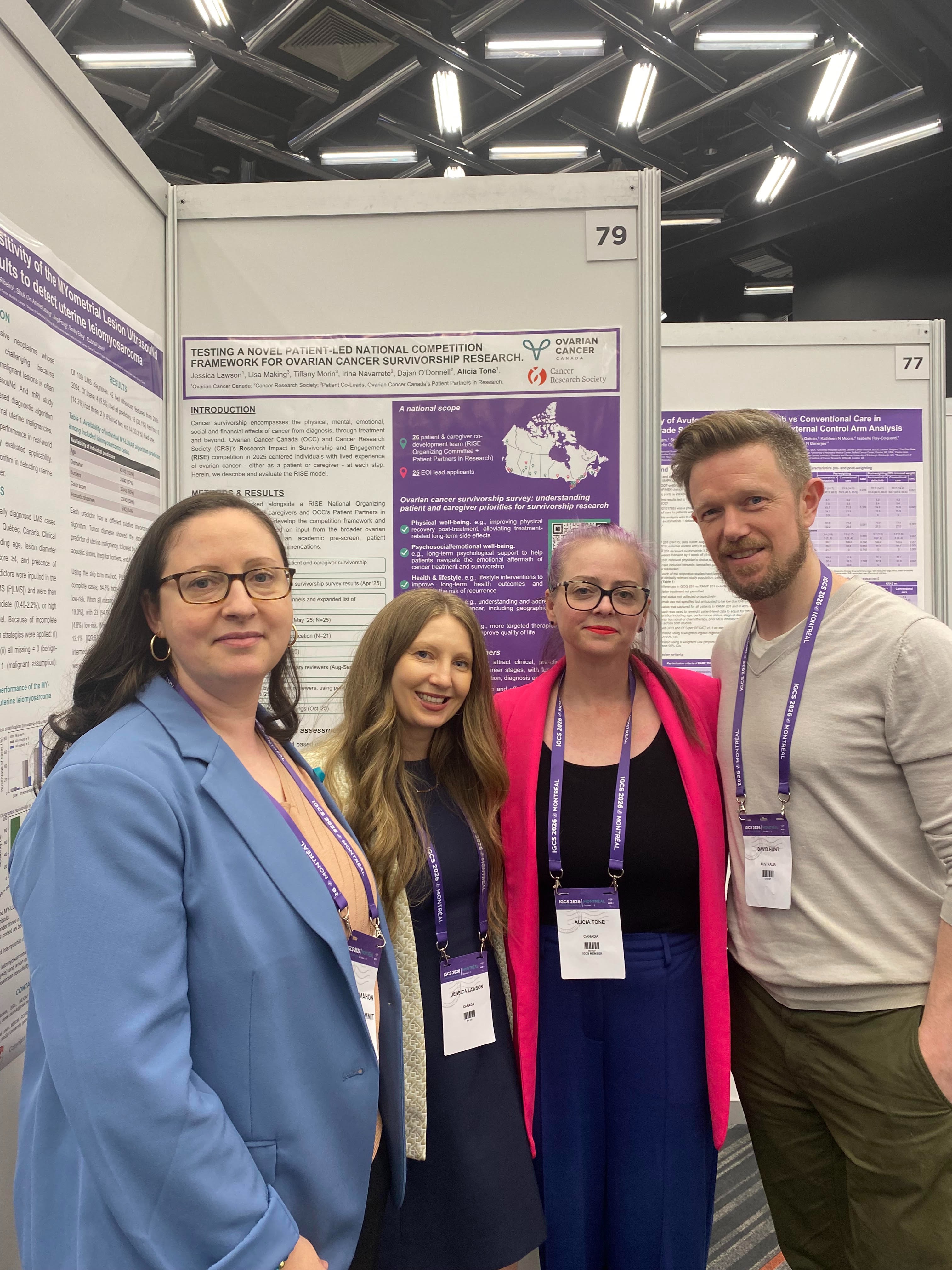
With media interest in opportunistic salpingectomy increasing in Australia, it was great for the OCRF to meet with global experts on the subject. The OCRF met with Canada’s Professor David Huntsman and Dr Alicia Tone, and heard reflections from Australia’s Professor Paul Cohen, co-chair of the conference, on what Australia can do to build awareness and potentially, uptake.
On a related note, the OCRF is working through the details of an exciting ovarian cancer prevention research collaboration. We hope to share more details early in the new year.
The session on AI was also extremely timely. The OCRF is working to finalise the details of a second ‘AI Accelerator Grant’, again co-funded with our global partners in Canada, the US and the UK (the ‘Global Ovarian Cancer Research Consortium’ or GOCRC).
Stay tuned for more exciting updates in the new year!
David Hunt
Executive Director, Research and Policy
Photo: L-R Melissa McMahon, Jessica Lawson, and Dr Alicia Tone from Ovarian Cancer Canada, and David Hunt

Get the latest news, stories & updates.
