Validation of new treatments for low-grade serous ovarian cancer
Overview
Experts on a rare subtype of ovarian cancer called low-grade serous ovarian cancer will trial promising drug combinations for treating the disease, with the view to identifying the most promising drug combination, to inform a new targeted treatment.
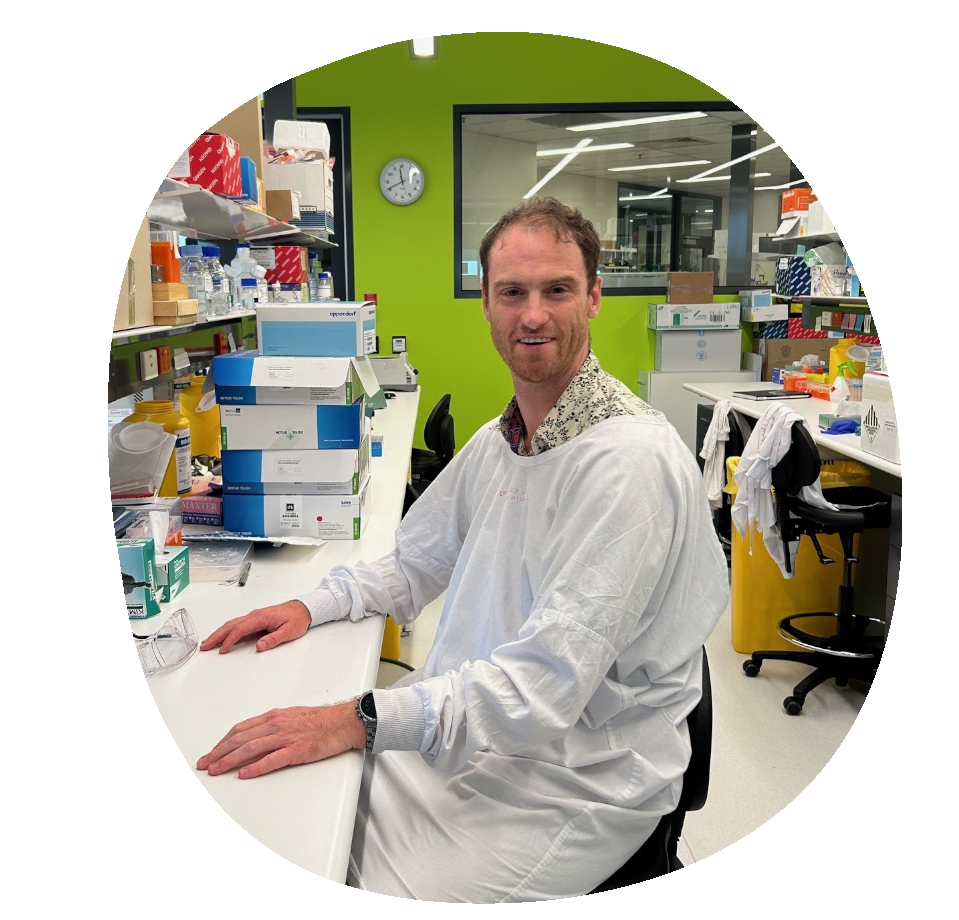
Lead researcher: Dr Dane Cheasley
Grant received: $482,000 over three years
OCRF research pillar: Treatment, Managing Recurrence
Primary institution: Cancer Evolution and Metastasis Program, The Peter MacCallum Cancer Centre
Funded institution: The University of Melbourne
Associated Institution/s: The University of British Columbia, Vancouver General Hospital, The University of Newcastle, Walter and Eliza Hall Institute for Medical Research, Victoria
Latest update
Project details
Low-grade serous ovarian cancer (LGSOC) doesn’t respond well to currently available therapies such as chemotherapy, so Dr Dane Cheasley is investigating new and effective treatments to boost the currently low survival rate. Previously, he’s studied the characteristics that make LGSOC unresponsive to therapy. Now, the team will test a series of drug combinations, that have shown promise in treating other cancers but have never been tested on LGSOC.
Aims:
- Demonstrate how effective each of the 20 identified drugs are against LGSOC by testing them alone, and in combination with each other and alongside standard treatments including chemotherapy, in essential pre-clinical experiments.
- Assess how toxic each of the 20 drugs are to healthy cells, to eliminate those that damage healthy cells and therefore identify those least likely to cause side effects.
- Identify the most effective and least toxic drug combinations, that show promise across all subtypes of LGSOC, and across LGSOC patient samples of diverse genetic makeup, to ensure that the team can present a potential solution for all patients.
Approach:
Dr Cheasley took an encompassing approach to screening Therapeutic Goods Administration (TGA) approved drugs to narrow down those with the most potential to be repurposed as an LGSOC treatment.
“We screened every known potential drug, rather than testing only a few promising ones.”
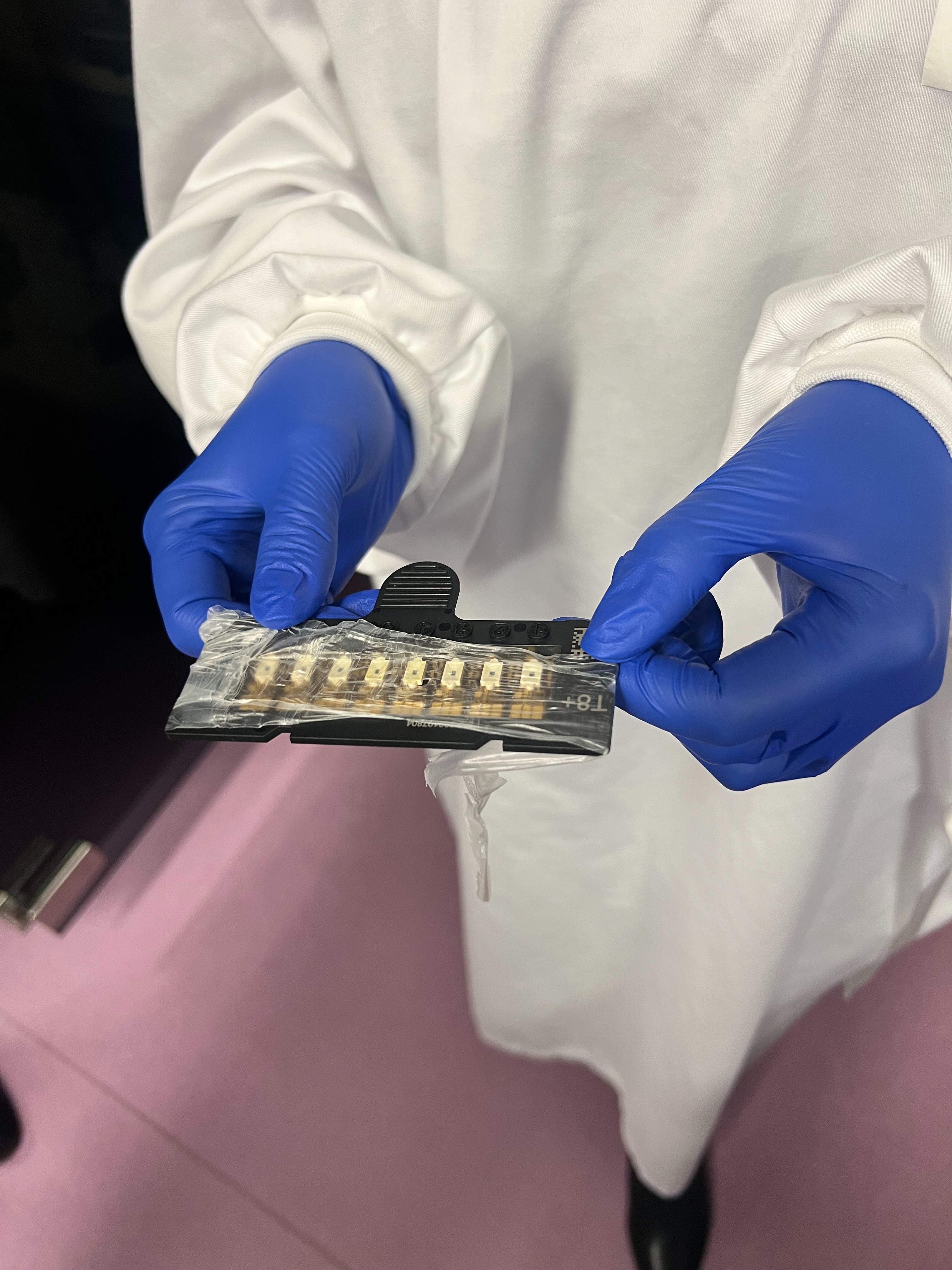
In previous studies he used powerful high-throughput screening technology, which allows thousands of samples to be rapidly examined, to screen 3,500 potentially suitable drugs. These had all been approved for use in treating other cancers or for phase 1 clinical trials. He tested the most promising 100 drugs in 12 LGSOC patient samples to identify the 20 most effective.
If successful, this project could produce a compelling case for a small clinical trial of approximately ten patients in a collaboration between Australian and Canadian researchers and clinicians.
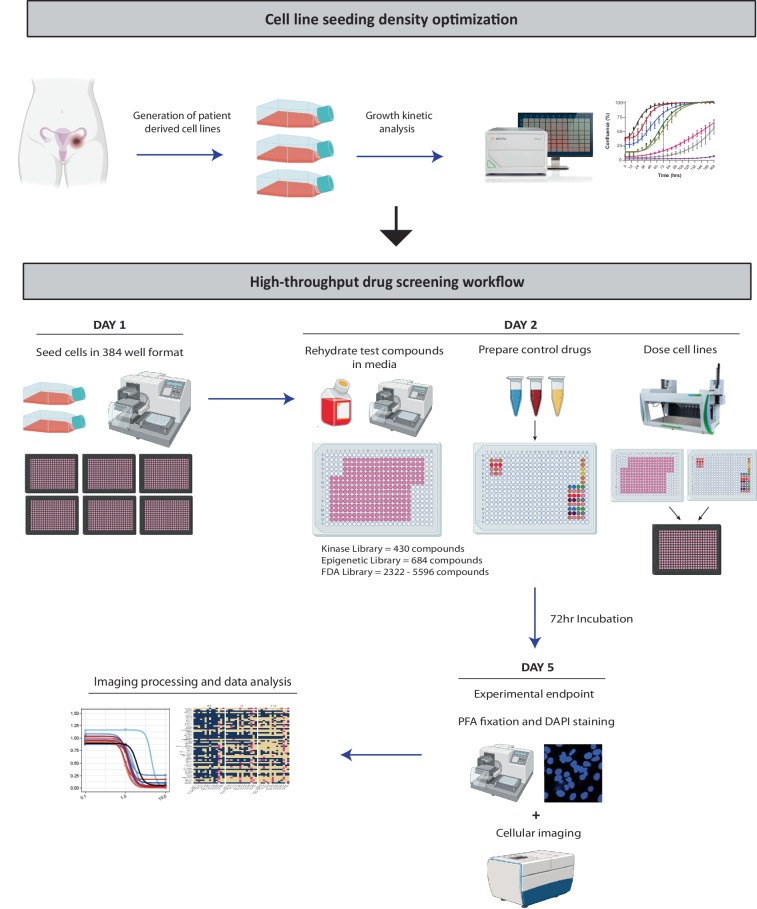
This image, from the team’s recent study (Pishas et al. 2024), shows an easy-to-understand snapshot of how the researchers tested different drugs on low-grade serous ovarian cancer (LGSOC) cells. First, they used live imaging to see how quickly the cancer cells grew and worked out how many to put in each tiny well. The cells were then placed on special plates and left to settle overnight. The next day, robotic tools carefully added hundreds of different drugs and control treatments. After three days, the cells were stained so the team could see which ones survived, and images were taken to measure how well each drug worked.
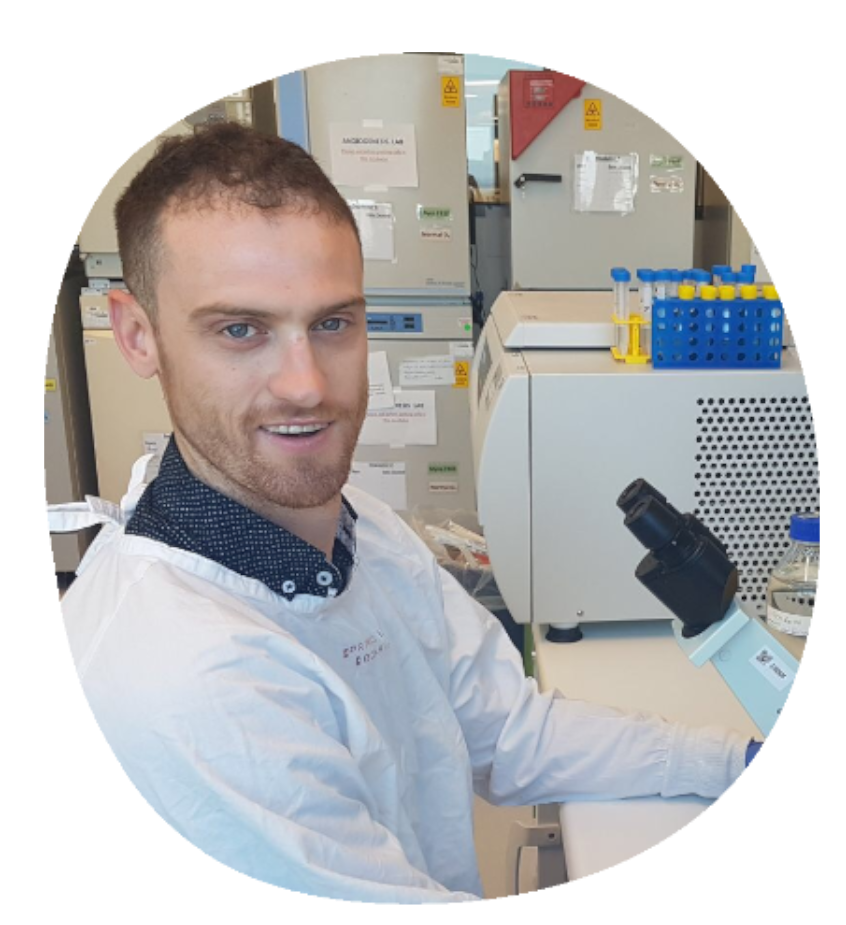
Dr Kathleen Pishas, from Dr Cheasley's team, discusses her the work in the Peter MacCallum Cancer Centre
Ambition and outcomes:
LGSOC is a rare ovarian cancer with scarce funding and accessible samples, making development of effective treatments a challenge. This project has the potential to change the treatment landscape for LGSOC patients in significant need. Importantly, the drug combinations will be tested on both first diagnosis LGSOC samples and samples with recurrent disease to evaluate effectiveness across both cases.
Although new drug treatments often take a long time to develop and can be expensive for patients, Dr Cheasley has focused his research on TGA approved drugs as it is more feasible to fast track them into the clinic. Additionally, the drugs are off patent and therefore more affordable. Dr Cheasley’s considered approach aims to make highly effective LGSOC treatments as accessible as possible to as many as possible, as soon as possible.
Current status:
This ovarian cancer research project is at the preclinical stage where researchers are conducting extensive studies in the lab with samples and models to verify the effectiveness of their approach as well as evaluating how safe it is likely to be for humans *
*Want to learn more about the medical research pipeline? Read more here.
For every project like this, many more can’t get underway due to a lack of funding. Support research like this to help them move forward.
Share page

Get the latest news, stories & updates.
