Professor Kum Kum Khanna
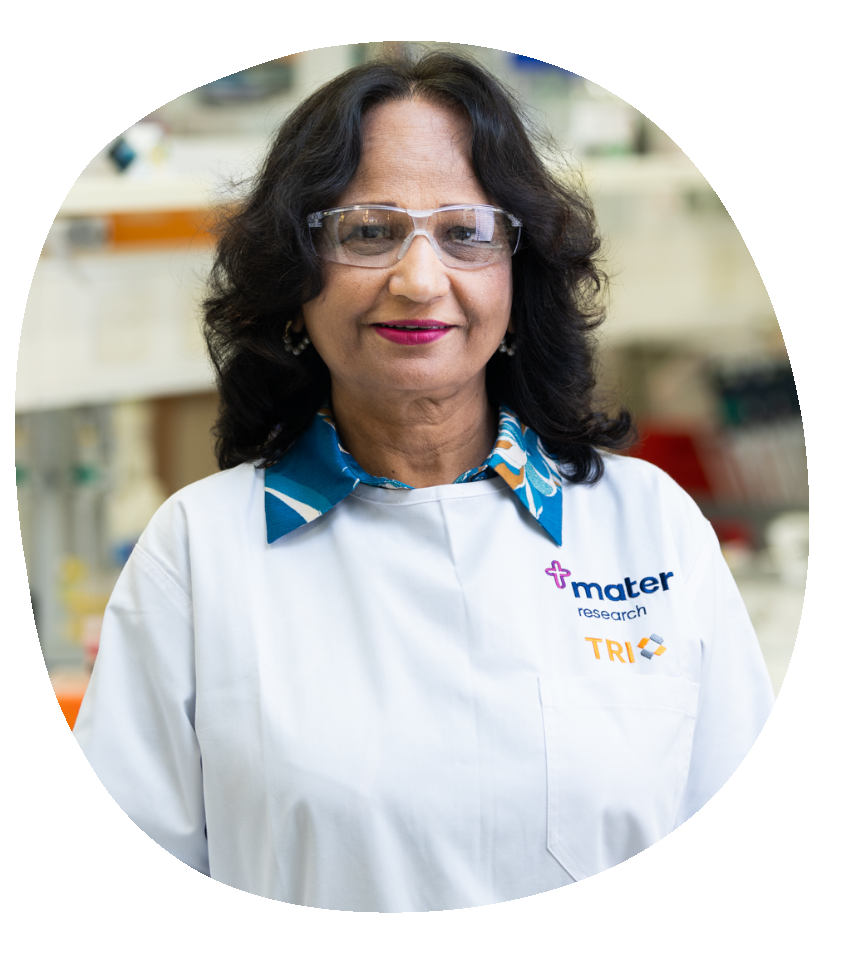
Research Institution: Mater Research
OCRF priorities the researcher addresses: Treatment
Their OCRF-funded research projects: New treatment targeting high-grade serous ovarian cancer and triple negative breast cancer, Targeting a protein to make ovarian cancers more susceptible to immune checkpoint blockade therapy
I know from personal experience that women should not be ignoring the signs their body is sending. They should feel they can ask questions, and check whether what is occurring is an issue. I’m a researcher because when a patient recognises a problem, I want them to be met with effective treatments.”
About Professor Khanna’s research
Professor Kum Kum Khanna is a leading Australian researcher working to develop innovative cancer treatments. She focuses on how normal cells respond to DNA damage and how the defects in DNA damage response pathways can lead to cancer formation and progression.
Her team is examining how these defects in DNA can be exploited to improve efficacy of treatments that could stop mutations and therefore growth of triple negative breast and high-grade serous ovarian cancer.
Having extensively studied DNA repair pathways, Professor Khanna applied her knowledge to cancer treatment to make her career as applicable as possible to the patients who urgently need effective options.
Background
As a teenager, Professor Khanna was inherently curious and felt compelled to get to the bottom of scientific questions. While at university she lost her mother to bladder cancer. Witnessing her mother’s experience, accompanying her back and forth to hospitals, was a catalyst for Professor Khanna to turn her attention to cancer research. She wanted to understand: Why her mother? How does cancer metastasise? How did her mother’s cancer evolve from a non-cancerous tumour into cancer?
After receiving her PhD in parasitology from The Postgraduate Institute of Medical Education and Research, India, Professor Khanna began her postdoctoral career at the University of Adelaide. She then moved to Queensland to research how cells respond to DNA damage signals at QIMR Berghofer, where in 1998 she set up her own laboratory after being awarded significant funding through the National Heath Medical Research Council and Sylvia and Charles Viertel fellowship.
A few years ago, Professor Khanna was diagnosed with endometrial cancer. Considering her lifetime of research, she recognised the signs early and received treatment quickly. Fortunately, because the early-stage diagnosis meant the cancer was contained at the time of surgery, she was able to be treated successfully.
Her personal experiences with cancer drive her to seek solutions that will allow more people to overcome and prosper after cancer.
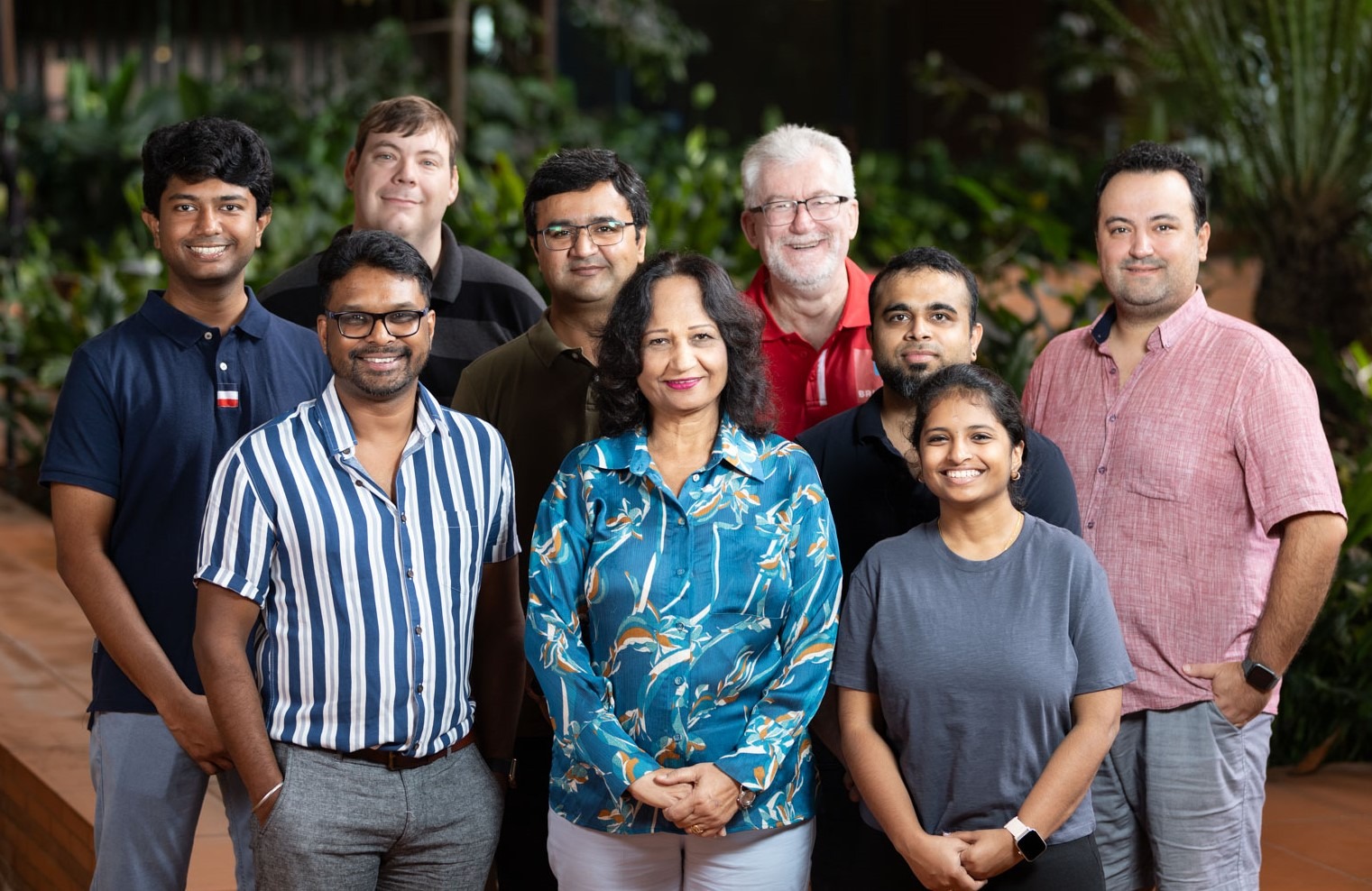
(Pictured above: Professor Khanna and her team)
Career highlights
Uncovering an important gene product: Professor Khanna pioneered studies of the Ataxia-telangiectasia mutation (ATM). Ataxia-telangiectasia is a genetic condition that can contribute to increased cancer risk and ATM is a gene product that is a key driver of DNA damage response pathways. Professor Khanna was the first to define the hereditary connection between ATM mutations and breast cancer when she identified a particular type of ATM mutation in families with multiple cases of breast cancer.
Identifying genetic connections: Her work also established how ATM function is linked to breast cancer by identifying ATM as a molecule that partners with BRCA1 proteins — and therefore her work shed light on ATM’s importance in ovarian and breast cancer where BRCA1 mutations increase the risk of both cancers.
Improving clinical practice: By identifying ATM mutations that could lead to disease in families that experience breast cancer, Professor Khanna’s work led to the incorporation of ATM gene testing in breast cancer panels in Australia, led by the EviQ committee. This resulted in the development of risk management guidelines for patients with ATM mutations, a practice that continues today.
Collaborative impact
Biologically, both triple negative breast cancer and high-grade serous ovarian cancer have similar characteristics, such as the presence of the same mutations including TP53 and in some cases BRCA1, which contribute to the earliest stages of the cancer development. For this reason, Professor Khanna’s recent project was funded by both the Ovarian Cancer Research Foundation and the National Breast Cancer Foundation, demonstrating an important collaborative effort that leverages both scarce cancer research funding and optimises knowledge sharing, benefiting more patients.
Professor Khanna works closely with clinicians, particularly from Mater Hospital, to inform the focus of her research. Her research pursuits respond to where clinicians say the greatest need lies.
For every project like this, many more can’t get underway due to a lack of funding. Support research like this to help them move forward.
Share page

Get the latest news, stories & updates.
