Welcoming OCRF-funded researcher Luzia Bukali
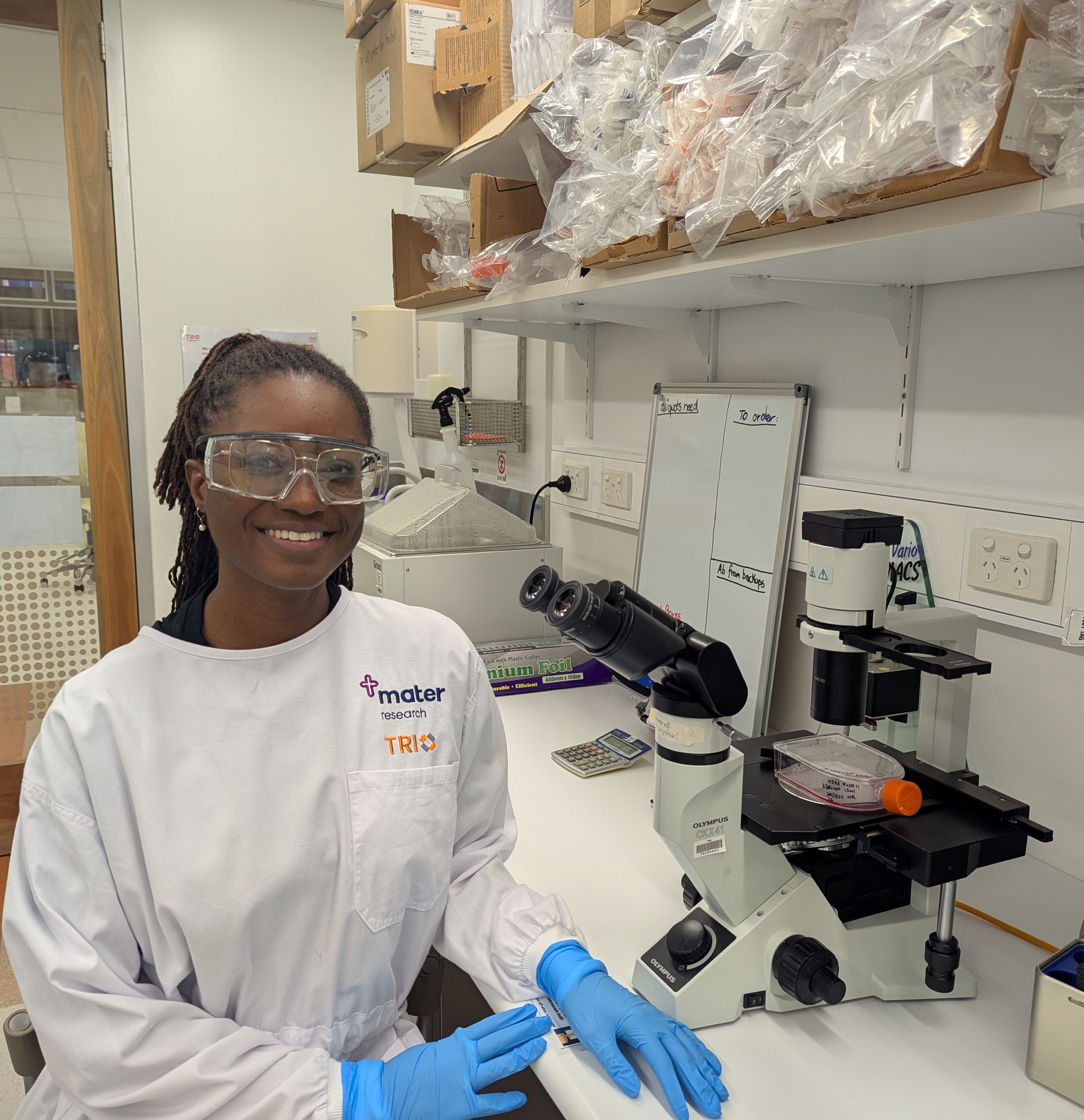
Far from one mind in the lab, research progress takes a specialised team. In a role funded by the OCRF, Luzia Bukali will join Associate Professor Kristen Radford’s lab at Mater Research. Luzia spoke to the OCRF about why ovarian cancer research has become their focus.
Reading time: 2 minutes
Thank you to the OCRF community for your generous support. Your commitment to funding ovarian cancer research is helping to drive forward discoveries that could one day lead to life-saving treatments for women across Australia and beyond.
Luzia Bukali, PhD Student
Tell us about your interest in ovarian cancer research:
I am interested in ovarian cancer because it is one of the most lethal gynaecological cancers in Australia, yet treatment options remain limited. Women's health issues are often sidelined, which can result in delayed diagnoses and poorer outcomes. I want to be a part of changing that by contributing to research that shines a light on cancers that affect women, such as ovarian cancer.
What led you to become a researcher?
Growing up, I was intrigued by the fact that we are constantly exposed to things that could make us ill, yet we often remain healthy. This curiosity led me to immunology, where I was captivated by the complexity of the immune system. I became a researcher because I wanted to understand how the body defends itself against disease and how we can use that knowledge to improve health outcomes.
Funded by the OCRF, you're working with on Associate Professor Kristen Radford's project, can you tell us about your role?
In our lab, I am focused on understanding human dendritic cell biology within the context of ovarian cancer. These cells are essential for initiating immune responses by recognising cancer and then activating T cells, which are responsible for killing tumour cells. By investigating how dendritic cells behave within the tumour environment, we hope to discover ways to strengthen their function and use that knowledge to inform the development of new immunotherapies.
What do you hope to achieve through your ovarian cancer research?
My goal is to bridge immunology with clinical relevance. By translating what we know about dendritic cell function into real treatment strategies, we could improve the lives of women diagnosed with ovarian cancer. There’s a lot of potential in leveraging the body’s own defences, and I’m excited to be part of research that could pave the way for innovative immunotherapies.
Read more about the Associate Professor Radford and the team's project.

Get the latest news, stories & updates.
