Grace Scoleri becomes Founding Patron of the Ovarian Cancer Research Foundation Patrons Program
July 03, 2024
The Ovarian Cancer Research Foundation is proud to announce the Patrons Program, a new fundraising arm to raise crucial funds for ovarian cancer research.
- The Ovarian Cancer Research Foundation is proud to announce the launch of the Patrons Program to accelerate the growth of the pool of funds available for our annual National Research Grant Scheme
- Grace Scoleri, ovarian cancer survivor, donor, and OCRF ambassador is the founding patron in the program
- With limited ovarian cancer research funding available, the OCRF is seeking major and transformational gifts to accelerate funds and support research
Currently, ovarian cancer is the most lethal reproductive cancer, regardless of gender, with more than 30 different sub-types. For each patient, their disease will develop and spread differently and have different molecular signatures, meaning they respond differently to treatments.
This is why raising awareness alone won’t save lives, but investing in research will.
Ovarian cancer research currently receives 0.7% of government medical research funding, the OCRF is the second largest funding source of ovarian cancer research in Australia after the government.
The new Patrons Program will help tackle this challenge and accelerate the pool of available funds for the annual OCRF National Research Grants Scheme, allowing more high-quality ovarian cancer research to be funded each year.
Reports from funded researchers, private lab tours, and the OCRF annual reports are all available to patrons, ensuring they can track the impact of their significant donations.
Hear directly from Grace Scoleri, OCRF Ambassador, donor, and the founding patron of the program
Grace was diagnosed with stage 3 ovarian cancer “by chance” through a massage in July 2020. In the months following her diagnosis, she completed 16 rounds of chemotherapy, 22 rounds of immunotherapy and 22 months of Niraparb treatment. She spent three years in remission before a recurrence in November 2023, seeing Grace back in treatment today.
Although Grace was aware of ovarian cancer, it wasn’t until she was diagnosed herself that she became increasingly frustrated by the lack of progress and research into treatments for the disease.
Deciding to take matters into her own hands and learn as much as she could about ovarian cancer led Grace to the OCRF. She was determined to help and create a lasting impact for future generations.
“I made it my mission to be heavily involved and focus on the research side to aid women in the generations to come. The more money we invest in research, the brighter their future will be,” Grace explains.
It’s a cruel reality that something that gives you life, can also kill you
Grace Scoleri
Now, Grace is proud to be the founding patron of the OCRF Patrons Program to continue her support of critical ovarian cancer research.
“I’m proud to be the inaugural patron and help fund important and exciting research as well as continually raise awareness around this disease.
“This program is going to change the future for ovarian cancer, and hopefully find a cure.”
Grounded in her own experiences throughout her journey, Grace hopes the program will arm women and girls with the knowledge needed to empower them from a young age to advocate for their health.
“It’s imperative the future generations learn about ovarian cancer from a young age, because it’s not an old woman’s disease,” Grace says.
Being a part of the Patrons Program will enable us to gain the knowledge and momentum we so badly need going forward to hopefully find a cure for ovarian cancer.
Grace Scoleri
Funding innovative ovarian cancer research through the OCRF National Research Grants Scheme
The OCRF is proud to support early and mid-career medical researchers across Australia conducting high quality, innovative ovarian cancer research. Funded projects fall into at least one of four research priorities: early detection, new and effective treatments, prevention, and managing recurrence.
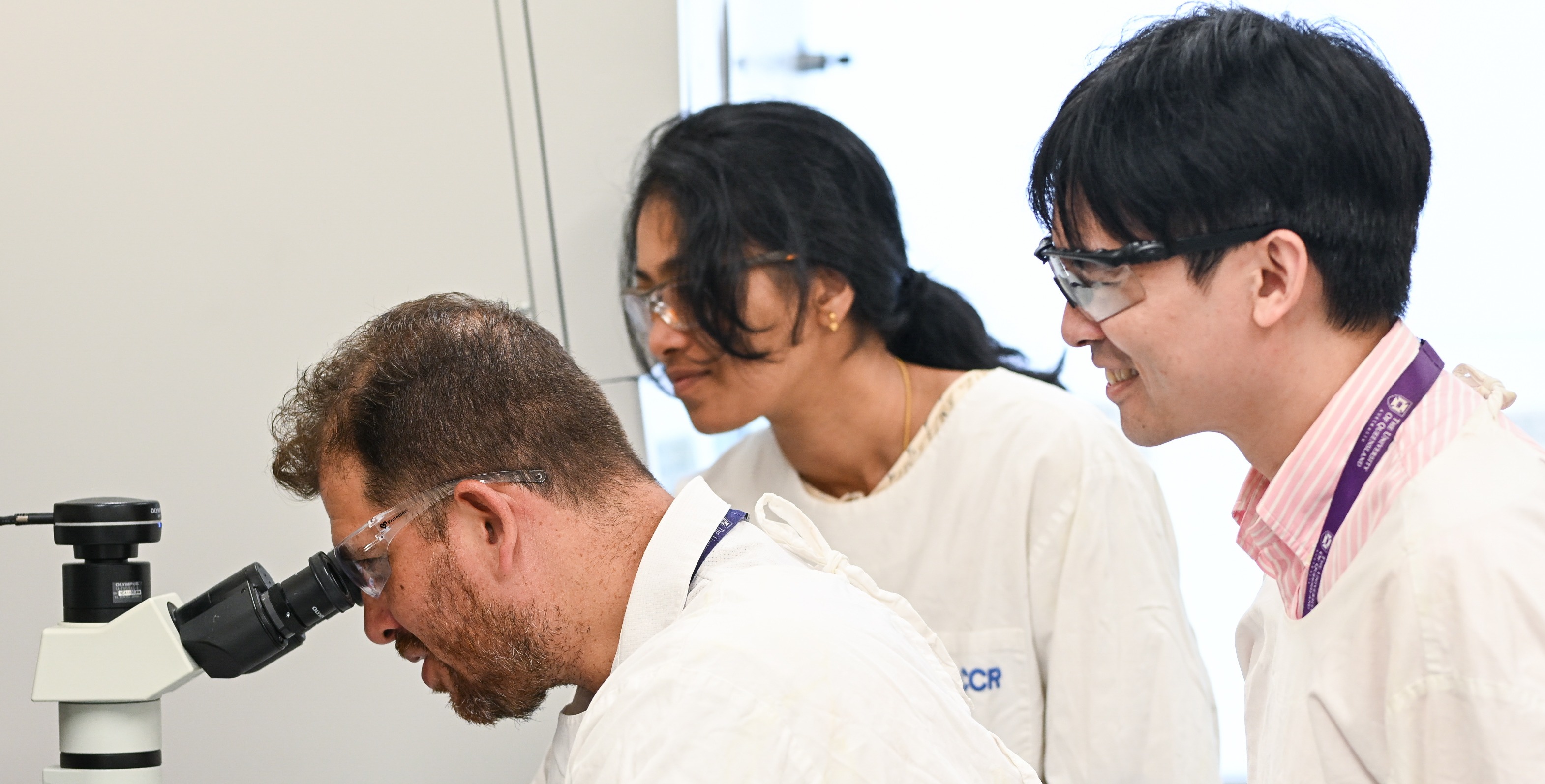
In 2024, the OCRF awarded over $2.4 million dollars in grants to three major research projects and collaborative projects. The projects spanned across early detection, treatment via vaccination, and treatment for low grade serous ovarian cancer. Since 2016, over 50 Australian research projects have received OCRF funding via the National Research Grants Scheme.
Investing in research is crucial to seeing advancements and better outcomes for ovarian cancer patients. Ovarian cancer research experts anticipate five-year survival rates can shift from 49 per cent, to over 90 per cent with the introduction of an ovarian cancer early detection test.
This is why the Patrons Program is crucial. Increasing the funds available for ovarian cancer research will mean the OCRF can award more grants and invest in impactful research that could drastically improve outcomes for ovarian cancer patients everywhere.
To learn more about the Patron Program, reach out to Donor and Partnerships Director, Georgie Herbert.

Get the latest news, stories & updates.
