Dr Gwo Yaw Ho
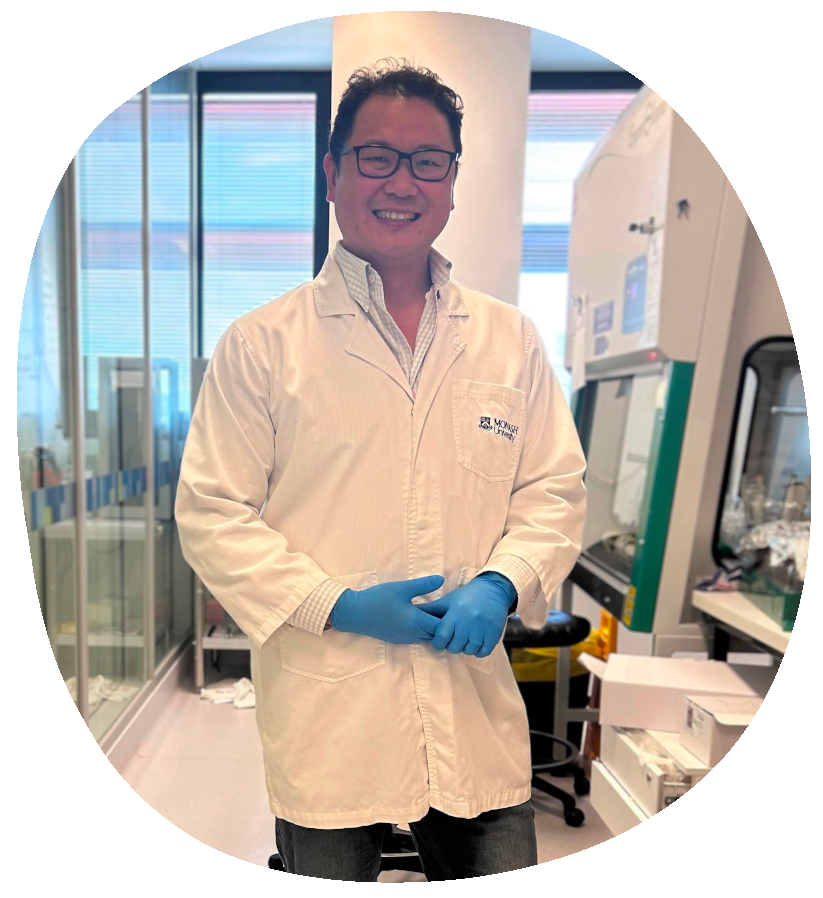
Research Institution: Monash University and Monash Health
OCRF priorities the researcher addresses: Treatment
Their OCRF-funded research projects: Using old drugs in new ways to make ovarian cancer cells visible to the immune system
Ovarian cancer is still one of the hardest-to-treat cancers, and this is precisely why we must work harder to change outcomes for the people living with it.
My research is driven by patients who are too often told, 'there's not much out there, and this is the best we can offer.' I believe these are exactly the people we should be focusing our efforts on. No one should be left behind."
About Dr Ho’s research
Dr Gwo Yaw Ho’s research at Monash University is a collaborative effort with Professor Brian Gabrielli and his team at The University of Queensland's Mater Research Institute. Together they are investigating a new combination of existing medicines in an effort to transform outcomes for women with high-grade serous ovarian cancer.
This approach combines a cell cycle checkpoint inhibitor (CHK1 inhibitor, CHK1i) with a low dose of the chemotherapy drug hydroxyurea (LDHU). In laboratory studies, this combination has been shown to kill a wide range of ovarian cancer cells, including those resistant to standard treatments.
The research is building the evidence needed to move this treatment strategy from the laboratory into human clinical trials. If successful, it could offer a new way to combine immunotherapy with medicines that help 'reprogram' the tumour immune environment for those with ovarian cancer.
Importantly, this approach has the potential to produce fewer harmful side effects, be easier to administer, and more affordable than many existing therapies. There is a strong desire among patients for access to effective immunotherapies, particularly given how successful these treatments have been in other cancer types. This work represents an important step towards making similar advances possible for ovarian cancer.
Background
Dr Ho’s combined expertise as an oncologist and medical researcher places him at the forefront of efforts to improve outcomes for women with ovarian cancer.
He is a senior medical oncologist at Monash Health, specialising in the treatment of women with breast and gynaecological cancers, and heads the Cancer Immunology Laboratory at Monash University. He is also a clinical trial investigator at the Monash Health Clinical Trial Centre. Earlier in his career, he practised as a medical oncologist at the Peter MacCallum Cancer Centre and the Royal Women’s Hospital, Melbourne.
His motivation is also deeply personal. Dr Ho lost his mother about 15 years ago to a rare and aggressive form of liver cancer, cholangiocarcinoma. Seeing first-hand the limited treatment options available to her strengthened his belief that every cancer patient deserves access to the most comprehensive care possible, not only those with more common cancers.
Dr Ho completed his early medical training in Glasgow and worked closely with the Beatson Institute, now known as the CRUK Scotland Institute – where many new therapies for breast cancers were being developed. During this time, he observed that ovarian cancer was not benefiting from the same level of attention or investment, reinforcing his commitment to the field.
He later completed his PhD at the Walter and Eliza Hall Institute of Medical Research, focusing on strategies to better understand and treat aggressive ovarian and rare cancers. His research examined high-grade ovarian cancer subtypes, including carcinosarcoma, a rare and highly aggressive cancer associated with poor prognosis that he continues to investigate today.
Career highlights
- Dr Ho established and leads the Cancer Immunology Laboratory at Monash University, where his team develops precision immunotherapy approaches for difficult-to-treat cancers, including ovarian cancer.
- He founded and leads the Monash Live Biobanking platform (MoLBi), an integrated translational research program that enables rapid collection and analysis of fresh tumour samples to accelerate the development of new personalised cancer therapies.
- Dr Ho has developed and characterised several patient-derived xenograft and human cancer organoid models, alongside complementary laboratory platforms, to identify promising therapies and investigate mechanisms of drug resistance in ovarian and other difficult-to-treat cancers.
- In 2025, he was awarded the ANZGOG Michael Friedlander AM Award for Emerging Early Career Researcher and Monash University School of Clinical Sciences Early Career Researcher Award in recognition of his leadership and research excellence.
- He was awarded the Monash Oncology Research Institute (MORI) Research Fellowship in 2024.
- In 2020, Dr Ho was the recipient of the Monash University School of Clinical Sciences Early Career Clinician Scientist Fellowship.
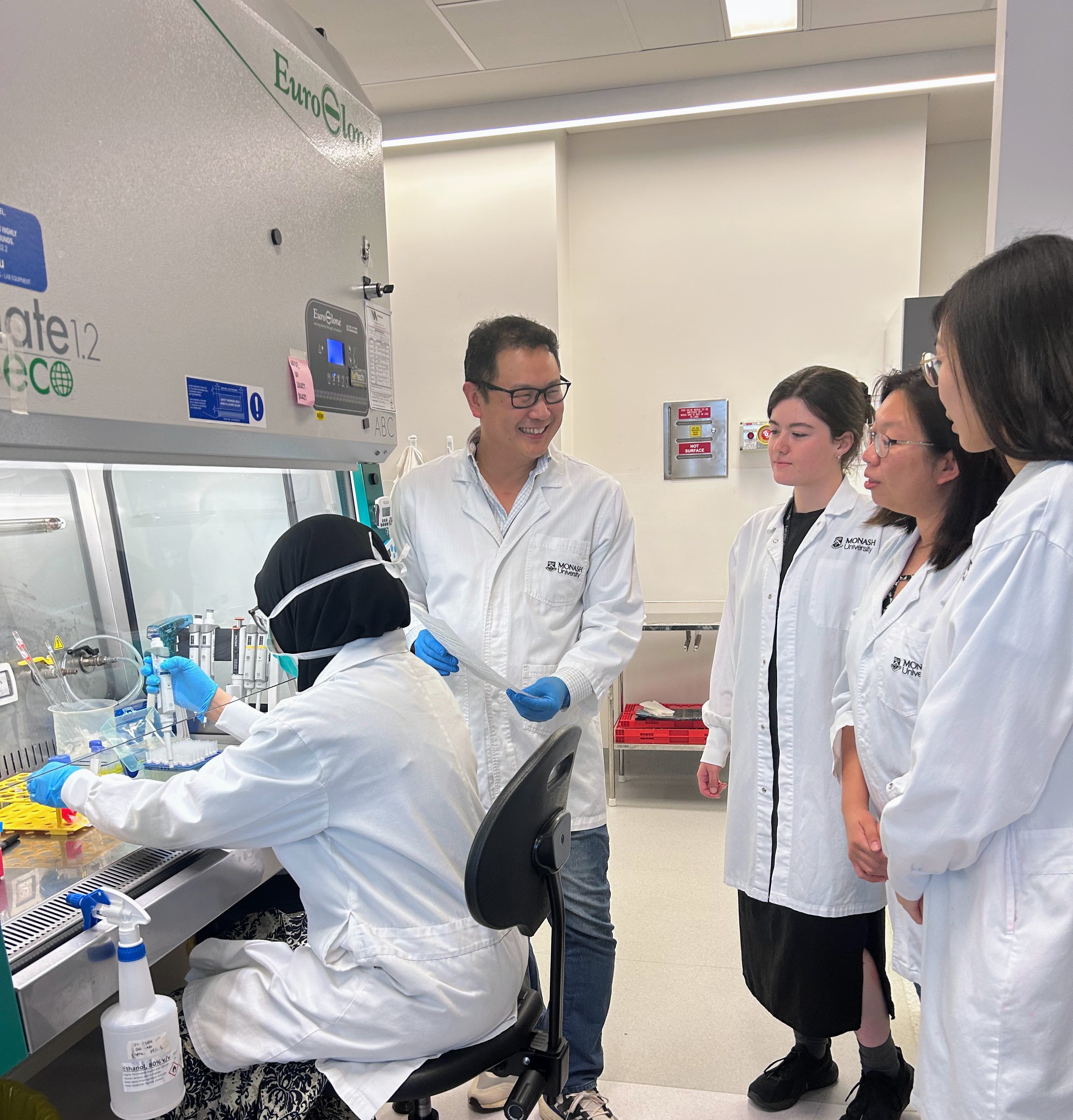
Collaborative impact
Dr Ho’s research forms part of a broader collaborative program with Prof Brian Gabrielli and his team at the Mater Research Institute, The University of Queensland. Together, the teams are advancing laboratory studies of novel treatment strategy that combines immunotherapy, a checkpoint inhibitor drug and low-dose chemotherapy, with the goal of progressing this approach into human clinical trials to improve outcomes for women with high-grade serous ovarian cancer and potentially other ovarian cancer subtypes in the future.
The teams are also working with an industry partner to support translation of this treatment strategy into early-phase clinical trials. This represents an essential step in evaluating the safety and potential effectiveness of the combination in patients.
The proposed research will generate the critical evidence needed to inform a future clinical trial testing this treatment approach alongside the most appropriate immunotherapy strategy identified through these studies. Together, these efforts aim to accelerate the development of more effective and accessible treatment options for people living with ovarian cancer.
For every project like this, many more can’t get underway due to a lack of funding. Support research like this to help them move forward.
Share page

Get the latest news, stories & updates.
