Using old drugs in new ways to make ovarian cancer cells visible to the immune system
Overview
This project is investigating a new treatment combination of existing medicines - including a targeted treatment, called a cell cycle checkpoint inhibitor, with a very low dose of oral chemotherapy. In laboratory studies, this combination has been shown to kill a wide range of ovarian cancer cells, including those that are resistant to standard treatments, and is more effective than either treatment on its own. Importantly, this approach may produce fewer side effects than current ovarian cancer treatments, can be taken orally rather than intravenously, and uses medicines that are already approved for use in other cancers, which may help make the treatment more affordable and accessible.
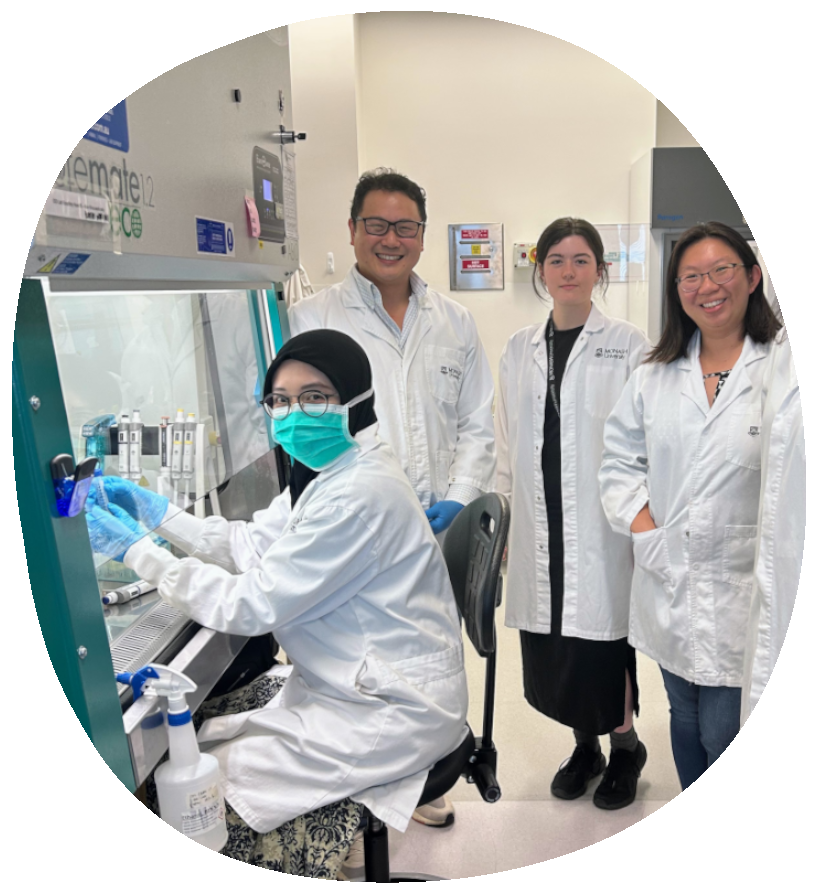
Lead researcher: Dr Gwo Yaw Ho
Grant received: $260,000 for 1.5 years
OCRF research pillar: Treatment
Primary institution: Monash University and Monash Health
Latest update
We are deeply appreciative of the support by OCRF. Every bit of funding that OCRF generates comes from a lot of hard work and dedication from the staff, affected individuals, and donors. We’re going to use the funding provided to develop novel effective therapies for those affected by ovarian cancer and hopefully give back to the community that supported OCRF.”
Doctor Gwo Yaw Ho, April 2026
Project details
A major barrier to treating ovarian cancer is the immune system’s limited ability to recognise and attack the tumour cells. While conventional immunotherapies work well in cancers that already have immune cells inside them ('hot' tumours), they don’t work as well in cancers that lack immune cells ('cold' tumours), or in tumours that are able to hide from the immune system in other ways. To improve outcomes, new treatments are needed that can reshape the tumour’s immune environment and make it more responsive to immunotherapy.
This project is advancing exploration into a new treatment combination developed through a long-standing collaboration between Dr Gwo Yaw Ho at Monash University and Monash Health in Melbourne, and Professor Brian Gabrielli of Mater Research Institute, The University of Queensland, who is also an OCRF-funded researcher on a related project .
This new grant represents a critical step in moving the teams’ discoveries closer to clinical trials. The researchers are testing this treatment combination in high-grade serous ovarian cancer (HGSOC), the most common and aggressive form of gynaecological cancer due to its high rates of recurrence. They also hope to extend this work to other subtypes, such as clear cell ovarian cancer, in the future.
The new drug combination being tested includes a DNA-damaging drug called a CHK1 inhibitor (CHK1i), together with a low-dose chemotherapy drug, hydroxyurea (LDHU), which are both taken in tablet form. In laboratory studies, this combination has been shown to kill a wide range of ovarian cancer cells, including those resistant to standard treatments, and is more effective than either treatment alone. Importantly, early laboratory studies suggest this combination avoided harmful cell stress, which may mean that side effects like hair loss that occur with higher doses may be reduced or prevented.
In preclinical models, the treatment activated cancer-fighting immune cells called CD8+ T cells, and also reduced the number of cells that can suppress the body’s immune response – like Tregs and MDSCs – which often protect the tumour. It also increased levels of a protein called PD-L1 in the tumour. This could open the door to using immune checkpoint therapies (like PD-L1 inhibitors) which are used in other cancer types but usually don’t work well in ovarian cancer.
In this project, the researchers will test the CHK1i drug in combination with LDHU. They will also test anti-PD-L1 (an immunotherapy) with or without the checkpoint inhibitor drug.
Aims:
By testing these combinations in preclinical models of high-grade serous ovarian cancer, the researchers aim to find the most effective treatment pairings. Dr Ho, in collaboration with Prof Gabrielli, hope to generate the evidence required to move this potential treatment into human clinical trials.
Approach:
The team will explore how this combination treatment reshapes the immune environment and whether it can be further improved by adding drugs that block PD-L1. They’ll also investigate how the treatment works at the cellular level, looking at inflammation and a type of cancer cell death called pyroptosis.
Ambition and outcomes:
If successful, this project could offer a powerful new way to combine immunotherapy with drugs that 'reprogram' the immune environment for those with ovarian cancer, helping the immune system recognise and fight the cancer. The ultimate goal is improved outcomes for a group of patients for whom successful treatments are few and far between.
The drugs being investigated are approved to treat other conditions and CHKi and LDHU are taken orally, which means the treatment is easier to administer and patients would spend less time in hospital outpatient clinics.
Importantly, the CHKi and LDHU combination has been shown to kill tumours in early lab studies not just across many different subtypes of ovarian cancer, but also other tumour types too, such as skin and bowel cancer. The researchers hypothesise that this approach could work in clear cell ovarian cancer, which is one of the hardest subtypes to treat and often considered 'cold' to immunotherapy. The impact of this research could therefore go beyond high-grade serous ovarian cancer, extending to other subtypes and even other cancer types.
Dr Ho’s and Prof Gabrielli’s collaboration also expands to their industry partner, who are experts in taking new treatments into clinical trials. Trials are the necessary first step in assessing the safety and potential effectiveness of the treatment approach. The proposed studies will provide evidence to support a future trial.
Current status:
This ovarian cancer research project is at the preclinical stage where researchers are conducting extensive studies in the lab with samples and models to verify the effectiveness of their approach as well as evaluating how safe it is likely to be for humans *
*Want to learn more about the medical research pipeline? Read more here.

For every project like this, many more can’t get underway due to a lack of funding. Support research like this to help them move forward.
Share page

Get the latest news, stories & updates.
