Professor Carlos Salomon Gallo
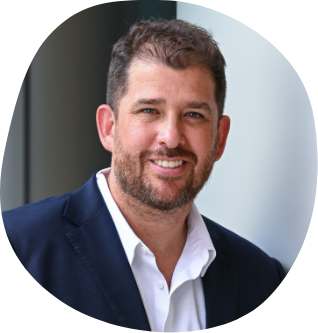
Research Institution: The University of Queensland
OCRF priorities the researcher addresses: Early Detection
Their OCRF-funded research projects: Sierra: Specificity of a new test for ovarian cancer, OCRF-7: A multivariate index assay, Monitoring and intervention using extracellular vesicles
I grew up with my mother, grand-mother and great-grand mother, and one of the things I learnt from them is that whatever you do – do it with commitment, do it with passion, and be a good person. And this how I try to approach my research."
About Professor Salomon Gallo’s research
Professor Carlos Salomon Gallo is widely recognised as an international expert in extracellular vesicles, and he believes they could be used to diagnose and detect the earliest signs of ovarian cancer.
Extracellular vesicles are tiny bubbles released from cells that travel in the blood, communicating with other cells and tissues. Cancerous tumour cells can use them to tell other cells to become cancerous. He established the Translational Extracellular Vesicles in Obstetrics and Gynae-Oncology Group at The University of Queensland, where he studies the role extracellular vesicles play in ovarian cancers. Recently, he has been appointed as the Director of the newly established University of Queensland Centre for Extracellular Nanomedicine.
Background
Curious about how the body works, Professor Salomon Gallo completed a MPhil in immunology, a Doctorate of Medicine (PhD) and considered becoming a doctor. However, he was drawn to the long-term, life-changing benefits that research could offer. He followed his career from his home in Chile to Spain and Texas, before basing himself at The University of Queensland.
Career highlights
Professor Salomon Gallo designed a biomarker panel for the diagnosis and earlier detection of ovarian cancer — a combination of biomarkers called OCRF-7, recognising the OCRF’s seed funding of his research. It uses biomarkers, or characteristics, of extracellular vesicles to capture a snapshot of what is happening inside a tumour and signal early stages of cancer. For this work he has received funding of over $4M from the government’s National Health and Medical Research Council.
Professor Salomon Gallo also developed an automated way to quantify extracellular vesicle biomarkers from plasma samples that can be done in routine pathology laboratories without the need for specialised equipment or highly trained personnel, meaning it can be widely implemented.
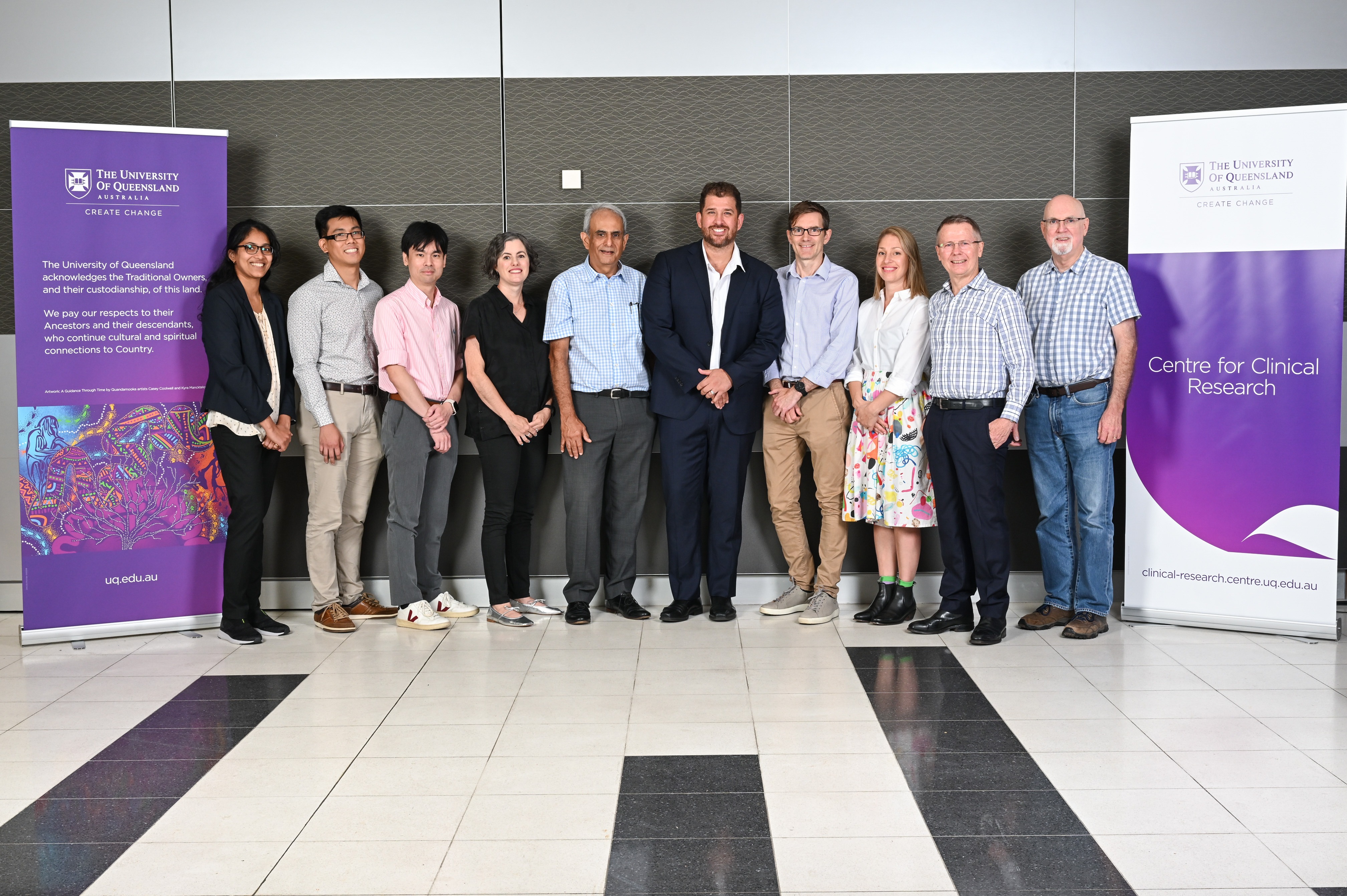
(Pictured above: Professor Salomon Gallo and his team)
Collaborative impact
Professor Carlos Salomon Gallo is working closely with ovarian cancer experts in Australia and overseas including at the University College London to propel his diagnostic and early detection research. Together they’re comprehensively testing the OCRF-7 in a large cohort of samples (up to 3000) from the UK Collaborative Trial of Ovarian Cancer Screening (UKCTOCS) trial, the largest ovarian cancer screening trial to date.
For every project like this, many more can’t get underway due to a lack of funding. Support research like this to help them move forward.
Share page

Get the latest news, stories & updates.
