Professor Kristen Radford
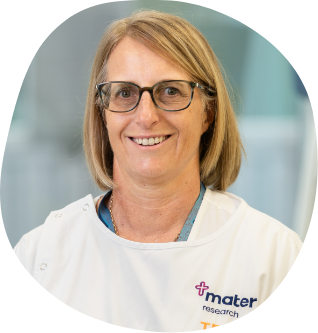
Research Institution: Mater Research
OCRF priorities the researcher addresses: Treatment, Managing Recurrence
Their OCRF-funded research projects: A Novel Vaccine for Ovarian Cancer
It’s very grounding when we talk to fundraisers, to patients and their families. They really value the work we’re doing as researchers, and it motivates us to keep going back, to do something worthwhile that will make a difference.”
About Professor Radford’s research
Professor Kristen Radford is a leading expert in cancer immunology and believes a vaccine could help the immune system in its fight against ovarian cancer. Her focus is on dendritic cells, which are key to immune function. Based at Mater Research for over two decades, she now leads its Cancer Immunotherapies Group.
Her shift towards ovarian cancer research responds to feedback from Mater patients who urgently require more effective treatments.
Immunotherapies have shown promise in treating other cancers, but to date they haven’t been as effective for ovarian cancer patients. By developing a vaccine that boosts the functionality of dendritic cells, activating the immune system against ovarian cancer, Professor Radford believes she can challenge this status quo.

Background
Professor Radford’s research began with a PhD in melanoma (skin cancer) at the University of Newcastle — aiming to understand how melanomas spread. She was awarded the Leo and Jenny Young Cancer Researcher of the Year and NSW Young Australian of the Year for this work.
Her research on melanoma sparked an interest in immunotherapy and the use of vaccines as cancer treatments. Specifically, she investigated the immune system’s ability to be trained to recognise and fight cancer cells, and results indicated that dendritic cells could be a promising treatment approach. During a postdoctoral fellowship at Cancer Research UK, she began to explore the development of dendritic cell vaccines for cancer.
Career highlights
Professor Radford developed a vaccine for metastatic prostate cancer that reached a phase 1 clinical trial, demonstrating both its safety and effectiveness. It was one of the first trials to use dendritic cells from patient blood and identified a subtype of dendritic cells that is key to fighting cancer.
Her team were the first to characterise, or understand the properties of the rare human dendritic cell type (cDC1) which is the key to activating the immune system to fight cancer.
Collaborative impact
Ovarian cancer patients often cannot spare the amount of blood that’s required to generate a vaccine, but cord blood from healthy patients can be used because it’s rich in stem cells that go on to make immune cells—and can therefore be used to generate dendritic cells. Professor Radford’s team collaborates closely with the Queensland Cord Blood Bank at Mater. Mater Mothers’ is one of the largest maternity hospitals in the southern hemisphere with over 12,000 births per year and consenting and eligible donors can opt to donate their cord to the Blood Bank. If unsuitable for blood bank purposes, cords can be donated to potentially life-saving research such as Professor Radford’s novel vaccine. Professor Radford will work closely with the Mater Ovarian Cancer Research Collaborative, a multidisciplinary network comprising clinicians, researchers and consumer representatives positioning the project to benefit from diverse insights.
For every project like this, many more can’t get underway due to a lack of funding. Support research like this to help them move forward.
Share page

Get the latest news, stories & updates.
