Professor Michael Jennings
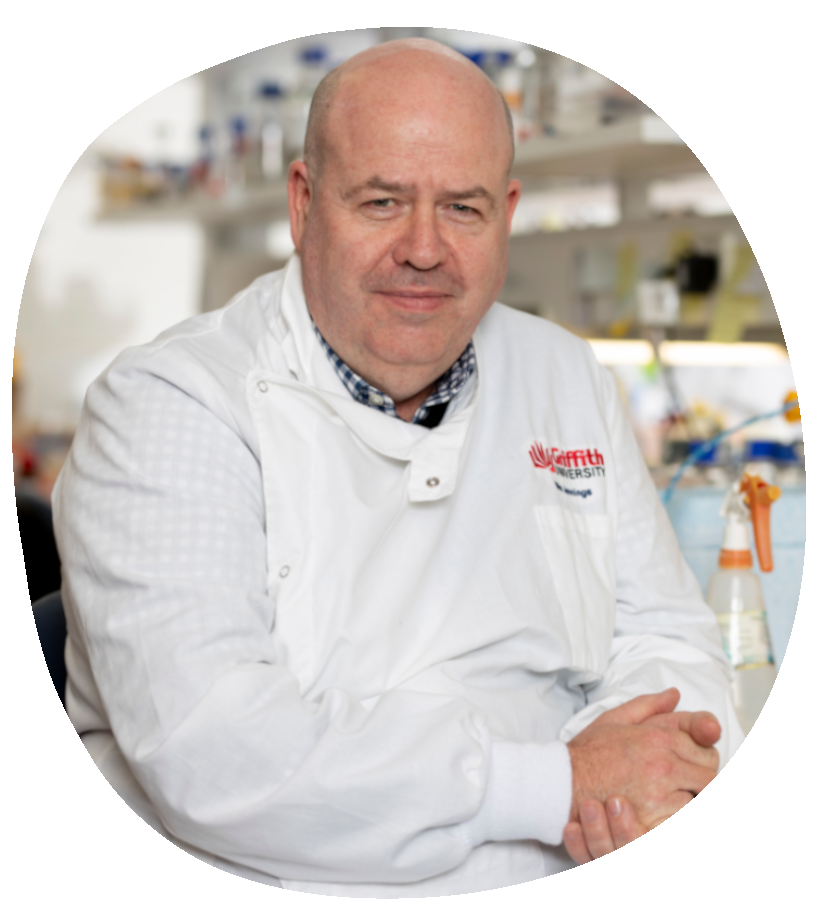
Research Institution: Griffith University
OCRF priorities the researcher addresses: Early Detection
Their OCRF-funded research projects: Discovery of new sugar-based markers in blood and MR imaging towards early ovarian cancer
My rapid diagnosis and successful treatment for prostate cancer made me feel kind of guilty because as a male I had an easy early detection blood test for prostate cancer. Am I cured? That’s answered by simple routine blood tests and if my PSA stays below detectable levels then I know it hasn’t come back. If there’s even a small tumour growing back, it can be detected in blood. If I put myself in the case of someone who can get ovarian cancer – they don’t have that kind of reassurance. So, applying that prism for perspective, that’s what we need for all female urogenital cancers, and I put ovarian cancer at the top of that list.”
About Professor Jennings’ research
Professor Michael Jennings specialises in glycomics research and is the Acting Executive Director at the Institute for Glycomics at Griffith University. Glycomics is the study of sugars that attach to proteins and cells, which can be involved in a range of diseases. It is still an emerging area of research, particularly in cancer research. He is internationally recognised as a leader in glycomics-based infectious disease research and vaccine development.
After decades in the field, he’s highly motivated by seeing discoveries his team have made make a difference in the clinic.
“We’re now at the interface of going into the clinic. Things that started as a knowledge breakthrough are turning into direct interventions in human health and that’s incredibly motivating.”
Background
Interested in understanding how things work at a fundamental level, Professor Jennings was always made for science. He completed his studies at Griffith University before undertaking his postdoctoral research at University of Oxford in glycobiology. He joined the University of Queensland where he examined sugars in the context of infectious diseases. Achieving his professorship, he moved to Griffith University’s Institute for Glycomics in 2009.
Professor Jennings focuses on glycomics as it’s an aspect of biology that is at the cutting edge of research. He hopes to fill this knowledge gap so that health experts know what constitutes normal sugar structures, and what is indicative of a change that could indicate disease. Understanding sugar structures has proved important in both infectious disease and in cancer biology.
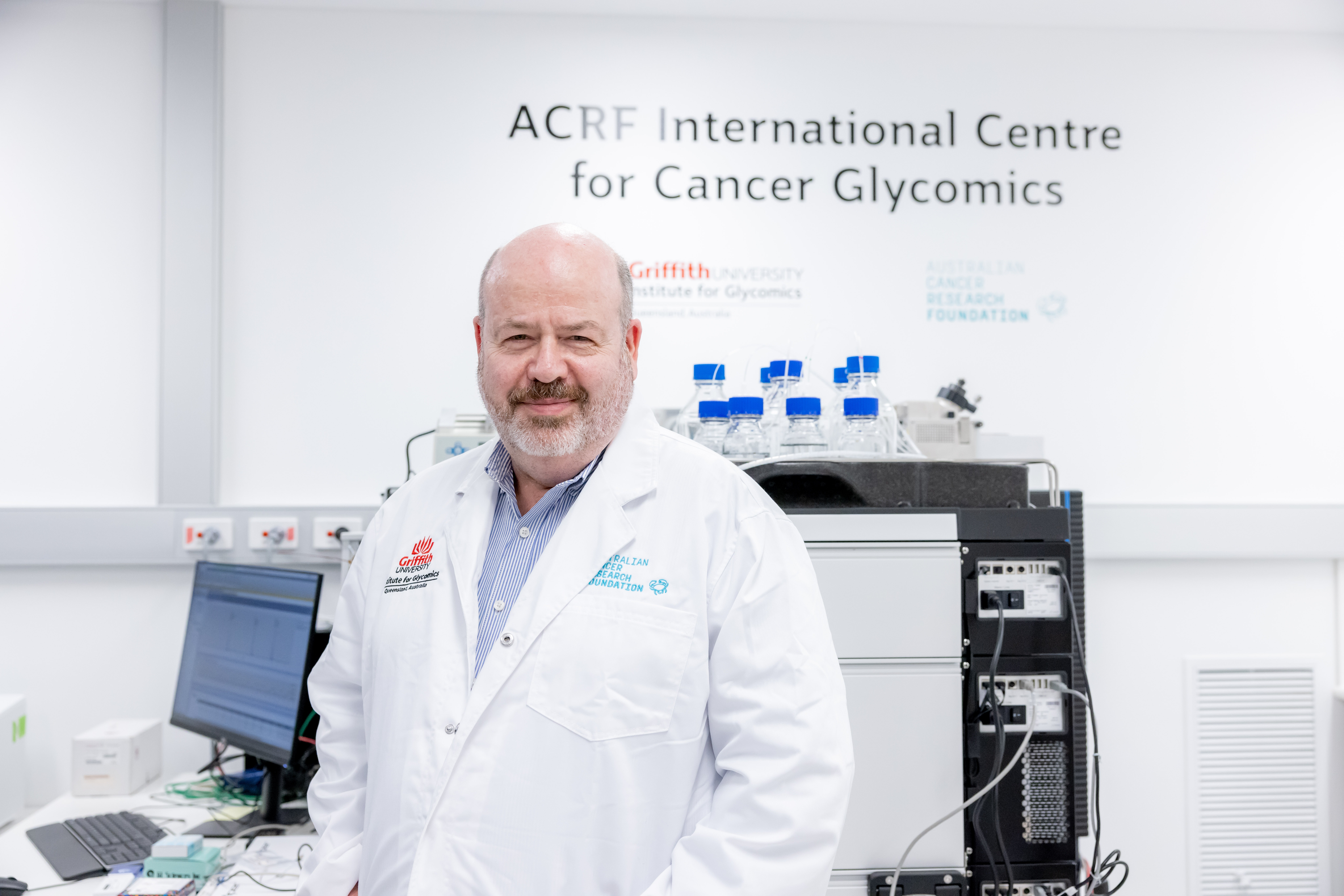
(Pictured above: Professor Michael Jennings at the ACRF International Centre for Glycomics)
Career highlights
Professor Jennings helped to define the relationship between bacteria and how they can infect specific types of cells. He established that sugars present on the surface of some cells (called ‘receptors’) can allow bacteria in, playing a major role in this process making it possible for illnesses such as infectious diseases and cancers to occur.
Professor Jennings began his career focusing on infectious diseases. However, after discovering these unique carbohydrate structures, he realised that they are also present in some cancers. This led to the multi-disciplinary nature of his lab and the development of new tools for cancer research.
Collaborative impact
The team’s OCRF-funded research is investigating a sugar-based biomarker to detect ovarian cancer early. They are also trialing the potential for innovative Magnetic Resonance Imaging (MRI) scanning techniques to assist in ovarian cancer early detection. The project team is comprised of clinicians at Brisbane’s Princess Alexandra and Mater hospitals to ensure the project has access to samples at various ovarian cancer stages throughout the it’s duration.
For every project like this, many more can’t get underway due to a lack of funding. Support research like this to help them move forward.
Share page

Get the latest news, stories & updates.
