Robin’s Reflections – October 2026
October 07, 2026
O is for…
‘O’ carries a lot of meaning for us at the OCRF – ovaries (of course), opportunities, optimism, onwards… so it stands to reason that October is a peak time of year!
First, Frocktober!
First and foremost, of course, is Frocktober and we kicked off in a big way. A giant dress hanging off the Sydney Harbour Bridge made for an unmissable beginning and sight. The stunt (yes, it was computer generated thanks to our friends at Noisy Beast agency), really got people talking with some wild theories circulating about what it was for, before we revealed its Frocktober origins.
It was a brilliant way to keep Frocktober fun and fresh, and to reach new audiences as far away as the USA! Combined with a raft of colourful materials and new partnerships, including Tapt media radio stations, we are really making our presence felt this year. Registrations and fundraising are looking strong, there are loads of Frocking fabulous events in the pipeline, and we are excited to see how the new Virtual Frocks go, bringing in those less keen on dressing up IRL!
The OCRF team will be heading off to events around the country to support fundraising and share progress updates - can’t wait to join in the fun. Good luck to all our Frockers – you really are a creative and stellar bunch of humans!
Promising progress
Our Research team has also been out and about, attending the Daffodil Centre’s Symposium on Cancer Prevention in Sydney to learn about epidemiological research across a range of prevention initiatives, including BreastScreen, vaping policy reform, opportunistic salpingectomy (removal of fallopian tubes to prevent some ovarian cancers), and personalised cancer screening.
We are keeping a close eye on the rapidly evolving research around opportunistic salpingectomy, and the new guidelines recently introduced in the US, so our team was keen to learn about new modelling undertaken at the Daffodil Centre. This indicated that if all planned pelvic surgeries on women had included salpingectomy, ovarian cancer rates could be around 11% lower by 2050. There are many considerations when it comes to a surgery like this but it’s certainly one of the most promising directions currently on the table and we will share more as the evidence comes in and the relevant Australian medical colleges refine their positions and advice.
And David Hunt, our Research Director, just returned home from the International Gynaecologic Cancer Society’s annual conference in Montreal. More from this important event next month!
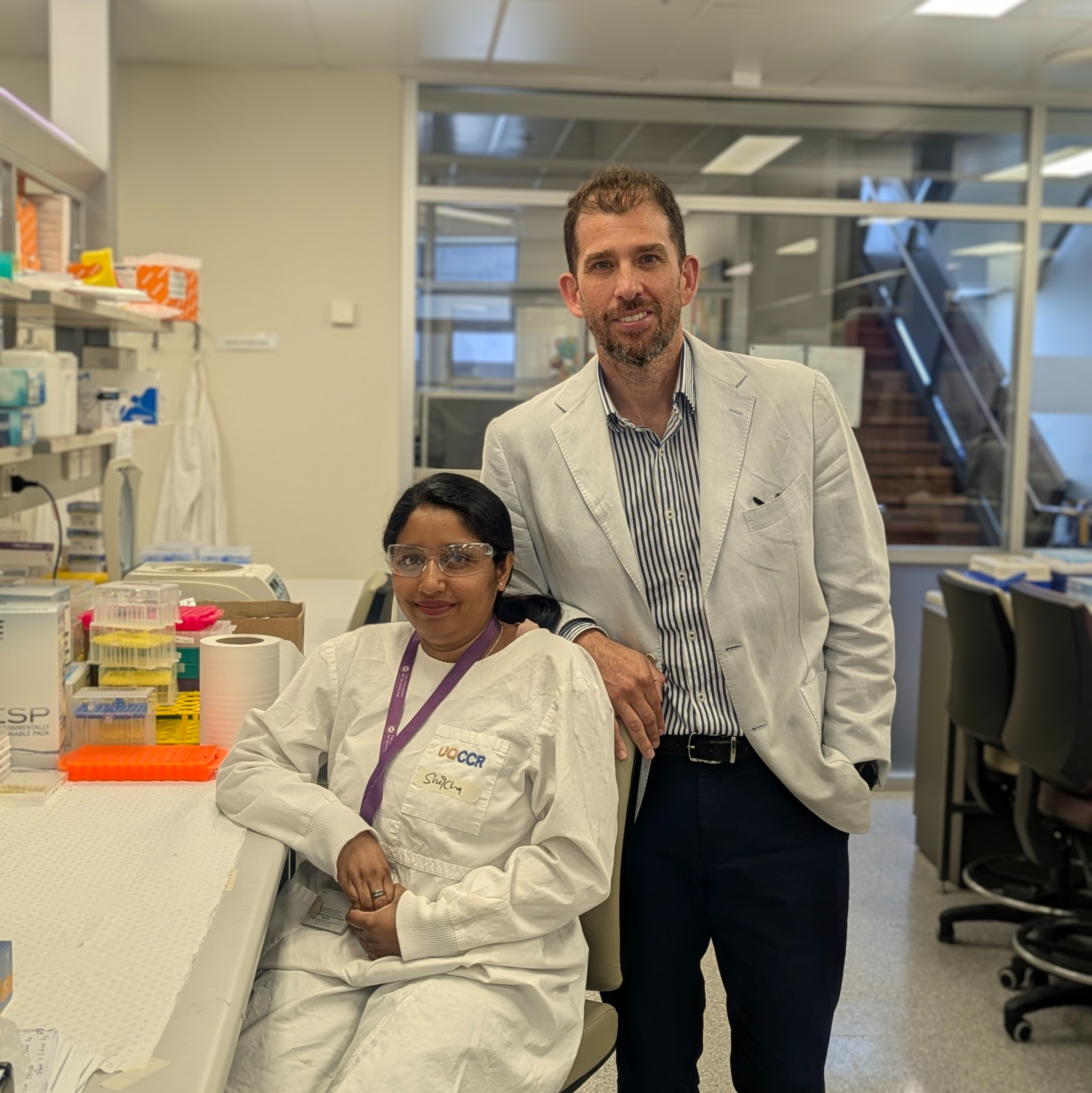
Still on the subject of research, as you all know, the tools we have to find it are still not good enough. CA-125, the current standard blood test, can be helpful — but it can also miss some cancers, and it often struggles to tell ovarian cancer apart from benign masses.
That's why new results from OCRF-funded researcher Professor Carlos Salomon and his team at The University of Queensland are so encouraging. Their work explores whether fats in the blood — including some carried in tiny particles released by cells — could offer clues that CA-125 alone cannot.
Across two new studies, these lipid signals consistently outperformed CA-125 on its own at distinguishing ovarian cancer from benign conditions and even showed promise in women whose CA-125 levels came back normal. You can read more about the research here.
This research is very much still in development, but it points to a future where a blood test for ovarian cancer is more accurate, more informative, and better able to support earlier diagnosis.
It's also a reminder of why your support matters and the impact that it has.
So let’s get frocking and raise the funds that fuel this progress!
Warm regards,
Robin Penty, CEO

Get the latest news, stories & updates.
