Could fats in the blood help catch ovarian cancers that existing tests miss?
October 07, 2026
OCRF-funded researchers at The University of Queensland have published two new studies showing that lipids – fats – in the blood could improve ovarian cancer diagnosis.
Reading time: 3 minutes
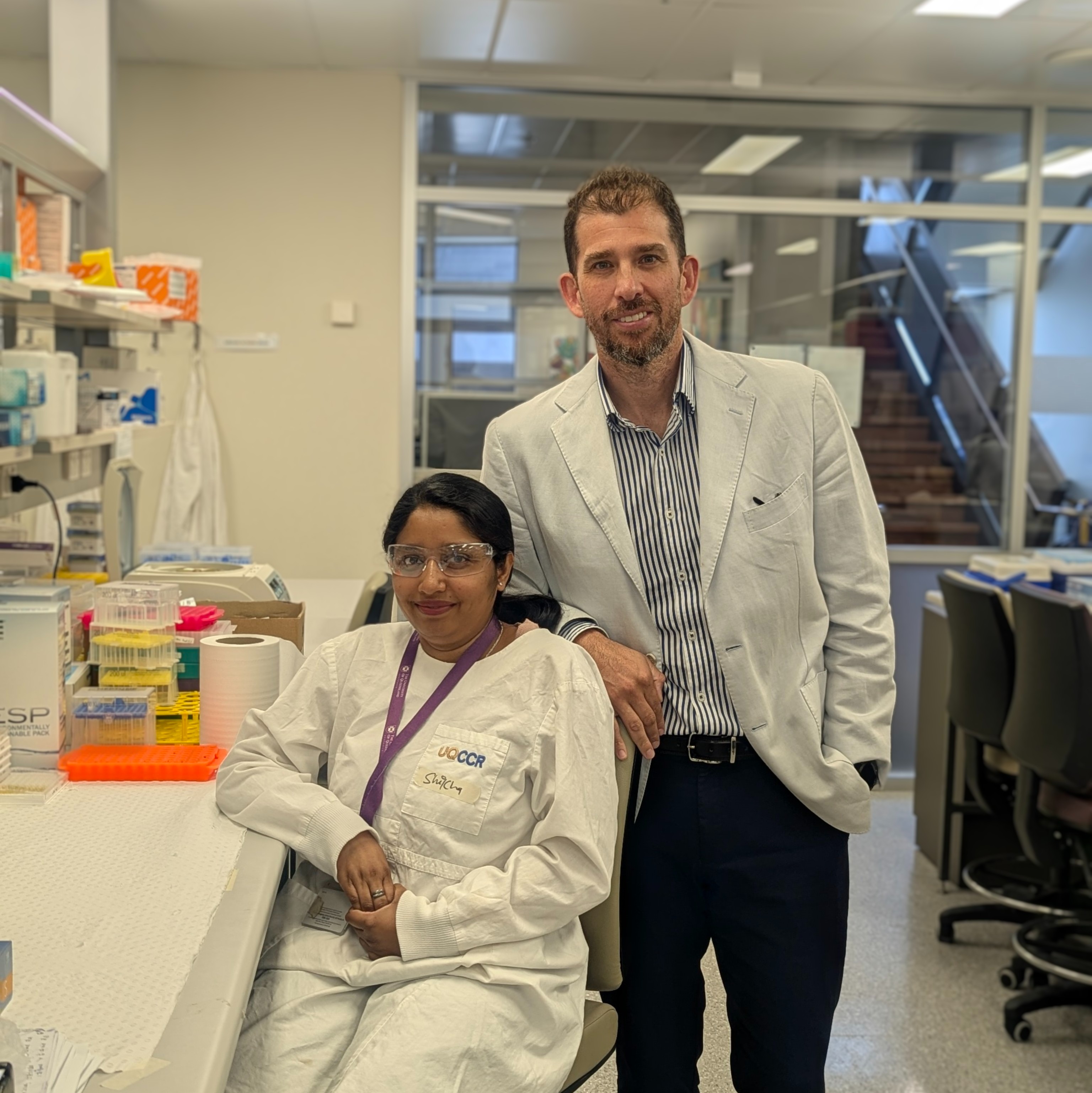
Both studies were led by Dr Shikha Rani (pictured, left) with Professor Carlos Salomon Gallo (pictured, right), and both used the CA-125 blood test as the comparison.
In one study published this week in Molecular Oncology, the team showed that ovarian cancer cells rewire how they use fats and release this "fat signature" into the blood. A lipid panel test, combined with CA-125, was better than CA-125 alone at telling cancer apart from benign masses.
In a second study, published in the Journal of Extracellular Vesicles, lipid markers improved detection of borderline and low-grade tumours. These also worked in women with normal CA-125 levels, who are the ovarian cancer patients most likely to be missed with existing testing.
“These two publications are the result of more than three years of work, and I'm incredibly proud to see these come together,” Dr Shikha Rani said. “Ovarian cancer is such a devastating disease, and every step that helps us understand it better matters. Knowing that our work could one day help women get a faster and more accurate answer makes all those years in the lab worthwhile.”
What was discovered?
Adding lipid markers to the CA-125 blood test made it more accurate than CA-125 alone. It was better at telling ovarian cancer apart from benign (non-cancerous) masses, including in high-grade serous cancer, borderline tumours and low-grade serous cancer. It also helped in women whose CA-125 levels were normal.
The team also used Artificial Intelligence to simulate much larger groups of women. The results suggest the approach could help in areas where CA-125 struggles, such as telling ovarian cancer subtypes apart and population screening.
“These studies would not have been possible without the support of the OCRF and its community,” Prof Salomon Gallo said. “Cancer cells need a constant supply of energy to grow and spread, and our research suggests that lipids play a key role in fuelling this process. That gives us a new way to detect ovarian cancer,” Prof Salomon Gallo said.
Why is the approach so innovative?
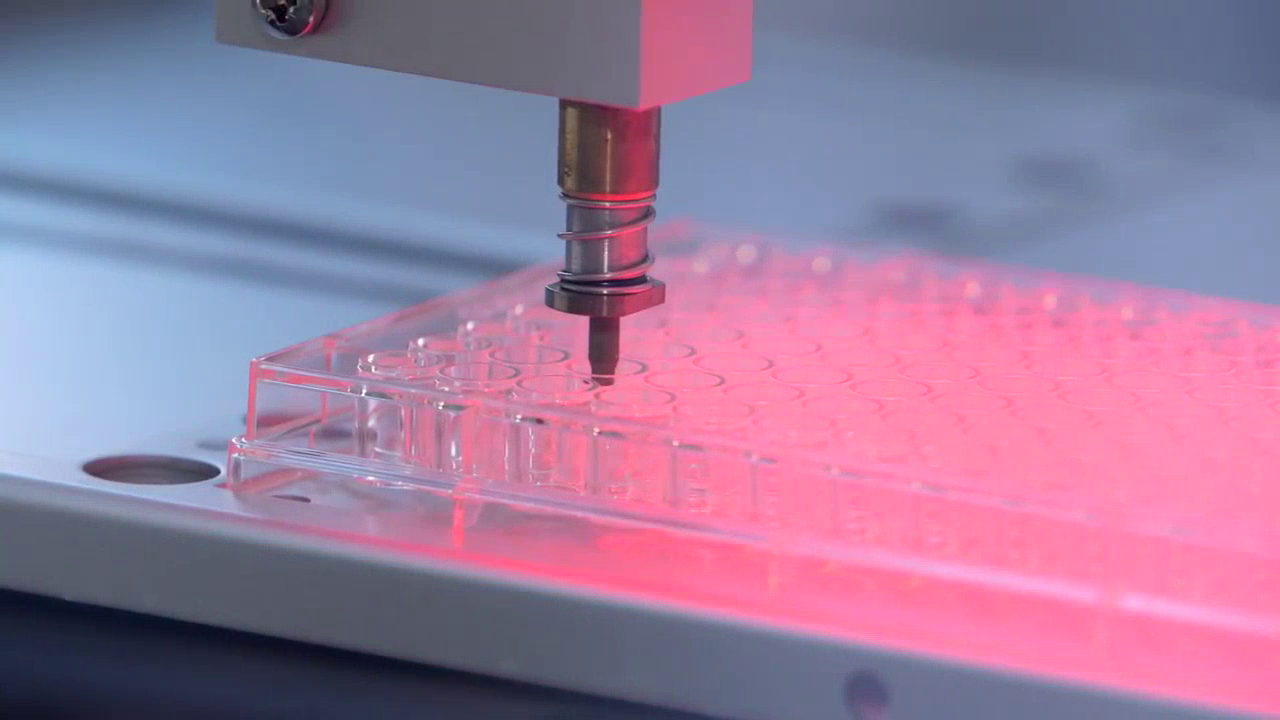
Prof Salomon Gallo’s team has undertaken transformational research studying extracellular vesicles – an emerging technology garnering global interest. In these studies, the team measured lipids in blood plasma and in small extracellular vesicles (sEVs), which are tiny particles released by cells, including those from tumours.
The researchers were able to develop ‘lipid signatures’ – like a biological fingerprint – to distinguish cancer cells from non-cancerous cells in particles shed by sEVs.
Why does this research matter?
Most women with ovarian cancer are diagnosed at an advanced stage, when the cancer has spread and is harder to treat.
CA-125 is the main blood test used to check ovarian masses. It works well for advanced high-grade serous cancer but is less reliable for other cases, for example:
- CA-125 levels are normal in more than half of early-stage ovarian cancers.
- It often misses borderline tumours and less common subtypes.
- It can be raised by conditions other than cancer, such as endometriosis and inflammation.
A test that enhances the information provided by CA-125 could help find more cancers earlier.
How could this development benefit patients?
In the future, a blood test using lipid markers could help doctors tell more accurately whether an ovarian mass is cancer. This could mean earlier diagnosis for women whose cancer is currently missed, including those with normal CA-125 levels. It could also mean fewer unnecessary surgeries and less worry for women whose masses are benign.
What are the next steps to progress this research?
For the past 14 years, Prof Salomon Gallo's research program has focused on finding new biomarkers for ovarian cancer, and these two publications are the latest results of that work.
“The next phase will test how reliable the lipid biomarkers are, both on their own and combined with other biomarkers such as the OCRF-7 panel, in a large prospective study. This is particularly important for the EARLY trial. Lipids will now be one of the biomarkers we test, alongside others, to see how these perform in a real-world setting,” Prof Salomon Gallo said.
Small Extracellular Vesicle and Total Lipid Profiles Provide a Diagnostic Advantage Over CA-125 Across Ovarian Cancer Subtypes , Journal of Extracellular Vesicles, 2026 Sep, doi: 10.1002/jev2.70348.
- Combination treatments use two or more unique ingredients to treat a single disease or condition.
- Apoptosis is a form of cell death where old, damaged, or unneeded cells neatly destroy themselves.
- Pyroptosis is a form of cell death where cells swell and burst releasing inflammatory signals that can be detected by the immune system. It is typically triggered by infections and cell-stress.
- Danger-associated molecular patterns (DAMPs) are molecules released by stressed, damaged, or dying cells that alert the immune system. They can be imagined like a flare or a beacon.
- Dendritic cells (DCs) are immune cells that help “teach” the immune system to recognise and attack threats like cancer.
- T cells are a type of white blood cell. They are an essential part of the immune system.

Get the latest news, stories & updates.
