Ovarian cancer research showcased at national science meeting
April 02, 2026
Last week David Hunt, OCRF Director of Research and Policy and Michelle Henderson, our new Corporate Communications and PR Lead, headed to the Gold Coast to attend the Annual Scientific Meeting of the Australia New Zealand Gynaecological Oncology Group (ANZGOG).
They shared that the meeting was a great opportunity to connect with many of our OCRF-funded researchers, hear the latest research advances, and be inspired by the dedicated clinicians and researchers working so passionately to improve outcomes for those affected by ovarian and other gynaecological cancers.
Reading time: 4 minutes
Pictured L-R: Jacinta Simmons, QIMR Berghofer; David Hunt, OCRF; Olga Kondrashova, QIMR Berghofer
Recognition for OCRF-funded researchers
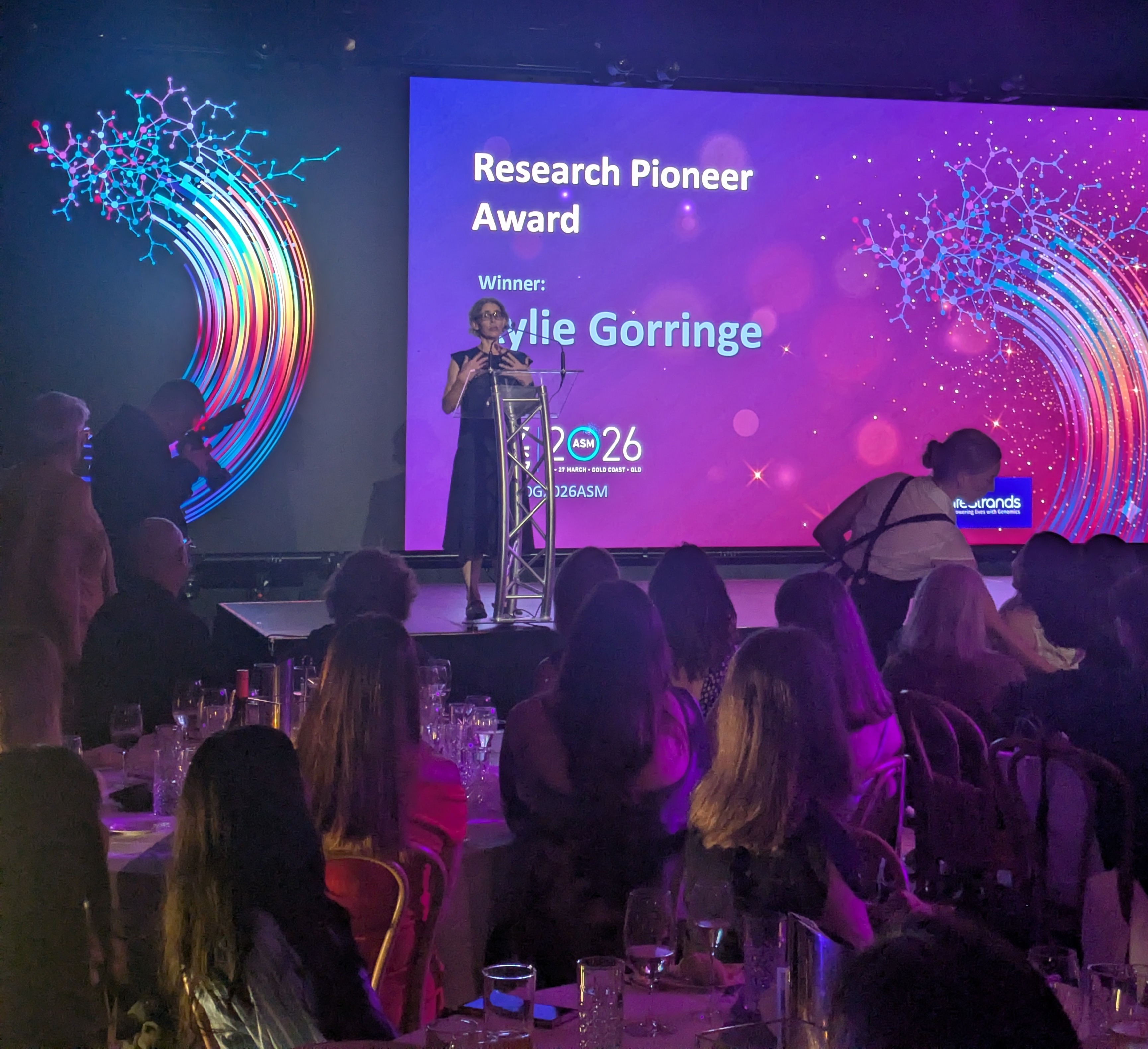
Huge congratulations to OCRF-funded researcher Prof Kylie Gorringe, who was awarded the Research Pioneer Award for leading the way in mucinous ovarian cancer investigations.
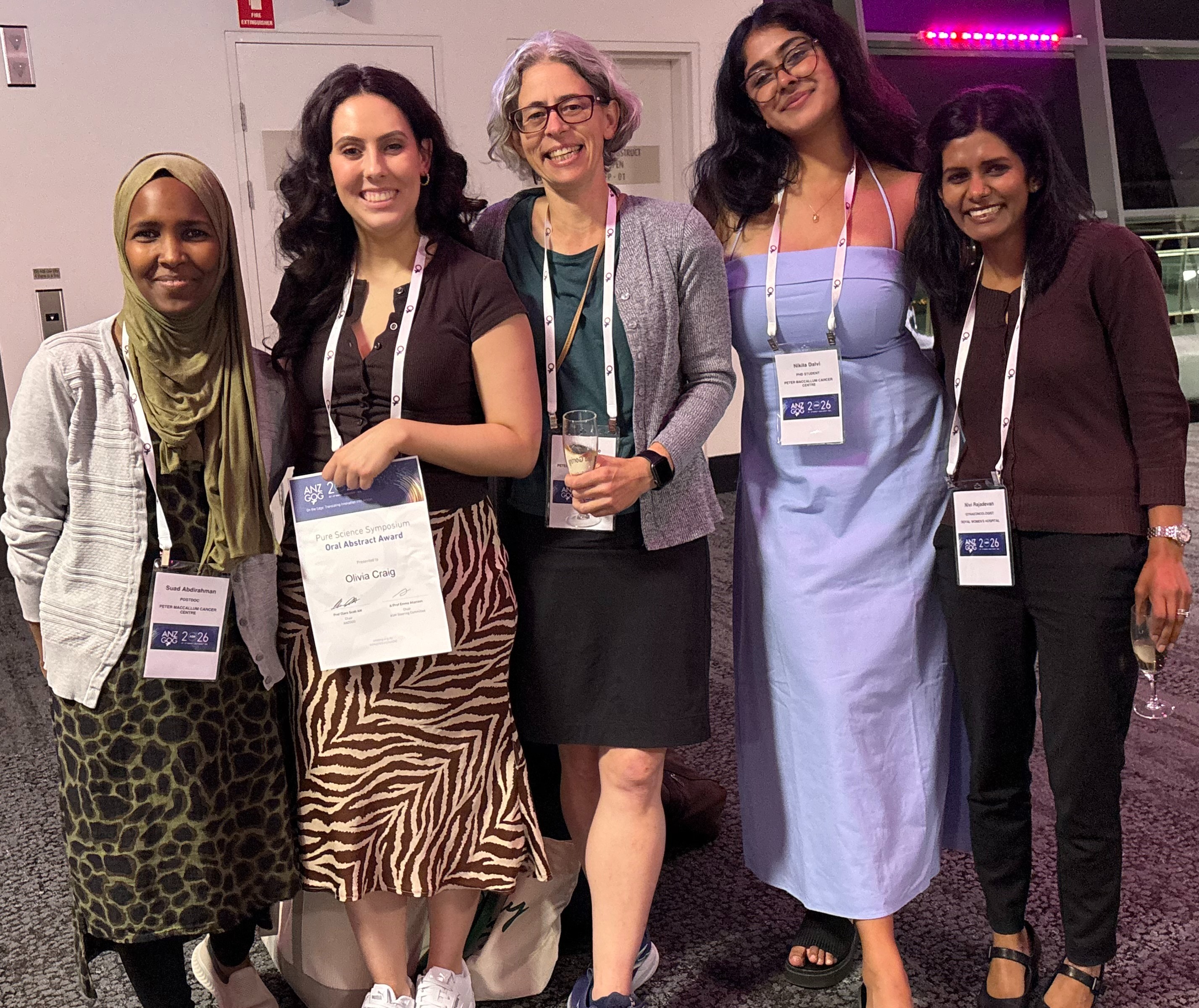
Two members of Prof Gorringe’s research lab were also recognised – Dr Niveditha Rajadevan was the recipient of the Michael Friedlander AM Award for an emerging leader, while Olivia Craig won Best Oral Abstract.
Presentations shine a light on ovarian cancer research advances
A highlight for us was seeing several OCRF-funded researchers give presentations across the three days including Prof Stacey Edwards from QIMR Bergohofer in QLD, Zarka Samoon from Prof Dale Garsed’s lab, and Olivia Craig, Nikita Dalvi and Dr Rajadevan from Prof Gorringe’s team – both labs based at Peter MacCallum Cancer Centre in Melbourne.
Olivia presented findings on research involving pre-clinical models, called organoids, to predict drug responses to mucinous ovarian cancer (MOC). Organoids are small tumours grown in the lab from a patient’s own tumour tissue, which are then used to test drug responses. In one instance, Olivia was able to report drug screening results from a patient’s tissue to their clinician in a turnaround time of just two weeks. Olivia's abstract says protocols are now optimised to achieve turn-around times of two to four weeks from patient surgery, through to organoid generation and drug screen completion. This provides the opportunity to direct personalised treatment within a clinically relevant timeframe. It was this research that won her the Best Oral Abstract award at the conference. This approach is an example of personalised medicine – ensuring the patient receives the right treatment, at the right time. A feasibility pilot trial called OrCaS will now get underway.
Pictured L-R: Suad Abdirahman, Olivia Craig, Prof Kylie Gorringe, Nikita Dalvi, Nivi Rajadevan - Peter MacCallum Cancer Centre
An opportunity to meet our researchers
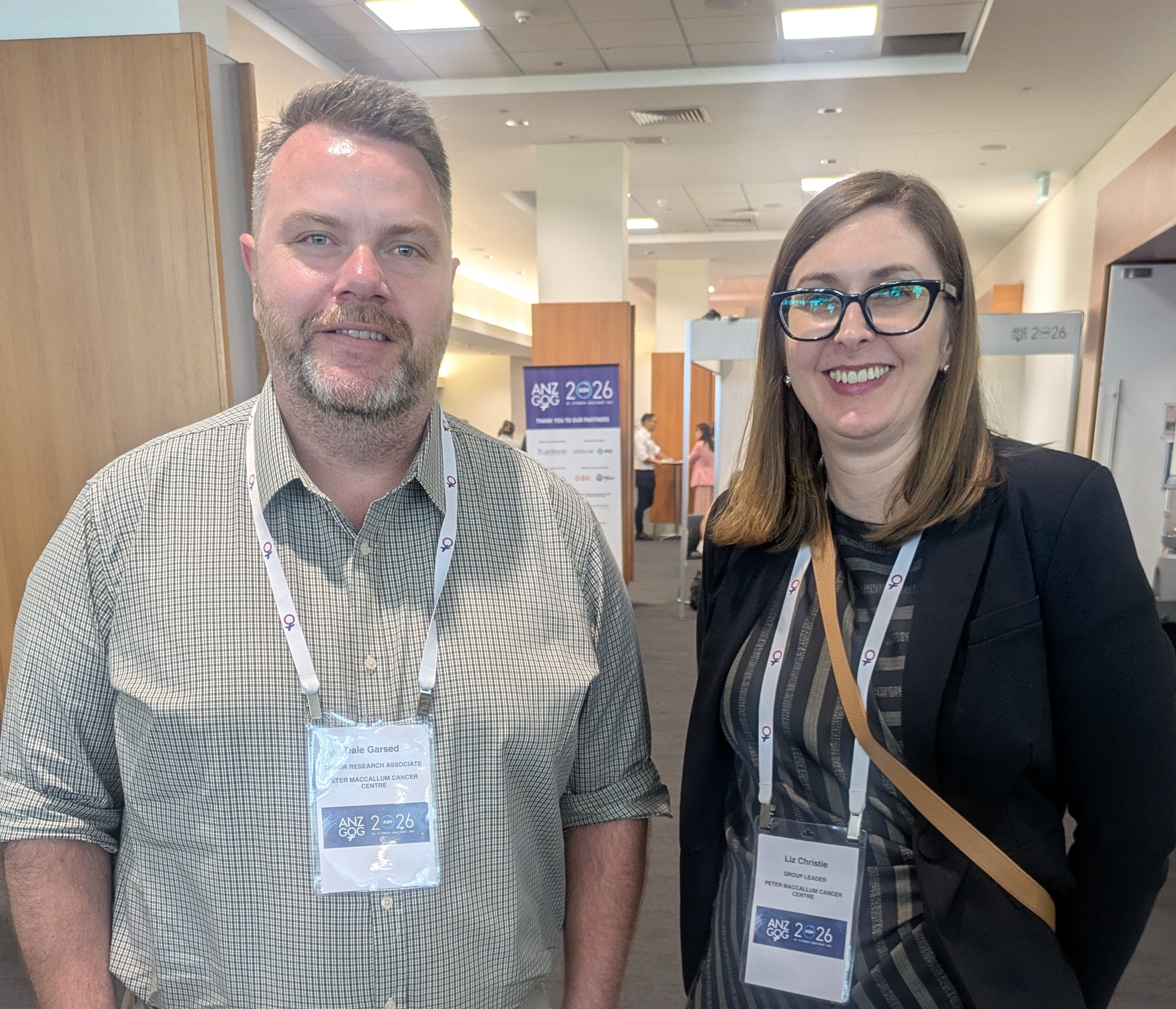
The event was an important opportunity to catch up with several ovarian cancer researchers, including Prof Garsed (pictured, left), Dr Dane Cheasley (Peter Mac), Dr Emma Bolderson, Jacinta Simmons and Dr Holly Barker (WEHI), all recipients of OCRF grants, and others who were among the conference attendees.
We were also inspired by conversations with other luminaries of ovarian cancer, Professor David Bowtell, Professor Anna DeFazio, Dr Liz Christie (Pictured, right), Dr Olga Kondrashova and many more.
Partnerships for better outcomes
The camaraderie between delegates at the ANZGOG ASM was a real testament to the strength and determination of this community. We’re grateful to have been a part of it. As we continue to advocate to the Australian Government for funding of the Gynaecological Cancers Transformation Initiative, it felt important to be standing alongside our ANZGOG and Ovarian Cancer Australia colleagues to support the community of researchers, clinicians, educators and people with lived experience who strive to make progress every day.
Right information, right time
In an era of misinformation, Dr Tracey DiSipio, School of Public Health, University of Queensland gave a timely presentation, discussing the importance of high-quality online information for patients with gynaecological cancers.
When someone is experiencing symptoms, Dr DiSipio said more than 80 per cent of Australians will go online before going to a doctor. “It’s critical that online information resources are high quality,” she said.
She emphasised that information is ‘not a nice to have, but a must have’. She noted that there are different information requirements across the cancer continuum, from pre-diagnosis, diagnosis, treatment and post-treatment. There is a need, she said, for patients to have the ‘right information at the right time.’
Audit of online gynaecological cancer information
Dr DiSipio’s shared the results of an audit of online information resources on gynaecological cancer symptoms, which identified 109 resources from Australian health organisations. The audit assessed the quality of resources against criteria including whether it was readable, understandable, actionable, and culturally inclusive.
“This audit shows that the quality of online resources can be improved and should be improved,” she said. It was important to note that the audit was released in 2022, before generative AI was launched into the world. A 2024 study found within just 18 months of OpenAI’s ChatGPT being released, one in 10 Australian adults were already consulting AI.
A survey of patient information
A study of patient preferences for information conducted by Dr DiSipio found many had not heard of the gynaecological cancer they were diagnosed with. They were also keen to connect with other people diagnosed with the same cancer.
Recommendations from the patients surveyed included:
- promoting greater awareness of gynaecological cancers
- peer support for those diagnosed
- being provided with information relevant to their specific cancer type and surgery during the treatment phase
- information on what to expect post-treatment during follow-up.
Patient information should be relevant, timely and personalised, she said, and further research would focus on information tailored for Aboriginal and Torres Strait Islander people and culturally and linguistically diverse communities, and working with women to co-design information.
Related OCRF articles

Get the latest news, stories & updates.
