Associate Professor Simon Chu
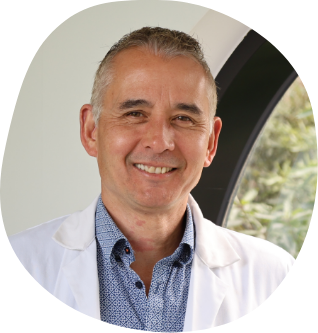
Research Institution: Hudson Institute of Medical Research
OCRF priorities the researcher addresses: Early Detection, Treatment, Managing Recurrence
Their OCRF-funded research projects: Towards a new era in granulosa cell tumour research: genomics, diagnostics and therapeutics, Understanding the mechanisms of granulosa cell tumours and developing an effective treatment approach, Advancing treatment approaches for a rare type of ovarian cancer: adult granulosa cell tumours
It’s incredibly motivating working in a rare cancer field. The patients as well as supporting people in the community, become more than collaborators - they become your friends! They remind us why this work is so important. Many have told me 'I know that I might not benefit from this personally, but someone will in the future.' That perspective drives us forward.”
About Associate Professor Chu’s research
Associate Professor Simon Chu specialises in research on a very rare form of ovarian cancer, granulosa cell tumours (GCT), which makes up approximately 5-8% of ovarian cancers, with around 100-150 people diagnosed in Australia annually. There are two subtypes of granulosa cell tumours: adult (aGCT), and juvenile (jGCT), which can develop in young children.
At the Hudson Institute of Medical Research, Associate Professor Chu leads one of the world’s only dedicated GCT research labs, and it is globally recognised for its progress. His team are currently researching multiple aspects of the disease, including:
- Developing a combination therapy for adult GCT that has already shown promising results in laboratory and pre-clinical studies.
- Conducting discovery research to understand how and why adult and juvenile GCT develop.
- Developing a diagnostic approach that could also be used to monitor recurrence of GCT, which can occur even decades after initial treatment.
Background
Associate Professor Chu began his scientific career in the Department of Endocrinology and Diabetes at the Royal Children’s Hospital Melbourne, where he investigated hormone receptors and endocrine function in children born with a combination of male and female biological traits. When research funding ended, he temporarily left research to work in telecommunications, helping to implement direct text messaging to Australia. However, his passion for research never wavered.
In 1996 he was recruited by Professor Peter Fuller at the Prince Henry’s Institute (now the Hudson Institute of Medical Research). His expertise in studying hormone and oestrogen receptors proved invaluable in exploring how oestrogen promotes cell growth in ovarian cancer, particularly in GCT cells. On the back of this study, Simon decided to undertake his PhD. His PhD project focused on the oestrogen pathway in GCT. Through this, he discovered two important biological pathways that contributed to the development of ovarian granulosa cell tumours. To support his studies, Associate Professor Chu was first funded by the OCRF in 2002 through an OCRF PhD Scholarship. This allowed him to continue in an area of research he was passionate about — ovarian cancer — and set the course of his career for the next 25 years.
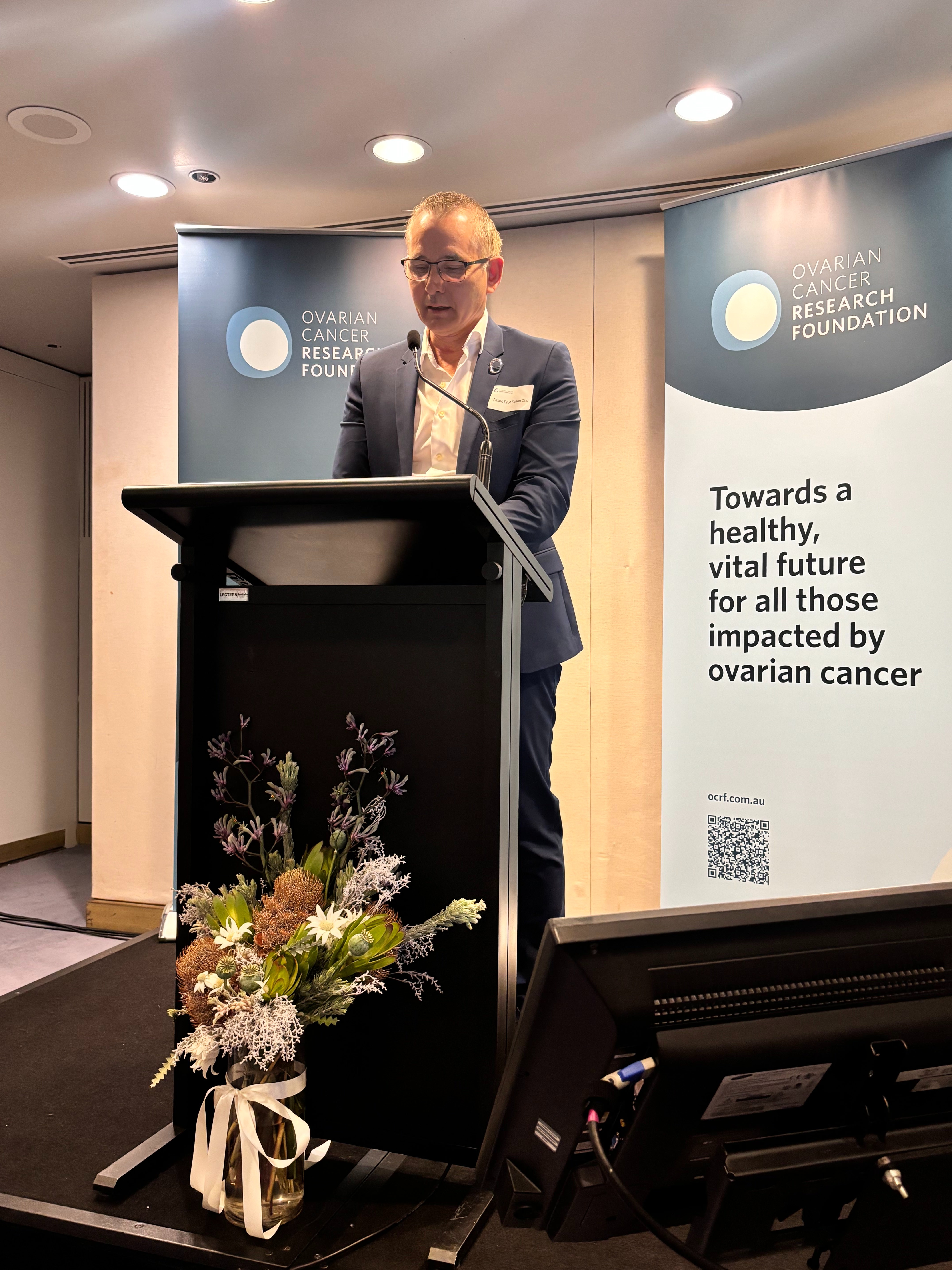
Following his PhD, he completed two post-doctoral positions in GCT research. His growing expertise in this rare ovarian cancer earned him an invitation to join regular ovarian cancer discussions with key specialists such as Professor Tom Jobling, Associate Professor David Robertson, Professor David Healy, and Emeritus Professor Henry Burger AO. The OCRF itself stemmed from these meetings as Professor Tom Jobling, approached the first CEO, Liz Heliotis, to found the OCRF. Associate Professor Chu has worked alongside ovarian cancer research and clinical specialists and the OCRF from the very beginning.
To broaden his research expertise, Associate Professor Chu undertook a post-doctoral position focused on avian influenza at the Pasteur Institute (Cambodian campus). Despite these diverse research opportunities, he remained committed to GCT, driven by a passion for discovery and a belief that this rare cancer could one day become curable. So, in 2009, he returned to the Prince Henry’s Institute to continue GCT research, funded by an OCRF L’Oréal Paris Post-Doctoral fellowship. In 2018, he became head of the Hormone Cancer Therapeutics group at Hudson Institute of Medical Research.
OCRF-funding has led our research to where we are today. Support between 2010 and 2018 led a Department of Defence grant and a $2.2 million Medical Research Future Fund grant. Without OCRF’s support for this rare cancer, at a time when other funding bodies didn’t consider it significant, this progress would not have been possible. I can honestly say that without OCRF, I wouldn’t be here today.”
Career highlights
On a personal level, Associate Professor Chu considers being able to lead a research group dedicated to rare ovarian cancer, and seeing it grow into its global reputation, a career highlight. The team is frequently contacted by other researchers and clinicians from around the world to seek advice on treatment techniques and updates on their research progress.
Secondly, the near completion of preclinical work on a promising combination therapy for GCT is an exciting highlight.
Associate Professor Chu considers being a mentor an essential part of his role and is deeply committed to nurturing the next generation of scientists, sharing his expertise and passion with the brightest new researchers of the future.
Collaborative impact
The GCT community have been invaluable collaborators in Associate Professor Chu’s research. Insights from his close association with the GCT Survivor Sisters group have helped his lab group better understand the lived experience of those with GCT, ensuring their research remains genuinely focused on real world impact. Similarly, he considers his long-standing involvement with the OCRF and its community as a key collaboration that has been instrumental for his team to become one of the only GCT-focused labs in the world.
The OCRF were the only organisation to say, 'yes, all ovarian cancers matter and are important.' And because of that I truly believe that without OCRF we would not have got other funding. Their belief in this work has made everything possible and amongst a difficult funding landscape that exists in Australia, I can honestly say that without the OCRF we wouldn’t have been able to have achieved what we have.”
For every project like this, many more can’t get underway due to a lack of funding. Support research like this to help them move forward.
Share page

Get the latest news, stories & updates.
