Understanding ovarian granulosa cell tumours and developing effective treatment approaches
Overview
Associate Professor Chu’s team is investigating a rare type of ovarian cancer called granulosa cell tumours, because increased understanding of the disease will help them develop a new and more effective treatment approach.
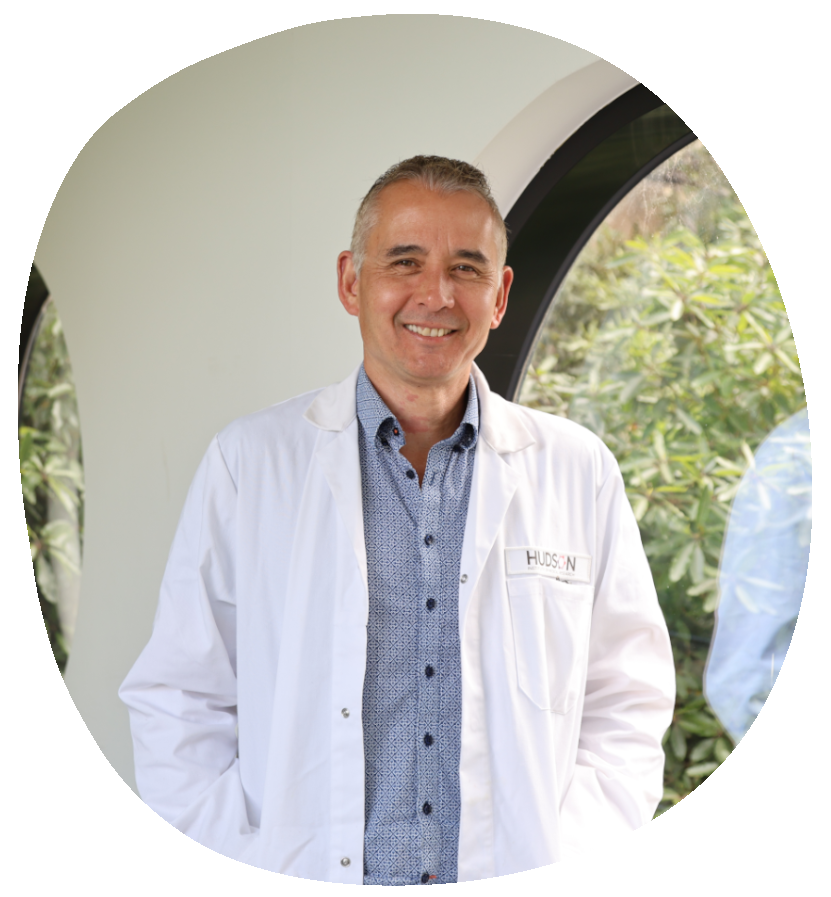
Lead researcher: Associate Professor Simon Chu
Grant received: $760,061 for 4 years (2015-2019)
OCRF research pillar: Treatment
Primary institution: Hudson Institute of Medical Research
Latest update
The data developed through this project, enhancing both our understanding of granulosa cell tumours and potential treatment approaches, was critical in enabling the preliminary data required to receive a grant from the Medical Research Future Fund to further test our combination treatment.”
Professor Simon Chu, September 2024
Project details
Associate Professor Simon Chu is an expert in a rare subtype of ovarian cancer called granulosa cell tumour (GCT). Building on over two decades of research into the disease, his lab is now investigating the efficacy of a combination treatment for GCTs, with the goal of advancing toward clinical trials.
There are two known subtypes of granulosa cell tumours: adult GCT, which makes up approximately 95% of GCTs, and juvenile GCT which makes up the remaining 5% of cases and can occur in much younger patients with the average age of diagnosis at approximately 20 years old.
In previously OCRF-funded research, the team studied the development of GCTs with the aim of developing new treatments for the disease.
Professor Chu describes, “In the natural reproductive cycle in the ovary, granulosa cells rapidly divide and grow around the egg after being stimulated by different hormones and growth factors. A granulosa cell will produce a lot of oestrogen. As the egg is about to be released during ovulation, the cells transition from producing oestrogen to producing progesterone. Once the egg is ovulated, granulosa cells then change to become luteal cells. GCT likely develop when some granulosa cells fail to make this transition, and instead continue to proliferate and form tumours.”
Additionally, the team have been able to research these rare ovarian cancers by using cell lines derived from GCT patient samples, as well as generating 3-dimensional cell cultures (known as organoids) from patient samples. These are essential research tools in the laboratory.
With this foundational research completed, the team can now use both their specialised GCT research tools and enhanced knowledge of the disease to investigate treatment approaches and the underlying processes that lead to this rare ovarian cancer.
Aims:
- In previous studies they identified that XIAP, a protein that appeared to drive GCTs, could make an effective treatment target. In this project the team will test the effectiveness of a class of drugs that inhibit XIAP called ‘second mitochondrial-derived activators of caspases’ (Smac mimetics) including LCL-161, AZD5582, GDC-0152 and Birinapant on their GCT cell lines to identify which of these drugs are the most effective at treating GCT.
- To test the combination of agonist drugs targeting peroxisome proliferator-activated receptor gamma (PPARg) in combination with Smac mimetics (which target XIAP) to determine the most effective treatment combination.
- To understand why specific treatments are working by determining what role the FOXL2 C134W mutation plays, as it has been found in 95% of those with the adult form of GCT. By understanding how it drives GCT, they may also be able to understand how to predict or monitor GCT patients for recurrence. This is important as GCTs can come back even decades after diagnosis and treatment. Interrogating the biology of GCTs will also allow the team to see if there are any other mutations that could act as therapeutic targets in addition to XIAP.
Approach:
Understanding granulosa cell tumour development
To develop effective treatment strategies for GCT, the research team is identifying the critical pathways that drive tumour growth and exploring potential therapeutic targets to block these pathways. Central to this work is the FOXL2 C134W mutation, which has been shown to drive the majority of adult GCTs. Using a patient-derived cell line that harbours this mutation, the team will employ CRISPR gene-editing technology to reverse the mutation and study the resulting cellular changes, providing insights into the processes that lead tumour formation.
At the same time, they will introduce the FOXL2 C134W mutation into a normal granulosa cell line to observe the effect and assess its broader impact on other genes, providing a comprehensive understanding on how GCTs develop. FOXL2 is one of approximately 20,000 protein-coding genes in the human body, but its complex biological structure and function makes it particularly challenging to study. Despite these technical difficulties, this research is critical for uncovering the mechanisms behind GCT formation.
Using the CRISPR strategy, the team will create and study four unique cell lines: GCT with and without the FOXL2 mutation, and the normal granulosa cells with and without the FOXL2 mutation. To further explore the mutation’s impact, they will use RNA sequencing techniques to compare gene expression patterns across these cell lines, identifying which genes and pathways are activated in the cancerous cells and pinpointing those most essential to GCT development and progression.
Testing new granulosa cell treatments in the lab
Using advanced 3D spheroid research models, which closely replicate the tumours within the body, but are grown in a petri dish, they will evaluate how effective the Smac-mimetic drugs are when targeting the XIAP protein, and therefore how effective they are in causing tumour cell death. They are also testing Smac-mimetic drugs in combination with PPARg agonist drugs to determine whether this approach enhances tumour sensitivity to the drugs and improves treatment outcomes.
We’re on the cusp of having effective treatments. This progress builds on early work funded by the OCRF, and we’ve made remarkable strides in understanding the biology of the disease.”
Ambition and outcomes:
This project has established a clinical model that will guide future studies to determine if their drug combination treatment is effective and whether it has any side effects, and therefore whether it is safe for clinical use.
Their preliminary findings indicate that reducing XIAP protein levels using Smac-mimetics sensitises the ovarian cancer cells to other drugs that target them, reinforcing not only XIAP as a critical therapeutic target, but also indicating its effectiveness as a combination treatment approach.
With granulosa cell tumours being a rare subtype of ovarian cancer, with two further subtypes (adult and juvenile), this important work has shed light on the biology of both diseases including its main drivers and provided important progress towards a more effective treatment.
Current status:
Clinical Research - Preclinical *
*Want to learn more about the medical research pipeline? Read more here.
For every project like this, many more can’t get underway due to a lack of funding. Support research like this to help them move forward.
Share page

Get the latest news, stories & updates.
