Dr Alexander Cole
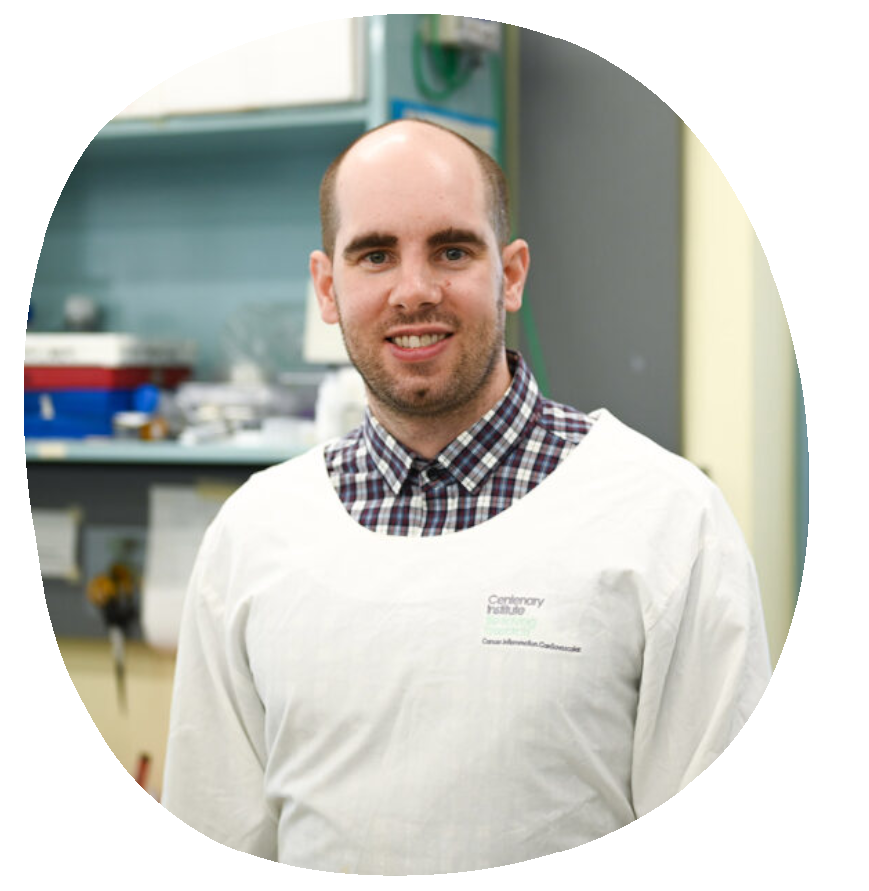
Research Institution: The Centenary Institute of Cancer Medicine and Cell Biology
OCRF priorities the researcher addresses: Treatment
Their OCRF-funded research projects: A new therapy to overcome ovarian cancer recurrence and chemoresistance
There hasn’t been a revolution in ovarian cancer treatment and considering its low survival rate, it’s a really important avenue of research and why I’m focusing on it. I want to be able to create something that helps people.”
About Dr Cole's research
Dr Alexander Cole is an expert in protein engineering and molecular biology, where he uses a specific technique called ‘directed evolution’ to develop new cancer treatments. He has worked in ovarian cancer research for over eight years, committing five of those years to building a platform that uses directed evolution to develop tiny antibodies (nanobodies), training them to target specific cancer-causing proteins. He’s now turning this wealth of expertise to an ovarian cancer treatment project, co-funded by the OCRF and Cancer Australia. This new treatment targets a protein called follistatin which his team have found is a major driver of chemotherapy resistance in high-grade serous ovarian cancer, the most common and deadly subtype.
Background
Dr Cole was initially interested in physiotherapy but after completing his honours in prostate cancer, he felt he could have a greater impact working as a researcher.
He then met Professor Deborah Marsh who became his PhD supervisor. She was extremely supportive and passionate about research, and this was Dr Cole’s introduction to ovarian cancer.
Dr Cole completed his PhD on ovarian cancer and epigenetics (modifications which can change the way genes are expressed) before joining a lab at the University of Pittsburgh (USA), led by Prof Ronald Buckanovich, who was working on ovarian cancer stem cells. Here he made the discovery that the follistatin protein is secreted in response to chemotherapy, where it drives ovarian cancer chemoresistance.
Although Dr Cole completed his PhD and post-doctoral work studying ovarian cancer cell biology and finding ways to treat them, he also joined a project to develop a nanobody drug to treat COVID-19. After encountering faults in the process of developing this nanobody, they created a new system called PROTEUS, a direct evolution platform. They are now applying this system with the aim of developing a new and more effective therapy for ovarian cancer.
Career highlights
Publishing his team’s discovery of the effects of the protein follistatin in promoting chemoresistance in high-grade serous ovarian cancer is a highlight for Dr Cole.
Developing the PROTEUS platform to create nanobodies that can be trained against many different targets, including follistatin, is another offering that he considers a significant achievement.
Collaborative impact
Two supervisors have been key to collaboratively progressing Dr Cole’s ovarian cancer research. His former supervisor from the US, Prof Ronald Buckanovich from the Magee Women’s Research Institute and Foundation, and the University of Pittsburgh, received the funding and samples to generate the panel of nanobodies and developed the initial idea for using them to target disease.
Additionally, Dr Cole worked closely with A/Prof Daniel Hesselson to develop the PROTEUS platform, integral to this research.
For every project like this, many more can’t get underway due to a lack of funding. Support research like this to help them move forward.
Share page

Get the latest news, stories & updates.
