Dr Kathleen Pishas
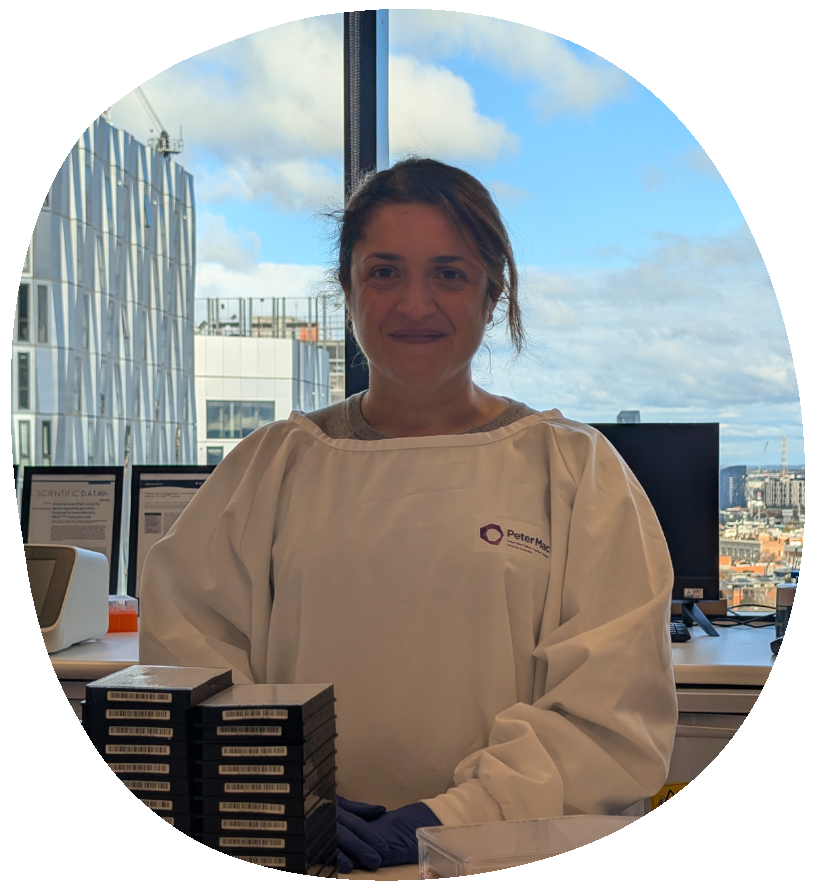
Research Institution: Peter MacCallum Cancer Centre
OCRF priorities: Treatment, Managing Recurrence
OCRF-funded research projects: Validation of new treatments for low-grade serous ovarian cancer
Rare cancers may affect fewer people, but every patient matters. Behind every diagnosis is a family, a future, and a life worth fighting for.
Throughout my research journey, I have learned that meaningful progress in rare cancers requires persistence, patience, and a commitment to championing those whose voices are too often under-represented in cancer research.
- Dr Kathleen Pishas
About Dr Pishas’ research
Dr Kathleen Pishas is a dedicated senior research fellow working to improve outcomes for people living with low-grade serous ovarian cancer (LGSOC), a rare and often difficult to treat disease. Her research focuses on investigating the unique biology of LGSOC to better understand the molecular processes that drive this chemo-resistant cancer.
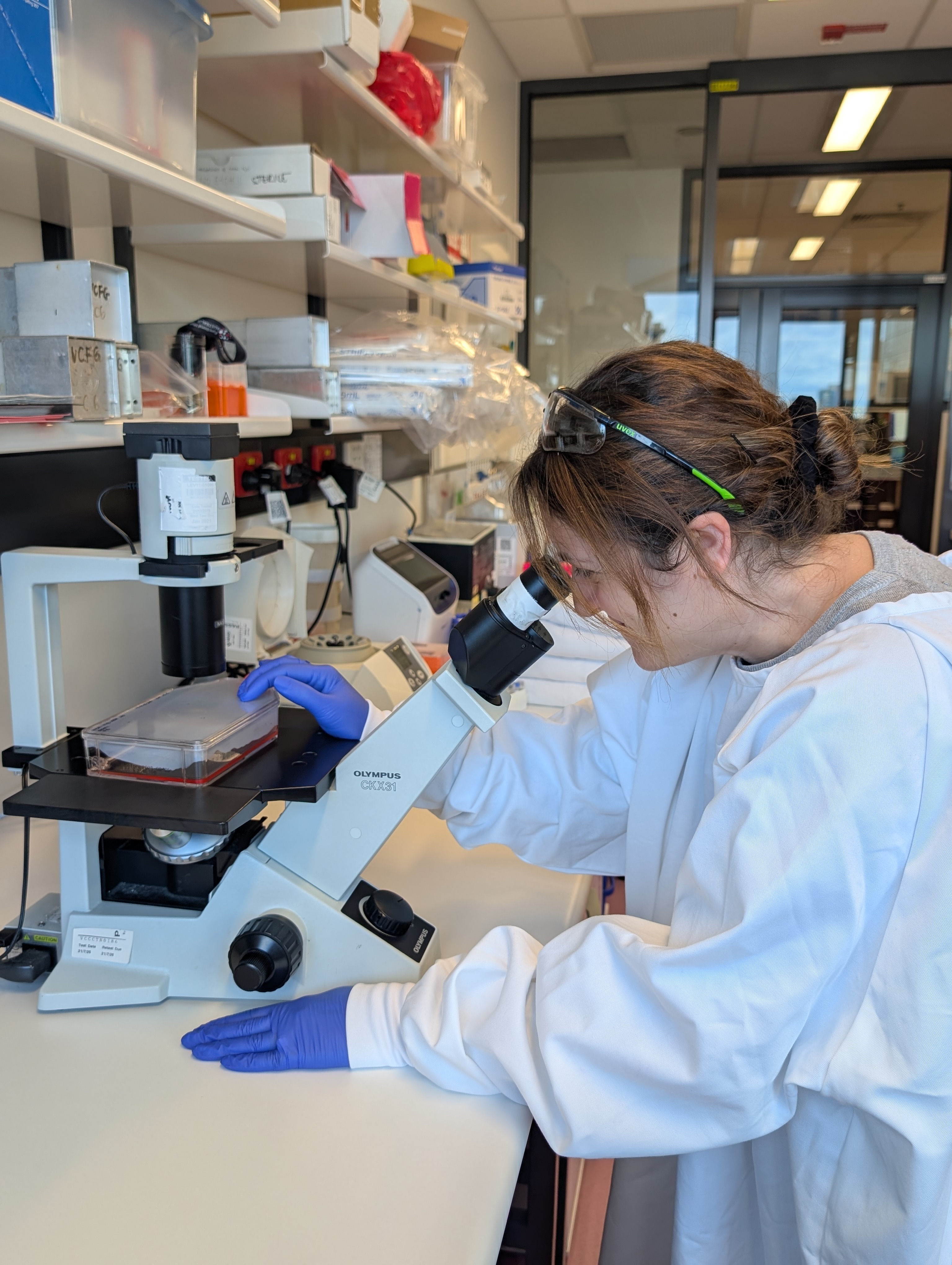
At the Peter MacCallum Cancer Centre, Dr Pishas leads a large-scale drug screening study exploring thousands of potential treatments. Through this work, she is helping to uncover new ways to target LGSOC, offering hope for more durable and effective options to patients who currently have limited choices.
Background
Dr Pishas' path into research has been shaped by a deep curiosity about how cancer behaves and adapts. For over a decade, she has worked in labs investigating how tumours respond to treatment.
Her early research in Ewing’s sarcoma, a rare paediatric bone cancer sparked a lasting interest in drug resistance and targeted therapies, including novel treatments that work by switching off the signals that help cancer cells survive and grow, known as LSD1 and TP53-MDM2 inhibitors.
This strong scientific training in Australia and the United States led her into ovarian cancer research, where she has chosen to focus on LGSOC - an area where patients urgently need better options.
Career highlights
Dr Pishas' success has been crucial to driving cutting-edge research while supporting the development of other researchers in the field. Highlights include:
- Securing over $3.5 million funding as a primary investigator
- An Alex’s Lemonade Stand Young Investigator Grant
- A US Department of Defense Ovarian Cancer Pilot Award
- NHMRC CJ Martin Overseas Biomedical Research Fellowship
- Victorian Government (Victorian Cancer Agency) Fellowship
- Louise Davidson Fellowship 2026
Supported by these awards, her work in genomics and cell-surface proteomic characterisation of LGSOC has helped establish her as an emerging leader dedicated to addressing rare and under-served cancers.
If we want to change the future of ovarian cancer, we must first understand its biology. Investment in fundamental research lays the foundation for every life-saving discovery that follows."
-Dr Kathleen Pishas
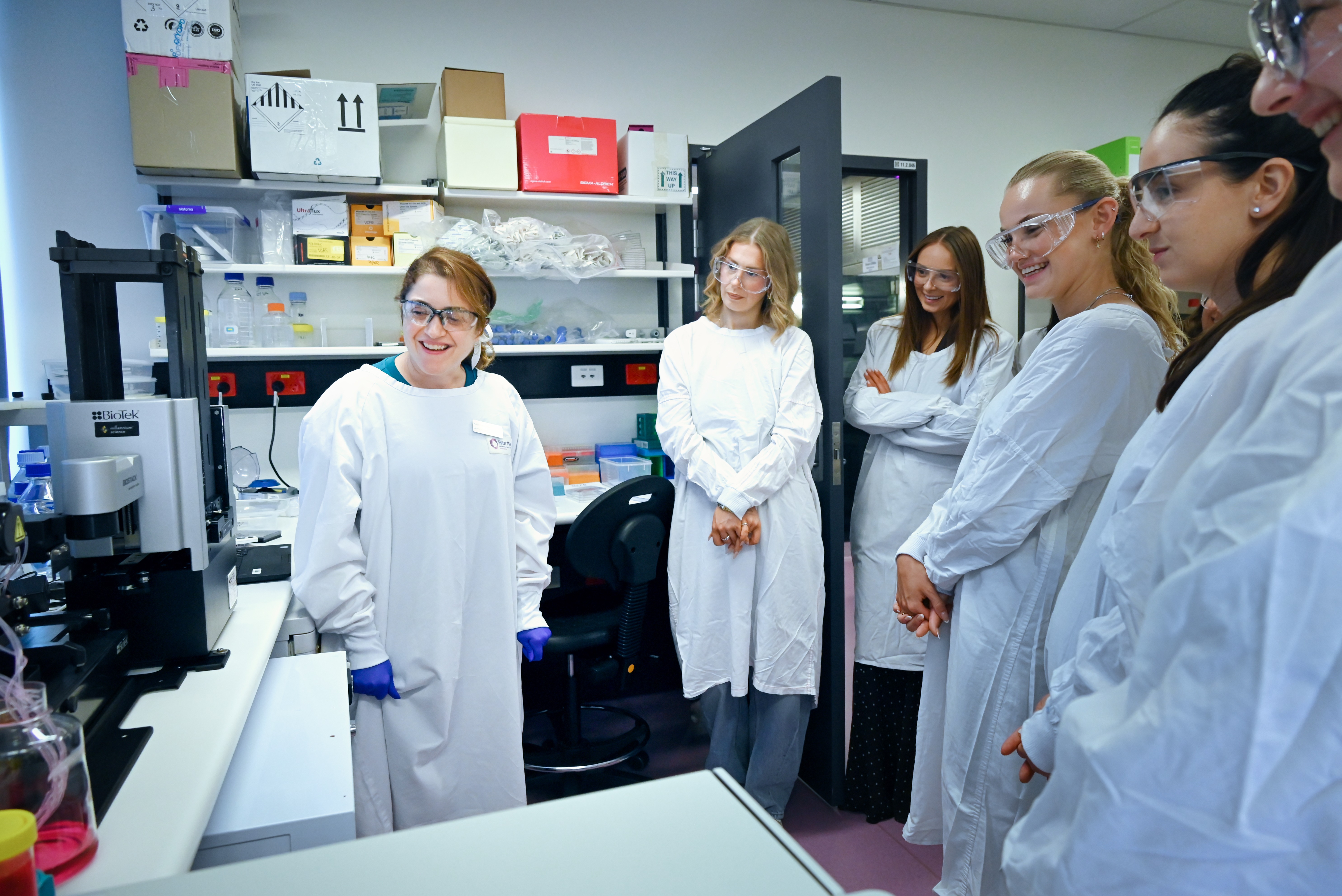
(Pictured above: Dr Pishas hosting a tour of the lab at Peter Mac for Witchery)
Collaborative impact
Dr Pishas' work is built on meaningful collaboration, bringing together researchers, clinicians, and technical experts to tackle complex challenges in ovarian cancer. Alongside her mentors Prof Ian Campbell and Dr Dane Cheasley, she works with leading teams at Peter Mac and contributes to broader national and international efforts to better understand and treat LGSOC.
Her partnership with the Victorian Centre for Functional Genomics, led by Prof Kaylene Simpson, has been instrumental in conducting high-throughput drug screening of 12 LGSOC patient samples across 3500 FDA-approved drugs. Partnerships with Prof Mark Carey (University of British Columbia) and Prof Martin Koebel (University of Calgary) have also been vital, enabling access to LGSOC patient samples for laboratory research.
Dr Pishas was recently awarded with the Louise Davidson Fellowship, a joint initiative between OCRF and the Mother's Day Classic designed to celebrate the efforts of a female researcher. This fellowship will play an important role in supporting Dr Pishas' continued career development, helping her expand her skills, deepen collaborations, and build the independence needed to establish her own research program.
For every project like this, many more can’t get underway due to a lack of funding. Support research like this to help them move forward.
Share page

Get the latest news, stories & updates.
