A new treatment that increases immune response to ovarian cancer
Overview
Professor Brian Gabrielli is trialing a drug combination that he hopes can both effectively treat ovarian cancer and activate the immune system to prevent its recurrence.
Lead researcher: Professor Brian Gabrielli
Grant received: $500,486 for three years
OCRF research pillar: Treatment, Managing Recurrence
Primary institution: Mater Research, The University of Queensland
Latest update
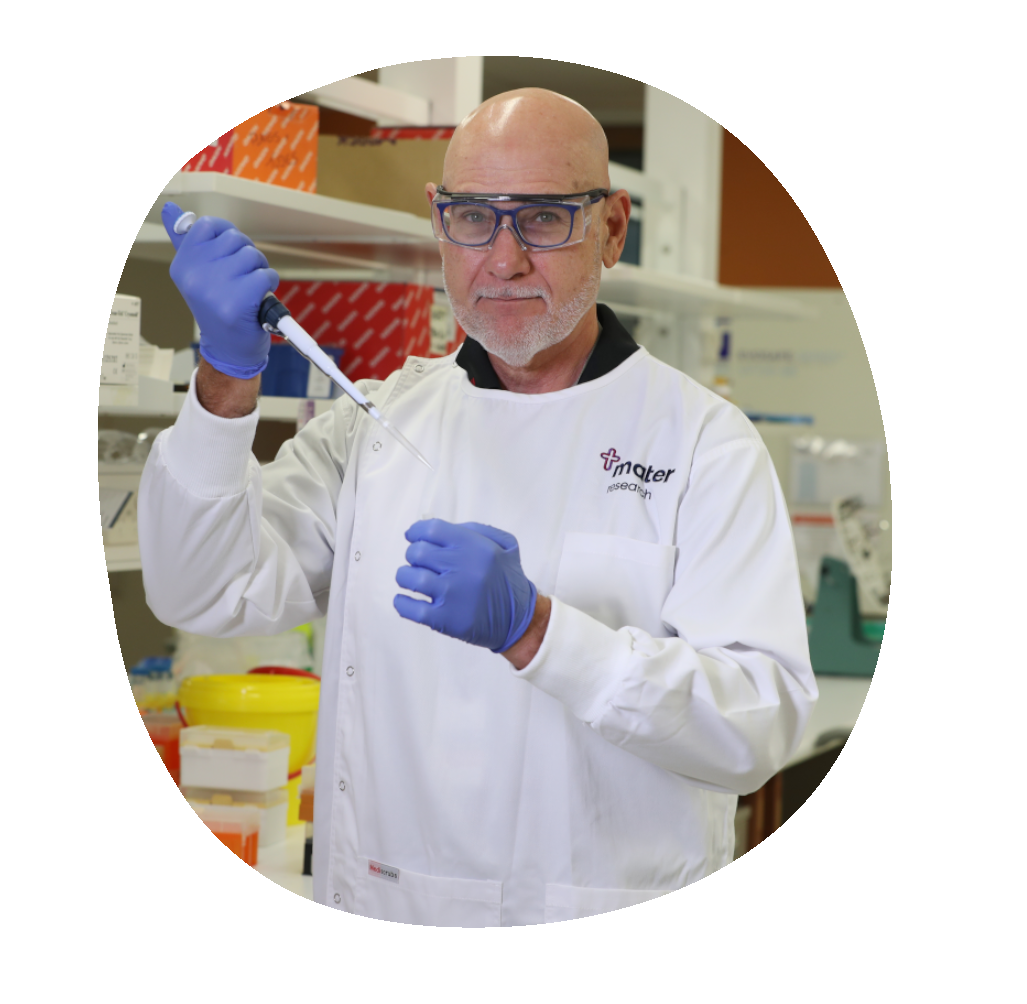
One of the key things we’ve learnt in the last year is that one part of the immune system is in fact sometimes helping the tumour avoid the immune system – this part of the immune system is like Harry Potter’s cloak of invisibility. The tumour is there but you can’t see it. Our treatment reduces the invisibility, making it unable to avoid the anti-tumour immune response.”
Professor Brian Gabrielli, June 2024
Project details
There are two problems that Professor Brian Gabrielli’s team hope to solve. Firstly, ovarian cancer treatments have not significantly advanced in decades and, after initial treatment, the cancer returns in over 70% of cases at which point it is often resistant to available treatments. Secondly, currently available treatments can have painful and long-term side effects that reduce a patient’s quality of life.
Professor Gabrielli’s team is developing a new drug treatment combination that can selectively target tumour cells. They hope it will both effectively treat the cancer in the first instance, and trigger an immune system response against the cancer that could reduce the risk of recurrence.
While investigating melanoma treatments with members of Mater Hospital’s gynaecological oncology group, the urgent need for new ovarian cancer treatment options was emphasised. Professor Gabrielli realised that the molecular-based treatments that are currently being investigated for melanoma were also applicable for most high-grade serous ovarian cancers, the most common and lethal type of ovarian cancer.
Serendipitously, the drug combination the team are investigating for ovarian cancer treatment was discovered when a lab member was waiting for a different drug to be delivered to use in testing against melanoma. Instead, they decided to test the Checkpoint kinase 1 inhibitor in combination with a low dose of the chemotherapy drug, hydroxyurea (CHK1i+LDHU). The results indicated that this was a promising treatment for melanoma, which led them to test the combination on ovarian cancer cell lines for which results proved even more promising.
Aims:
- Investigate and define why their treatment combination is effective in ovarian cancer. The team’s data indicates that their combination treatment, CHK1i+LDHU, works by both directly killing tumour cells and by activating an immune response against the cancer, but they don’t yet understand how.
- Test the treatment combination in patient-derived samples to identify whether genetic diversity impacts the way the treatment works.
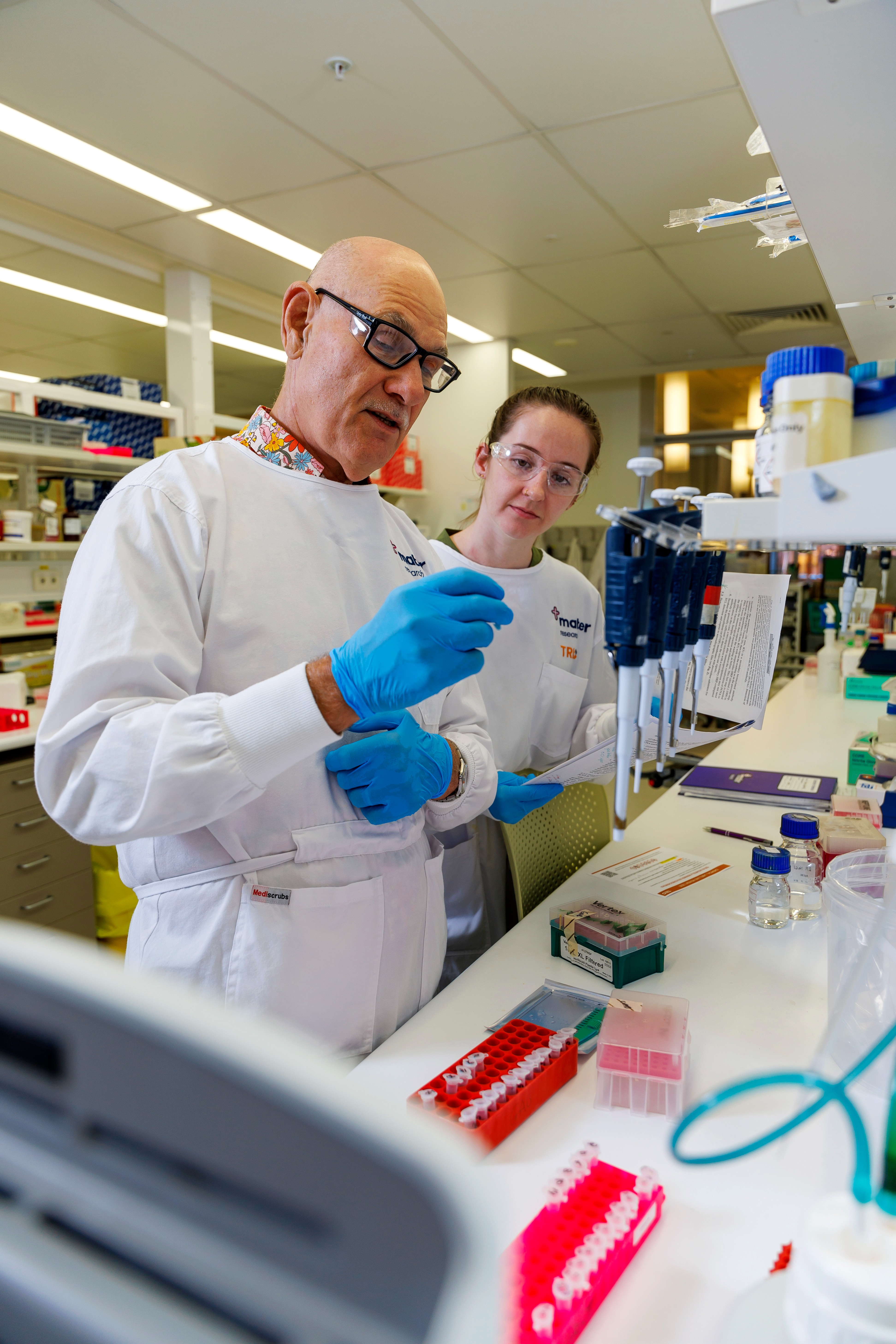
- Test the treatment on patient-derived cancer and immune cells from ascites samples (fluid from the abdomen of cancer patients). Testing both the cancer and immune cells at the same time will allow the team to investigate how the immune system activates to attack cancer cells, and secondly how it remembers these cancer cells to prevent them from coming back.
Approach:
Professor Gabrielli’s approach focuses on replication stress. Replication stress refers to a defect in the way cancer cells grow, or replicate, which is much faster than normal, healthy cells. Because the cancer cells are trying to grow and replicate the genome too quickly, they trigger stress.
This discovery sparked Professor Gabrielli’s idea: if replication stress only occurs in cancer cells, then it could potentially be targeted to develop an ovarian cancer treatment as it presents a ‘window’ that the treatment could use to access the cancer.
With this logic, the team tried to increase replication stress in cells, widening the window that makes the cancer cells vulnerable, and giving their drug combination an increased chance to attack the cancer.
Their treatment, combining a low-dose chemotherapy drug and a targeted drug, is designed to kill the tumour but at the same time activate specific parts of the immune response. Because the treatment is targeted against the tumour the patient does not experience adverse side effects from the treatment.
With OCRF funding the team will validate their approach in both in-vitro and in-vivo models in the lab.
Professor Gabrielli discusses his drug treatment and collaboration with the OCRF
Ambition and outcomes:
The team hope their drug combination will treat ovarian cancers effectively, whist enhancing immune responses against the tumour – essentially vaccinating the patient against their own cancer to reduce the chance of relapse.
In the short-term Professor Gabrielli anticipates that the combination could be introduced to patients who are resistant to other available treatments and offer better quality of life by removing some of the painful and irritating side effects of traditional chemotherapy treatment. Long-term they hope it could prove an effective first line treatment option.
The two drugs being investigated are approved to treat other conditions and can be taken orally. This means that these drugs are easier to administer and require less time in hospital outpatients’ clinics for treatment. This exciting project could lead to a new and more effective treatment for ovarian cancer patients that not only improves their quality of life during treatment but could improve the likelihood, reassuringly, that they wouldn’t need treatment again.
Current status:
This ovarian cancer research project is at the preclinical stage where researchers are conducting extensive studies in the lab with samples and models to verify the effectiveness of their approach as well as evaluating how safe it is likely to be for humans *
*Want to learn more about the medical research pipeline? Read more here.

For every project like this, many more can’t get underway due to a lack of funding. Support research like this to help them move forward.
Share page

Get the latest news, stories & updates.
