$4.6 million to boost ovarian cancer research
April 20, 2026
- The Ovarian Cancer Research Foundation (OCRF) today announced its largest-ever funding pool, $4.6 million, highlighting growing community support for ovarian cancer research
- $2.6 million awarded through the OCRF National Research Grants Program to eight recipients
- Two major grants plus six new proof-of-concept grants supporting highly innovative projects
- A further $2 million is earmarked for an expanded Partnership Grants program to be announced later this year
Thanks to our generous community of donors, partners and individual fundraisers, $2.6 million has been awarded through the OCRF’s National Research Grants Program. It is the first tranche of a $4.6 million funding pool to be distributed this year.
Eight new grants will allow medical researchers to examine key questions, including how to combat ovarian cancer cells that ‘hide’ from the immune system’s defences, exploring new combinations of existing drugs to reprogram the immune system to respond better to treatment, and using genetic insights to drive personalised therapies.
"This record funding commitment highlights the growing level of community support for ovarian cancer research,” said Robin Penty, OCRF’s Chief Executive Officer. “We are so grateful to our generous community donors, partners and individual fundraisers for their dedicated efforts to raise funds for a cancer we know has been overlooked and underfunded for far too long. At the OCRF, we are absolutely committed to rewriting this story.”

Pictured above: 2026 grant recipient Associate Professor Liz Caldon and her team, Garvan Institute
Two major grants and six proof-of-concept projects awarded
Major grants have been awarded to Professor Anna DeFazio AM at Westmead Institute for Medical Research, University of Sydney ($654,000 over three years) to screen new drug combinations for Low Grade Serous Ovarian Cancer and to Associate Professor Liz Caldon at the Garvan Institute of Medical Research, University of NSW ($517,000 over three years).
In addition, six new proof-of-concept grants have been awarded, providing researchers with critical foundational funding to build evidence and test key questions. This is the first time the OCRF has awarded these innovative, shorter-term grants to support promising proposals in key areas of need, to gather foundational data that may lead to additional funding from a range of sources.
The grant recipients are from eight medical research institutes across Queensland, NSW and Victoria, bringing the total number of OCRF-funded projects Australia-wide to 27 across 13 medical research institutions.

Professor Anna DeFazio AM

Associate Professor Liz Caldon
Mother’s Day Classic Foundation names three projects
The projects led by Prof Anna DeFazio AM, A/Prof Liz Caldon, and Dr Maree Bilandzic have been selected as the 2026 OCRF Mother's Day Classic Foundation grantees, in recognition of the foundation’s $1.37 million donation to OCRF in 2025.
“The Mother's Day Classic community is proud to be supporting three of the eight ovarian cancer research projects announced, an important step in elevating ovarian cancer research,” said Zara Lawless, Mother’s Day Classic Foundation’s Chief Executive Officer. “With $1.37 million contributed in 2025, and a total of $2.57 million committed since 2024, our community has shown it wants to, and can go further. Together, we are working towards a future where no more lives are lost to either breast or ovarian cancer, supported by a total contribution of $3.5 million to research in 2025. After our strongest donation in more than a decade, we’re ready to raise the bar again when our community unites on Mother’s Day, Sunday 10 May 2026.”
The 2026 Ovarian Cancer Research Foundation National Research Grant Program major grant recipients are:
- Professor Anna DeFazio, Westmead Institute for Medical Research and University of Sydney, OCRF Mother’s Day Classic Foundation grantee, $654,000 over three years to screen a wide range of targeted drugs to find effective treatment combinations for Low-Grade Serous Ovarian Cancer, a less common subtype that often affects younger women, with limited treatment options. This could inform future clinical trials.
- Associate Professor Liz Caldon Garvan Institute of Medical Research, UNSW, OCRF Mother’s Day Classic Foundation grantee, $517,000 over three years to investigate why ovarian cancers stop responding to treatment called PARP inhibitors, using gene-editing tools to search for hidden drivers of resistance, with the aim of finding new ways to make cancers sensitive treatment again.
The 2026 Ovarian Cancer Research Foundation National Research Grant Program proof-of-concept grant recipients are:
- Dr Maree Bilandzic Hudson Institute for Medical Research, Monash University OCRF Mother’s Day Classic Foundation grantee, $260,000, 1.5 years to study ‘safe zones’ that form around treatment-resistant cancer cells after chemotherapy, leading to recurrence in a bid to identify new therapies and tools to monitor patients for relapse.
- Dr Elizabeth Christie, Peter MacCallum Cancer Centre and The University of Melbourne, $119,578, one year to identify targeted therapies for the 60 per cent of High-Grade Serous Ovarian Cancers that have undergone whole genome doubling, a process that makes tumours harder to treat. The team will test up to 110 drugs and advance the two most promising into further testing.
- Professor Derek Richard Queensland University of Technology, $200,000, 1.5 years to develop a new cancer treatment that works by blocking a protein called hSSB1, which cancer cells depend on to repair their DNA and survive.
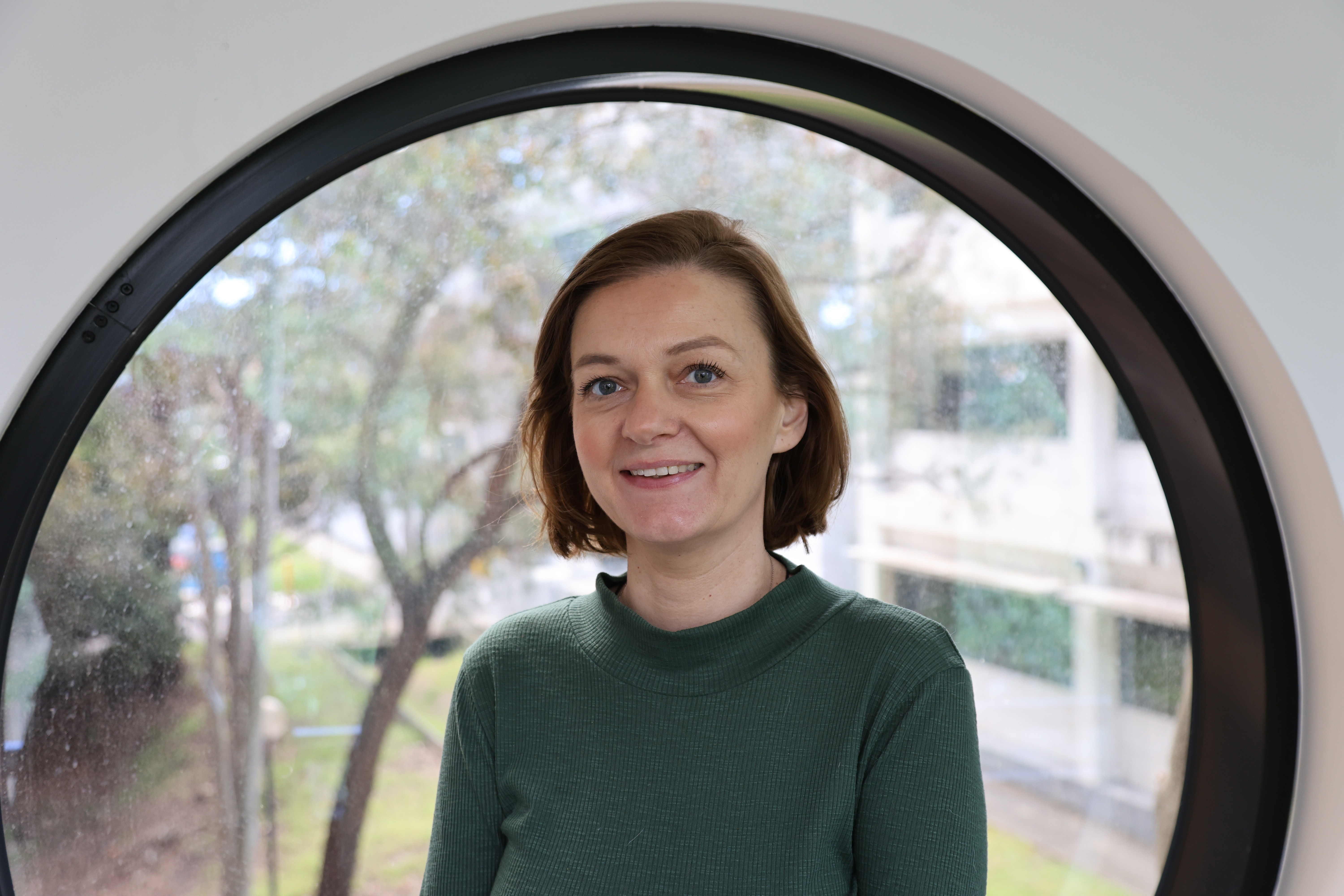
- Associate Professor Fernando Guimaraes, Frazer Institute, The University of Queensland, $240,000, 1.5 years to modify immune natural killer cells to recognise and attack ovarian cancer, while also protecting them from a process that normally switches them off, in pursuit of a powerful new immunotherapy that remains effective against cancers that have stopped responding to chemotherapy.
- Dr Gwo Yaw Ho, Monash University, Monash Health $260,000, 1.5 years to test a new combination of existing drugs, one called CHK1 inhibitor (CHK1i), and a low dose of the chemotherapy drug, hydroxyurea (LDHU). In lab studies, this combination has been shown to kill a wide range of ovarian cancer cells, even drug-resistant ones. The aim is to see if the combination can help immunotherapies work better for ovarian cancer patients.
- Professor Kum Kum Khanna, Mater Research Institute, The University of Queensland, $337,985 1.5 years to explores whether blocking a specific protein can prompt ovarian cancers to be more visible to the immune system, potentially allowing immunotherapy to work better for this disease. The team will test this approach using mini-tumours grown from patient samples, and preclinical models to look for molecular clues to predict which patients would benefit most.
Targeted, responsive funding
A further $2 million has been earmarked for an expanded 2026 Partnership Grants Program to be announced later this year. This grant funding will support dedicated investment in sadly lacking research infrastructure such as biobanks, and other partnerships that underpin the crucial work of ovarian cancer researchers.
This initiative is in direct response to a national consultation held by OCRF with researchers, patients, survivors, carers and industry partners in 2024, which identified key gaps in ovarian cancer research, as highlighted in our Research Impact Strategy 2025-30.
Discovery research
The average five-year survival rate for women diagnosed with ovarian cancer is just 49 per cent and drops to 29 per cent for women diagnosed in the advanced stages.
This cannot change without discovery research and as the leading independent funder of ovarian cancer research, the OCRF plays a catalytic role.
Over the past decade, ovarian cancer has received less than one per cent of Australian Government medical research funding despite now ranking as a common cancer for women and trailing far behind the average five-year survival rate for all cancers (71%).
Every research grant advances the goal of improving survival and quality of life for people affected by ovarian cancer. These OCRF-funded projects reflect the complexity of the disease, which has more than 30 subtypes, and the diverse range of approaches needed to tackle it.
Donations can’t turn into discoveries without you.
Marking our largest funding commitment to date, the OCRF reflects upon all we’ve achieved. Every dollar comes from you — the OCRF community. Together, for over two decades, you’ve helped us enable researchers to drive momentum and progress that offers hope of a healthy, vital future to all those impacted by ovarian cancer.
Read more about the research projects

Get the latest news, stories & updates.
